dailynewsnblog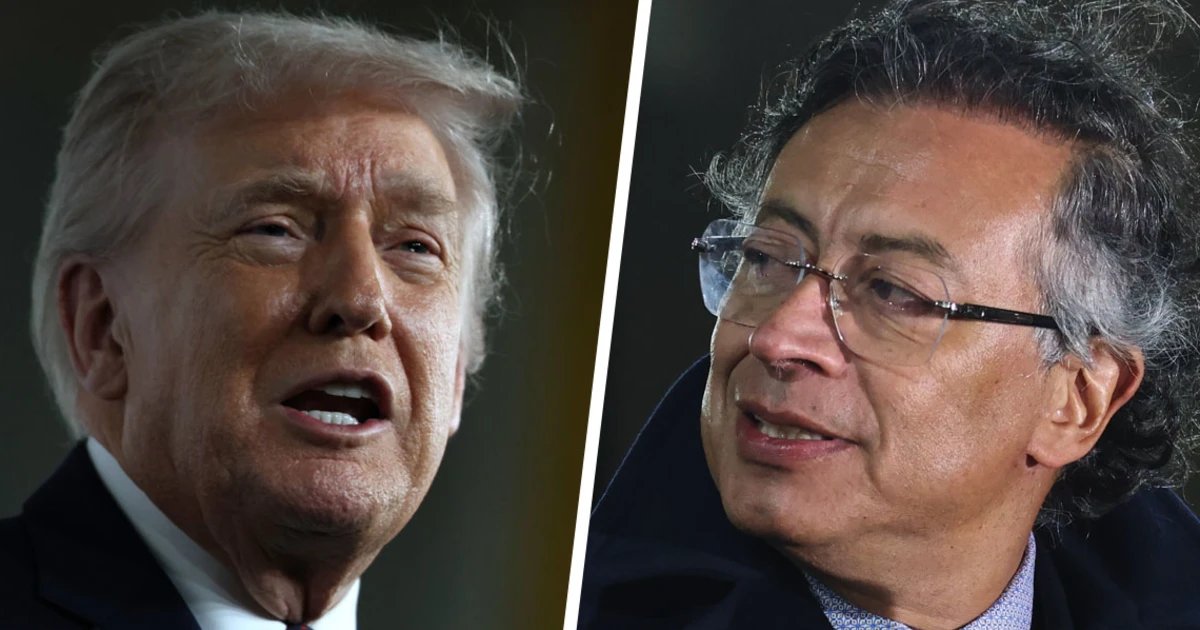
WASHINGTON — President Donald Trump is set to host Colombian President Gustavo Petro at the White House on Tuesday in the first meeting between two leaders who have feuded on and off with each other over the past year.
The meeting will also be Trump’s first sit-down with a South American head of state since the U.S. captured then-President Nicolás Maduro in Venezuela one month ago.
The bilateral meeting is expected to include a discussion of topics pertaining to Venezuela, including its border with Colombia, oil and energy, and guarantees about independence during Colombia’s upcoming presidential elections, four people familiar with the planning, including Colombia’s former foreign minister Luis Gilberto Murillo, told NBC News.
Trump told reporters Monday afternoon that he and Petro would talk about narcotics, “because tremendous amounts of drugs come out of his country.”
Trump added that he expects the meeting with Petro, who is term-limited and set to leave office in August, will be “good,” saying Petro “has been very nice over the last month or two.”
“He was certainly critical before that, but somehow, after the Venezuelan raid, he became very nice. He changed his attitude very much,” Trump said.

Petro, a former Marxist revolutionary, has often drawn Trump’s ire, publicly disagreeing with him over Maduro’s capture, the U.S. strikes on alleged drug boats in the eastern Pacific and the Caribbean and deportations of Colombians from the U.S.
Petro said seizing Maduro was a violation of the region’s sovereignty and characterized the operation as a kidnapping. In response, Trump repeatedly threatened Petro, saying a U.S. military operation in Colombia “sounds good” to him and calling Petro a “sick man” who should “watch his a–.”
Trump’s searing comments after Maduro’s capture caused fear and anger in Colombia, and propelled nationwide anti-American demonstrations in support of Petro.
Last week, in a freewheeling speech at a hospital in Colombia, Petro demanded the U.S. send Maduro back to Venezuela to stand trial there. A day later, Petro softened his stance, saying in a speech in Panama that he was not defending Maduro.
Colombia’s foreign minister, Rosa Villavicencio, said at a news conference Monday that the Colombian side feels “positive” going into the meeting. Some former officials, however, have expressed apprehension at the meeting, citing both Trump’s and Petro’s unpredictable and fiery tempers.
Some members of Congress have sought to mend what has usually been a strong alliance between the U.S. and Colombia. Sen. Rand Paul, R-Ky., helped facilitate a phone conversation between Petro and Trump in late January, a diplomatic source in Washington told NBC News. The call, which both leaders described in positive terms, prompted Trump to invite Petro to the White House.
Before that, though, Trump sanctioned Petro, his family and one of his Cabinet members in October over allegations of involvement in the global drug trade. Petro has strongly denied any involvement, and he has vowed to fight the far-reaching sanctions in U.S. court.
The sanctions came shortly after Sen. Bernie Moreno, R-Ohio, who was born in Colombia and has become a key voice influencing U.S. policy toward the country, encouraged Trump to take a targeted approach with Petro. Moreno brought a document that included what appeared to be an artificial intelligence-generated image of Petro and Maduro in orange prison jumpsuits to a lunch at the White House with Republican senators. After a photo of White House deputy chief of staff James Blair holding the image was posted to the White House website, Petro recalled the Colombian ambassador to the U.S.
Moreno, who has met with Colombian politicians in the days leading up to Trump and Petro’s meeting, is expected to be at the discussion, a source familiar with the meeting said. Moreno’s office did not respond to a request for comment on the meeting.
Kevin Whitaker, a former U.S. ambassador to Colombia under Trump and former President Barack Obama, said “a critical component” of the meeting “will be whether press is around.”
“Petro, certainly, but absolutely President Trump postures for the camera and sees it as an opportunity to underline his greater worldview,” Whitaker said.
As of now, no part of Tuesday’s meeting will be open to the media, according to the White House.
The result of the meeting, Whitaker said, will depend in part on whether Petro “is prepared to make some offers.”
“In the context of the national security strategy the Trump administration put out in early December, the hemisphere is ours,” Whitaker said. “Petro would do well to understand Trump’s view in that regard.”