dailynewsnblog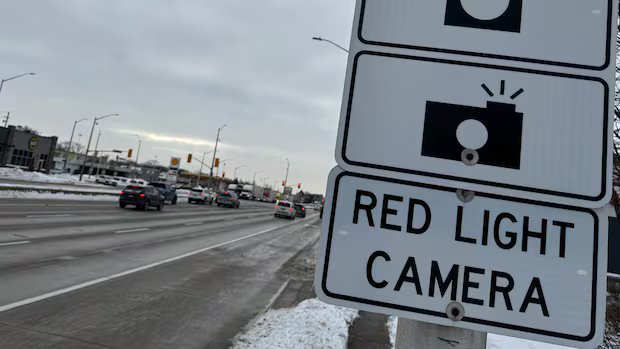
Red-light cameras in Ontario have been catching civilians for years, but some police officers who rush to emergencies say they’re unfairly being penalized by the same technology.
The union that represents nearly 500 officers in Windsor said that each time one of its members gets a red-light camera ticket, the service docks six hours of pay for the first offence. If it happens a second time, the officer loses 12 hours of pay.
“You’re working a day and a half for free,” said Kent Rice, president of the Windsor Police Association.
Rice said officers are highly trained and already have discretion to do their jobs, which shouldn’t stop when entering an intersection at a red light.
“I understand balancing the line between public safety, but I also believe this was never the intent of the [legislation] put in place. They’re given discretion for a reason,” said Rice. “I don’t think the public would agree that this is what the intent of what the legislation should be.”
As an example, Rice said, if an officer is responding to a priority call such as an active domestic situation, break and enter, or somebody being shot — and wants to make a right-hand turn on a red light in the middle of the night — fully stopping may not be needed.
“You can see from blocks around that nobody is coming,” said Rice, adding that the type of call, time of day and type of intersection dictate how an officer would respond.
“I want them to be focused on doing their job, and getting to [the emergency], and not being concerned about being [disciplined] and issued a penalty for going through a red light.”

Rice said that when he was a front-line patrol officer, 911 dispatchers would express concern about communicating with someone needing immediate police assistance.
“You can hear it in their voice. They’re like, ‘We need officers to step it up,’” said Rice. “Officers will in fact make that discretionary call that I need to get there as soon as possible.”
CBC News spoke with one current officer whose pay was docked after he was detected by a red-light camera while responding to a Priority 1 — the most urgent type of call in law enforcement. The officer’s identity is being kept confidential over fears of reprisal for speaking out.
The officer arrived on the scene in time to make an arrest.
“Instead of getting a, ‘Great work, you caught the guy,’ it’s, ‘Here’s your six-hour tariff,’” the officer said.
‘You feel so betrayed by your organization’
In the moment, the officer said, they didn’t even think about being penalized.
“We all drive safely. You roll to almost a complete stop, you look both ways and if it’s clear, you go because your mindset is, ‘I gotta catch this guy.’ That’s what we signed up to do.”
Anger is the emotion. You feel so betrayed by your organization.– Officer docked pay after red-light camera detected him responding to urgent call
Now, the officer said, they’ve started thinking about red-light cameras when they should be solely focused on the emergency they’re responding to.
“Anger is the emotion. You feel so betrayed by your organization,” said the officer.
“It’s very frustrating because it seems to be a punishment for no reason.”
The officer wants Windsor police administration to use a “rational mindset” to look at the circumstances of a red-light infraction and apply exemptions if warranted.
The Windsor Police Service (WPS) has not responded to multiple requests from CBC News about its policy when it comes to red-light cameras.
However, an internal discipline directive obtained by CBC News through a freedom-of-information request doesn’t say whether the circumstances of each occurrence are investigated prior to officers losing six or 12 hours of pay.
Rice said he isn’t aware of a case where an officer caught by a red-light camera wasn’t docked pay.
Officers stop yet still disciplined, union says
Rice said he’s learned some officers do come to a complete stop at the white line and are still disciplined. That’s because police cruisers can accelerate quickly in large intersections, which triggers the red-light camera infraction.
Under Ontario’s Highway Traffic Act, police are allowed to go through a red light, with lights and sirens activated, after coming to a stop and when it’s safe to do so.

(Jason Viau/CBC News)
There have been instances in other parts of Canada when first responders were found to be responsible for causing a crash while going through a red light.
For instance, in 2024, a Winnipeg police officer pleaded guilty after causing a two-vehicle crash at an intersection when responding to an emergency.
Rice said there are forms of accountability that officers face when that happens — including internal reviews, and scrutiny by Ontario’s Special Investigations Unit and the Law Enforcement Complaints Agency.
“That’s the goal of it. The officer has to come up [to the intersection] — they use discretion and judgment,” said Rice.
Paramedic red-light infractions reviewed
By comparison, Essex-Windsor EMS paramedics who get captured by red-light cameras could be subject to discipline.
The County of Essex, which employs EMS paramedics in Essex-Windsor, said it’s responsible for fighting or paying the ticket. Internally, each instance is investigated to determine if discipline is warranted.
For Windsor firefighters caught by red-light cameras, the driver is responsible for paying the ticket.
But fire trucks were equipped with technology in previous years to turn traffic lights green, so those infractions don’t happen often, said chief fire prevention officer John Smith. That system is being upgraded and city fire trucks don’t currently have the capability to change traffic lights, he said.
The City of Windsor, which collects red-light camera ticket revenue, said the system is designed to not ticket first responders.
“Upon review, if the emergency lights (lights, sirens) are visible in the [red light camera] picture image captured, a ticket will not be issued as there is evidence that the vehicle was responding to an emergency,” said Michael Janisse, the city’s senior manager of communications.
Meanwhile, the Toronto Police Service (TPS) said discipline isn’t automatic for officers captured speeding by red-light cameras.
An internal review is conducted “to determine if an exemption is justified,” said Stephanie Sayer, manager of corporate communications.
“If it is determined that no exemption applies, prescribed hours are docked from the officer’s pay as a penalty.”
Officer lost pay after rushing to baby not breathing
In London, similar to Windsor, the head of the police union said his members face what seems like an automatic loss of pay for red-light camera infractions.
London Police Association president Gareth Harris cited a recent 911 call regarding a baby who wasn’t breathing.
Harris said an officer arrived at the scene before paramedics and firefighters, and then provided assistance. While en route, Harris said, the officer didn’t fully stop at a red light while making a right turn in the middle of the night, and that led to the loss of six hours of pay.
He said the officer’s lights and sirens were on at the time.
“That’s a pretty serious call in our estimation,” said Harris. “In most circumstances, I think most people would say that should be a justifiable offence.”

Harris wants the London Police Service (LPS) to consider the type of call the officer is responding to, weather conditions, traffic and time of day when assessing whether discipline is warranted or not.
Currently, Harris said, that’s not happening.
But the LPS said it does review each red-light camera infraction to see “whether the officer may have been justified in not stopping.”
“If it is determined that the failure to stop was justified in the circumstances, there is no further action taken,” said Const. Matthew Dawson, a media relations officer.
CBC News asked the provincial government if it intended for the red-light camera technology to be used to discipline first responders.
A spokesperson for the Ministry of the Solicitor General wouldn’t directly respond to that question.
“Questions related to the internal disciplinary practices of police services or other emergency services should be directed to those organizations,” said Brent Ross.

![17-Hour Nonstop Flights: Delta’s 10 New Ultra-Long Routes In 2026 [Updated]](https://dailynewsnblog.com/wp-content/uploads/2026/05/delta-air-lines-airbus-a350-900-touching-down.jpg)