dailynewsnblog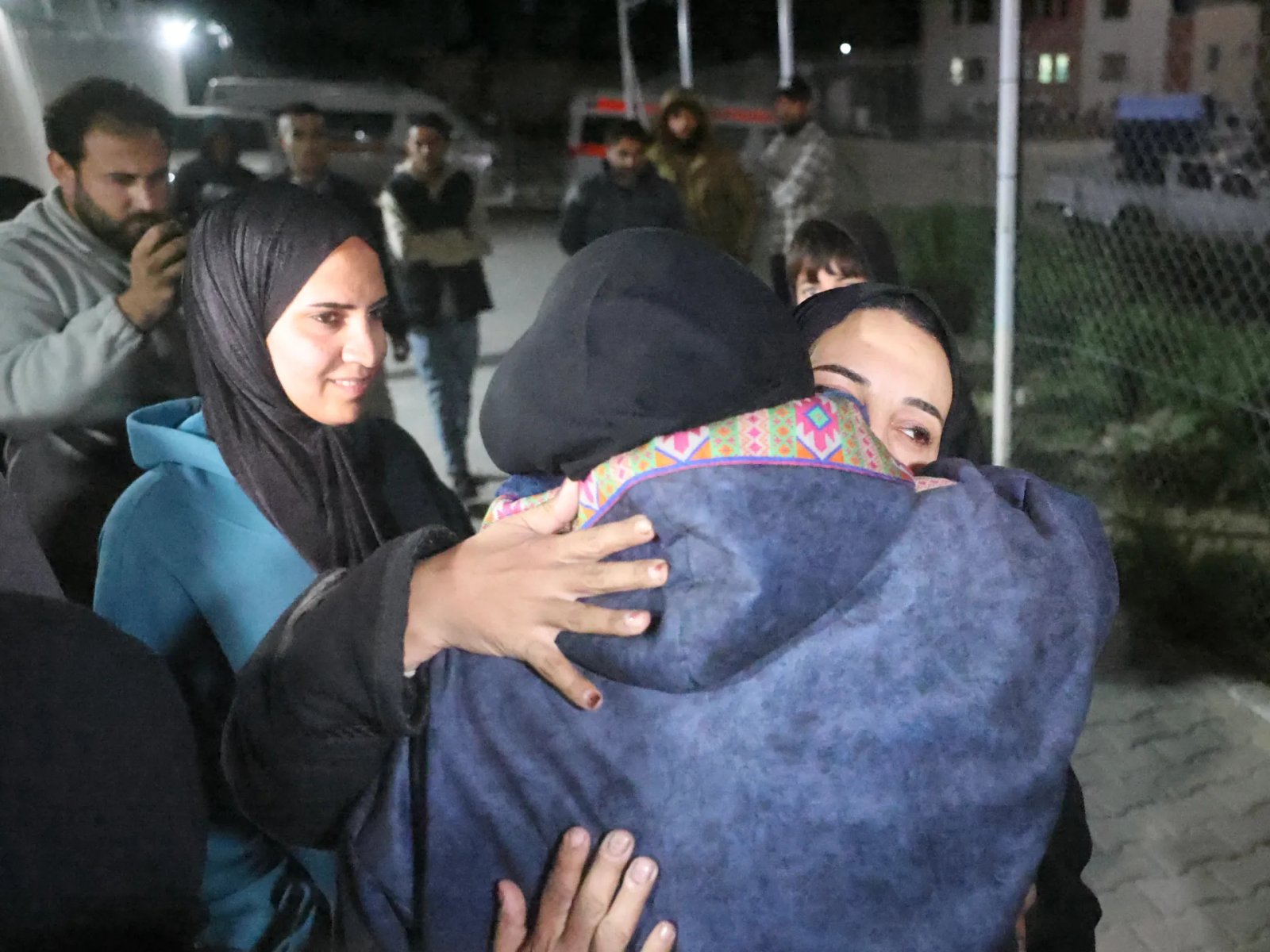
Only five medical evacuees were allowed to leave Gaza, and just 12 Palestinians were allowed to return to the war-torn territory due to delays imposed by Israeli authorities as the Rafah border crossing with Egypt finally reopened.
The long-awaited reopening of the territory’s southern border crossing with Egypt on Monday was supposed to alleviate more than 18 months of a punishing military siege on Gaza.
Recommended Stories
list of 3 itemsend of list
Instead, Israeli authorities continued with tight security restrictions and a complex bureaucratic process that allowed only a small number of people to travel in either direction – leaving or entering Gaza – and also blocked goods from passing freely through the border gate.
The number of people allowed to pass through the Rafah crossing – five sick patients leaving Gaza for treatment abroad and 12 people returning home on Monday – fell far short of the 50 people Israeli officials had promised would be permitted to move in each direction.
Al Jazeera’s Hani Mahmoud, reporting from Gaza City early on Tuesday, said the reopening of the crossing was a long time coming, and the result was far less than promised.
“This is coming after a long time of waiting,” Mahmoud said.
“They were expected to be entering the Gaza Strip throughout the past hours, but they were held for long hours, and this is in part due to the long process of security clearance set by the Israeli military on the Rafah crossing,” he said.
“We expected to see 50 Palestinians returning from Egypt into the Gaza Strip throughout the day, and that was the expectation by the family members here in the Gaza Strip,” he added.
Instead, a bus carrying 12 people, the first of its type to enter Gaza through the Rafah crossing in more than 18 months, brought the first group of people home early on Tuesday.

Among the many restrictions being imposed at the crossing by Israeli authorities is that only people who left Gaza during the war are being allowed re-entry through Rafah after undergoing an exacting security clearance process.
While only five Palestinian patients were allowed to leave the Strip on Monday through the crossing, an estimated 20,000 children and adults in dire need of medical care are waiting to depart on the Gaza side of the border for medical treatment in Egypt and elsewhere, according to Gaza health officials.
Ambulances queued for hours at the border on Monday, ready to ferry Palestinian patients across the border, Egypt’s state-run Al-Qahera News channel showed.
Al Jazeera’s Tareq Abu Azzoum, reporting from Khan Younis in southern Gaza, spoke with Randa Abu Mustafa, whose son lost sight in both his eyes due to injuries sustained in Israel’s war on the territory. He was among the five patients lucky enough to be approved to leave on Monday.
Another woman, Shimaa Abu Rida, told Al Jazeera that her daughter, Joumana, was seriously wounded in an Israeli air attack and she is still anxiously waiting to leave.
“Streams of people are lining up, hoping to cross to Egypt. But with 20,000 patients waiting for approval, most will be disappointed,” Al Jazeera’s Abu Azzoum said.
And with the entry of much-needed medicine and humanitarian supplies still blocked, Palestinian lives remain “at the mercy” of Israel, he said.
Tom Fletcher, United Nations undersecretary-general for humanitarian affairs, said the partial reopening of the Rafah crossing was insufficient, stressing that the border post must function as a genuine humanitarian corridor to deliver life-saving aid.
Qatar, which helped negotiate the “ceasefire” deal Israel continues to violate at will, welcomed the opening of the Rafah crossing as “a step in the right direction”.
In a statement, the Qatari Ministry of Foreign Affairs urged Israel to fully implement the deal “to ensure the sustainable and unhindered flow of humanitarian aid to the Strip”.
“The Ministry renews the State of Qatar’s steadfast and permanent position in support of the Palestinian cause and the resilience of the brotherly Palestinian people, based on international legitimacy resolutions and the two-state solution, which guarantees the establishment of an independent Palestinian state on the 1967 borders, with East Jerusalem as its capital,” the ministry added.
Before Israel’s genocidal war on Gaza, Rafah was the main crossing for people moving in and out of the enclave.
The territory’s handful of other crossings are all shared with Israel, while Rafah, which links with Egypt, was seized by Israeli troops during the war in May 2024.
Violence continued across the territory on Monday, with Israeli attacks killing at least three Palestinians in central and northern Gaza.
The Palestinian news agency Wafa reported that Israeli drones bombed a location close to an area where people had gathered for a funeral in Nuseirat in central Gaza, killing two people and injuring several.
Israeli forces also killed one Palestinian in Halawa Camp in the city of Jabalia in northern Gaza.
The latest casualties in Gaza on Monday from Israeli attacks raised the number of people killed since October 2023 to at least 71,800, with 171,555 injured, according to Palestinian health authorities.