dailynewsnblog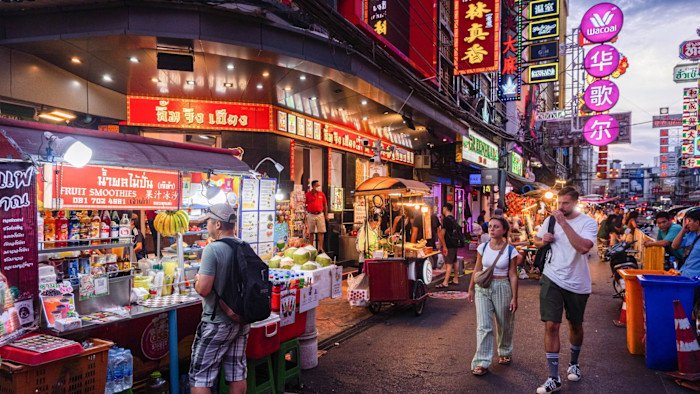
Like millions of Thais, Tipvimol Wanitthaphan came to the capital Bangkok in search of a better livelihood to support her family. For most of the past four years, she managed to do so by running a small restaurant catering to office workers.
But sales have plunged by two-thirds in recent months, as an economic downturn kept cost-conscious customers away. With losses mounting, Tipvimol, 57, plans to shut up her shop when her lease expires in April.
“Right now, a lot of people are being laid off . . . so the purchasing power is lower,” she said, adding that she was worried about her own expenses and a car loan she has yet to pay back.
For voters such as Tipvimol, the economic slowdown is central to Sunday’s general election. Thailand’s prime minister Anutin Charnvirakul and other major contenders are campaigning on pledges to restore economic and political stability.

South-east Asia’s second-largest economy has been stuck at about 2 per cent growth for the past five years, with its pivotal drivers of consumption, manufacturing and tourism all in decline.
Growth as high as 13 per cent in 1988, when Thailand was hailed as an “Asian tiger”, is now a distant memory due to a rapidly ageing and shrinking population, high household debt and a sustained decline in competitiveness.
“It has gone from being hailed as Teflon Thailand to the sick man of Asia within 10 years,” said Burin Adulwattana, chief economist at Kasikornbank. “That’s quite alarming,”
Making matters worse are prolonged political instability and frequent changes in leadership. The royalist-military establishment has been locked in a stand-off with reformist parties that have won the past two elections but have been blocked from power. Thailand has had three prime ministers in as many years.
Tourism projects and budgets have been hit by the political upheaval, said Kitti Pornsiwakit, president of the Association of Thai Tourism Marketing. With better “credibility and stability” in government, “we can go back to the best [years]”, he said.
“Everything is falling apart,” said Pipat Luengnaruemitchai, chief economist at Kiatnakin Phatra Securities. “We do not have new engines of growth. This is not a cyclical demand story. Now it’s a serious issue that requires real structural change and reforms.”

Signs of economic malaise are increasing. Banks worried about defaults are lending less, the property market is in its worst slump in three decades and headline inflation turned negative last year, signalling weak demand. Thailand’s stock market has been the worst performer in Asia over the past 12 months, declining 10 per cent in 2025 in local currency terms.
The government has projected 2 per cent growth this year, but the IMF has forecast just 1.6 per cent, the slowest among major southeast Asian economies.
“We are concerned about an economic recession,” Kriengkrai Thiennukul, chair of the Federation of Thai Industries said last month. He warned of pressures from 19 per cent US tariffs and the baht’s gains against the dollar, which undercut the country’s important export sectors.
“The new government must make serious efforts to transform old industries into new ones,” he said.

Manufacturing has been on the decline for years, weighed down by weak domestic demand, an influx of cheaper Chinese goods and intense competition from newer manufacturing hubs such as Vietnam.
That has also taken a toll on Thailand’s once mighty auto sector. The country was a regional hub for car manufacturing but Nissan, Honda, Suzuki and others have shut down factories or scaled back production in recent years.
Yupin Boonsirichan, chair of the Automotive Industry Club at the Federation of Thai Industries, said the car industry’s “significant” slowdown had hit the job market and industrial output.
“Vehicle output, domestic sales and plant utilisation rates have declined from pre-pandemic and peak levels,” she said, calling for government incentives to stimulate investment and domestic demand.

Economists said Thailand would also have to drop protectionist policies, ease restrictions on foreign investment and improve infrastructure to take advantage of potential growth areas such as data centres, high-value manufacturing, pharmaceuticals and biotechnology.
But a more immediate task would be to revive the fortunes of the Thai consumer.
Household debt-to-GDP is close to 90 per cent, among the highest levels in Asia, as wages have remained stagnant. And Thailand’s population has been shrinking for four years, with the birth rate hitting a 75-year low in 2025.
Many Thais are cutting back on expenses and discretionary spending.
“I get fewer and fewer customers,” said Tewanaree Sawangnate, who runs a hair salon in Bangkok. The 45-year-old is now looking to save more. “I buy fewer personal items for myself and focus more on [purchases for] my children,” she said while shopping at a store selling goods for Bt20 (US$0.62).
The economy is “not in the ICU”, but “if the government doesn’t address these structural challenges, things will look a lot worse from here”, added Kasikornbank’s Burin.
Tourism, another economic engine, is sputtering and this has had a knock-on effect on retail, agriculture and hotel construction, said Kitti. Thailand recorded 32.9mn foreign visitors in 2025, a 7 per cent fall from the previous year and still below the pre-pandemic peak of 40mn tourists in 2019.
The industry has been hit by safety concerns after a Chinese actor was abducted by a cyber scam operation last year, as well as increasing competition from countries such as Vietnam and Japan.

The dour sentiment is evident across Bangkok, where restaurants are deserted, hotels are rarely full and retailers are struggling to stay afloat. At Banthat Thong road, once a bustling street food destination for tourists, several eateries have been forced to shut down.
At the Delidelo Cafe in the north of the capital, Tipvimol has begun to cut back on personal expenses, and has turned to her daughter to cover her car loan. “I have stopped going to restaurants or hanging out with friends,” she said. “If we go out, it costs a lot of money,” she said.
Additional reporting by Khemmapat Rojwanichkun in Bangkok and data visualisation by Haohsiang Ko in Hong Kong