dailynewsnblog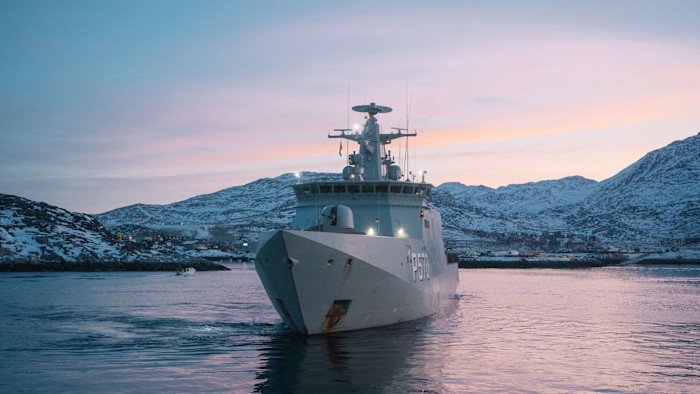
Unlock the White House Watch newsletter for free
Your guide to what Trump’s second term means for Washington, business and the world
The writer is a senior fellow at the Carnegie Endowment for International Peace and author of ‘China’s Law of the Sea: The New Rules of Maritime Order’
US aggression against adversaries and allies alike is changing the strategic geography of the globe. Russia may be first to benefit from Donald Trump’s erratic campaign against Nato to “get Greenland”. But only China stands to reap long-term strategic rewards across the globe — including in the Arctic region that Washington claims to be defending.
With each new and unexpected mis-step in the western hemisphere — from abducting Venezuela’s leader to talk of conquering a Nato ally’s territory to threats to subjugate Canada — Trump is opening new and unexpected avenues for Chinese access and influence.
For those who seek consolation in Trump’s propensity to chicken out or lose interest in matters of state, this radical lurch into hemispheric defence policy should be of grave concern. Neither Trump’s latest tariff climbdown, nor the announced framework for a deal on Greenland will halt the broader trends accruing in Beijing’s favour. The world is reckoning with a ruptured postwar order, and China is filling the void by default as the relatively stable, safe great power. For now, Beijing can simply watch from the sidelines as its opponent makes unforced strategic errors.
As Trump takes an axe to Pax Americana in the western hemisphere, Xi Jinping will continue to book gains in the western Pacific, where China’s primary strategic interests lie. China’s military already enjoys growing freedom of action around Taiwan — aided by the redeployment of key US Navy assets to the Caribbean and Middle East. Under these permissive conditions, Xi can afford to bide his time and marshal China’s resources for future conflicts closer to home, exploiting any opportunity to break free of America’s perceived “encirclement and containment” of China.
Trump is correct that securing the Greenland-Iceland-UK Gap and the Panama Canal are vital for US national interests; preventing an enemy from controlling or denying these chokepoints is indeed a “homeland security” concern. But his impulsive moves, like tariffs and invasion threats, perversely elevate China’s interests. With no reason to challenge the US militarily in its own hemisphere — and no naval or military presence near Greenland nor any actual “control” of the Panama Canal — China can play its strongest cards in America’s backyard, almost all of which are economic in nature.
Even a hypothetical revival of Venezuela’s oil production could not keep pace with China’s existing capacity across Latin America. Its state-owned enterprises operate at scale extracting and importing oil, gas, lithium, copper and other critical minerals that fuel China’s accelerating dominance in batteries and electric vehicles.

The Greenland gambit betrays a basic misunderstanding of polar geography and a misreading of China’s strategic options. China’s sole access point to the Arctic Ocean is on the other side of the world, around Japan and transiting through the US Aleutian Islands before entering the Russian Arctic through the Bering Strait. Beijing’s interest lies primarily in opening the new commercial sea lanes emerging from the melting polar ice. The Northern Sea Route — running along Russia’s northern coast — is rapidly becoming China’s express shipping route to tap into Russia’s vast energy and mineral resources and access northern Europe’s rich markets.
China’s self-appointed “near-Arctic” status cannot change the geographic reality that its ships and aircraft must navigate through Japanese and US waters to access the Arctic Ocean. And Russia is the biggest impediment to Chinese encroachment in Moscow’s strategic backyard. No Chinese naval or coastguard vessels have been reported near Greenland by anyone but Donald Trump; that’s because to date they operate only in the Bering and Chukchi seas bordering Alaska. The Trump administration is ignoring — and likely exacerbating — the genuine strategic challenge China poses on the other side of Asia, largely in Alaskan waters and airspace.
Meanwhile, Canada — a country with a recent history of diplomatic friction with China — is becoming a supplicant to Beijing by necessity, choosing the least-worst great power option available. As in Greenland and Panama, Trump’s threat to seize allies’ sovereign territory is one they cannot accept. China is therefore becoming the only realistic hedge for middle powers seeking relief from the American threat.
The Atlantic and the Caribbean will remain US lakes. But China will play a progressively freer hand in an expanding sphere of influence in its home region and across the globe. Trump’s manufactured chaos across the western hemisphere bolsters Xi’s confidence and hastens the senseless self-destruction of a successful postwar order.