dailynewsnblog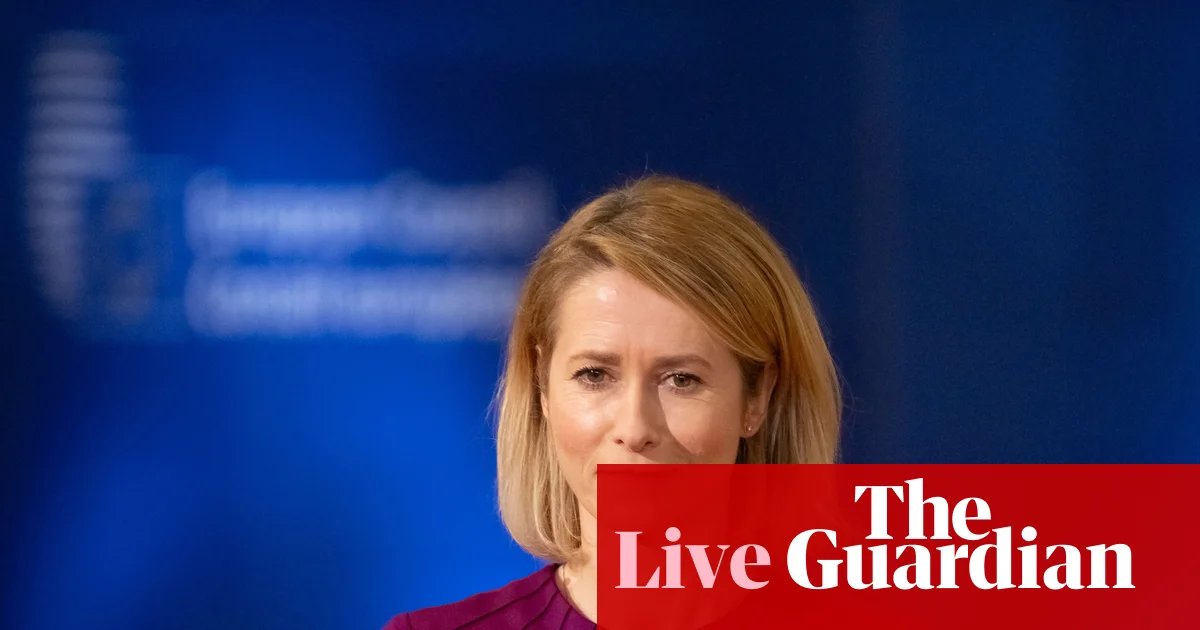
Key events
Morning opening: Our own Groundhog Day

Jakub Krupa
After 378 days, January is finally over, and so welcome to the new year month of February.
It’s a Groundhog Day in the US. Although, let’s be honest, you would be forgiven for feeling like you have been living your own personal time loop since 20 January last year lately.
The movie-famous groundhog will make an appearance at some point this afternoon to reveal if we should expect a long winter, or an early spring. As doom and gloom dominates the headlines, we’re all rooting for a bit of sun, Phil. Don’t let us down.
But over in Europe, we still have lots of more important topics to cover – even though, indeed, so many of them have been making the headlines for a long time now.
Norway’s prime minister Jonas Gahr Støre and EU top diplomat Kaja Kallas are speaking at the Oslo Security Conference this morning, warning about the end of the world as we know it, and how Europe needs to adapt to the new realities, not just with aggressive Russia, but also a rapidly changing nature of Europe’s alliance with the US.
Kallas in particular warned that the US shift away from Europe is a “long term” process that the bloc needs to urgently adapt to.
“Actually, if we look at the transatlantic policy, or we look at what, what the US administration … the decisions that they have taken. it didn’t really start with President Trump. I think there’s a lot of convergence with the policies of different administrations. So … it might be so easy to think that one personality comes, there are elections, then another one, but I think it’s a long term that we really need to look at.”
She said that back in October, over 40% of Americans considered Europeans their closest allies, a view shared by only 14% of Europeans, adding that we have since “seen a lot happening, so I think it might be even lower.” (Think: tariffs, Greenland, Nato.)
Sounds familiar? Yeah, it’s definitely Groundhog Day today.
They have no definitive answers on how to resolve it – although both hinted at ‘more Europe’ as part of the solution – but the task is getting increasingly urgent. Let’s see what they can come up with. More lines to come from this event, no doubt.
Separately, I will also keep an eye on Ukraine with the latest there, as the wartorn country – already struggling with energy and heat production amid continuing Russian strikes – face extreme cold, with temperatures falling below 20 Celsius.
The broader central and eastern European region is also affected. It’s -20 Celsius in Vilnius, -18 Celsius in Warsaw, -12 in Riga, and -9 in Berlin.
Spring cannot come early enough.
It’s Monday, 2 February 2026, it’s Jakub Krupa here, and this is Europe Live.
Good morning.