dailynewsnblog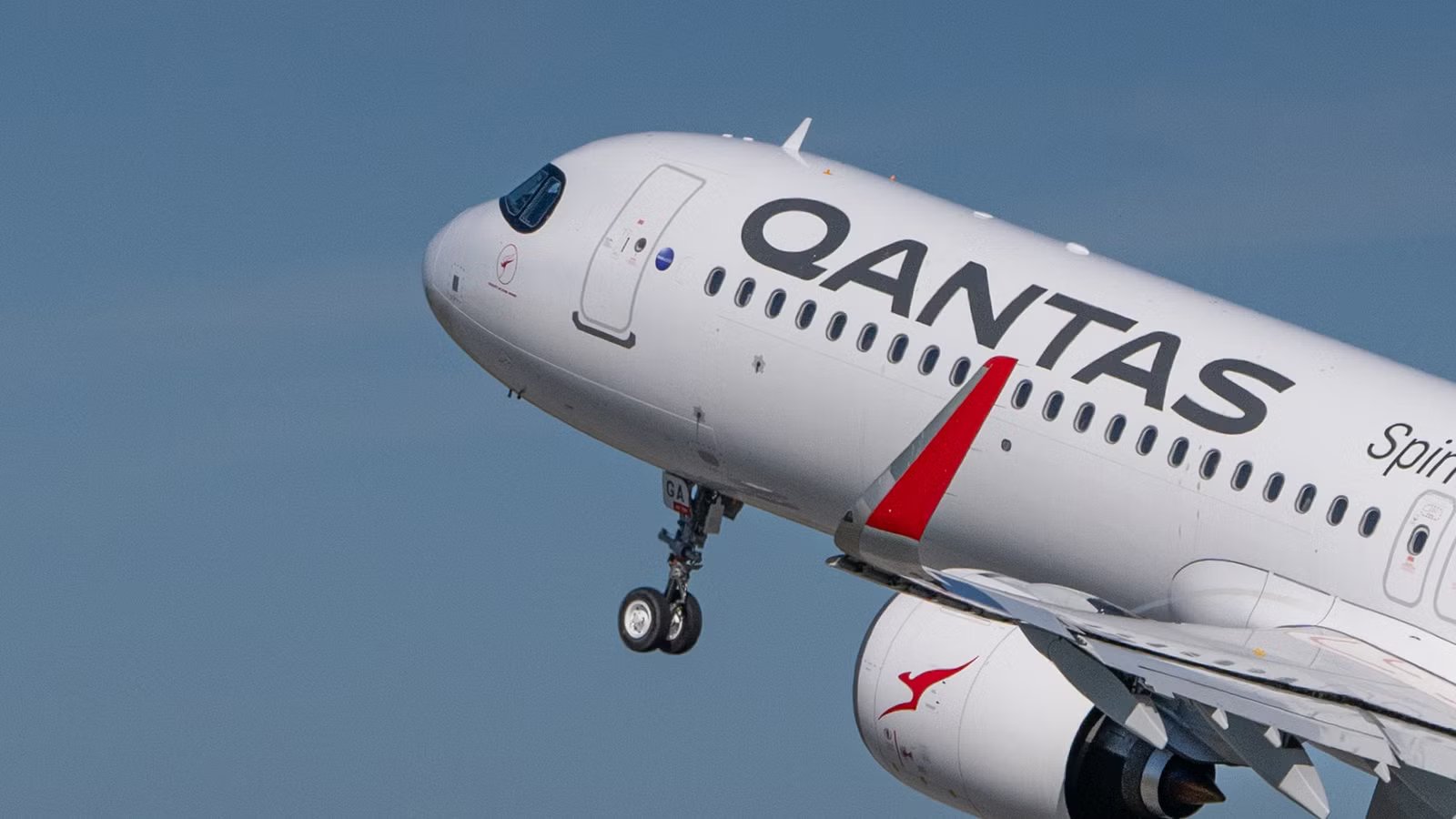
Qantas will take delivery of its fourth Airbus A321XLR, which has been given tail number VH-OGD, in Australia this month. It will be the first in the airline’s A321XLR fleet to include a fourth lavatory. This additional toilet, which is placed just aft of the forward cabin, responds to criticism of the first three jets’ economy passenger-to-toilet ratio on long-haul flights.
Space for this additional toilet obviously had to come from somewhere, and, as a result, the airline had to introduce a revised layout that removes an economy row. This cuts overall passenger capacity by three seats, dropping from 200 to 197. Qantas says that the first three A321XLRs will be retrofitted later. As for passengers, the airline is trading a revenue hit for a large comfort upgrade.
A Design Created By Early In-Service Feedback

This lavatory tweak is a mid-stream cabin redesign driven primarily by early in-service feedback. Qantas has already introduced the Airbus A321XLR to passenger service in September 2025, initially flying from Sydney (SYD) to Melbourne (MEL) and Sydney (SYD) to Perth (PER). The airline touted larger overhead bins, faster Wi-Fi, and lower fuel burn than the Boeing 737s, which the jet is set to replace.
Those first three aircraft featured a 200-seat layout with 20 business and 180 economy-class seats, with only three toilets in total. From this new jet onward, Qantas will now shift to having four toilets by adding one in economy and reducing capacity to 197 seats. This improves the economy-class toilet ratio from around one per 90 passengers to around one per 59 passengers. The airline says that the first three jets will be retrofitted during future maintenance, all while deliveries ramp towards a target figure of seven by June.
A Real Network-And-Revenue Decision

Giving up three seats sounds somewhat trivial, but it is a legitimate network-and-revenue decision. On paper, fewer seats raise unit costs and reduce the upside on peak days, especially on trunk routes where Qantas can sell every seat. It also adds hardware, water, and servicing time, but those costs are small compared with protecting satisfaction on long-haul services. Yet the early math creates its own costs, as passengers had to tolerate just one toilet for 90 passengers, according to The Australian.
That resulted consistently in longer queues, significantly more aisle congestion, and pressure on cabin crew to police access to the business-class lavatory, all of which can hurt satisfaction on the five-hour sectors. A fourth lavatory also spreads wear, lowers the odds of an out-of-service toilet, and can reduce conflicts onboard.
For these reasons, it was incredibly important for Qantas to decide to invest in a larger aircraft and add this lavatory. For a premium-leaning brand, optics undoubtedly matter. The Airbus A321XLR is meant to feel like an upgrade over the Boeing 737, not a squeeze. This is thus a defensible swap on Australia’s longest individual domestic legs, something which could ultimately be a move that the boardroom and investors will support.

All You Need To Know: These Are Qantas’ First 2 Airbus A321XLR Routes
A new era takes flight as Qantas unveils its first two routes for the game-changing Airbus A321XLR.
The Aircraft Will Enter Service On Flights Across The Region

Qantas is now rolling out the Airbus A321XLR as a Boeing 737 successor, and a step-change in narrowbody product. The first aircraft entered service on transcontinental services, and the carrier has signaled that the type will lean heavily into long domestic sectors where range and extra payload capabilities matter.
The fourth jet’s added lavatory helps add to this plan, amplifying comfort on long domestic flights. The best-equipped airframes are likely to spend more time crossing the continent than doing short hops. Longer term, the Airbus A321XLR’s impressive reach gives Qantas a single-aisle option for thinner international markets, such as secondary links from the east coast or Perth to Pacific islands and Southeast Asia that do not justify a widebody.
Qantas has also ordered additional Airbus A321XLRs with enhanced premium cabins including lie-flat seats. This is aimed at longer flights to some international markets. More rotation specifics will undoubtedly be released when these jets actually enter service.