dailynewsnblog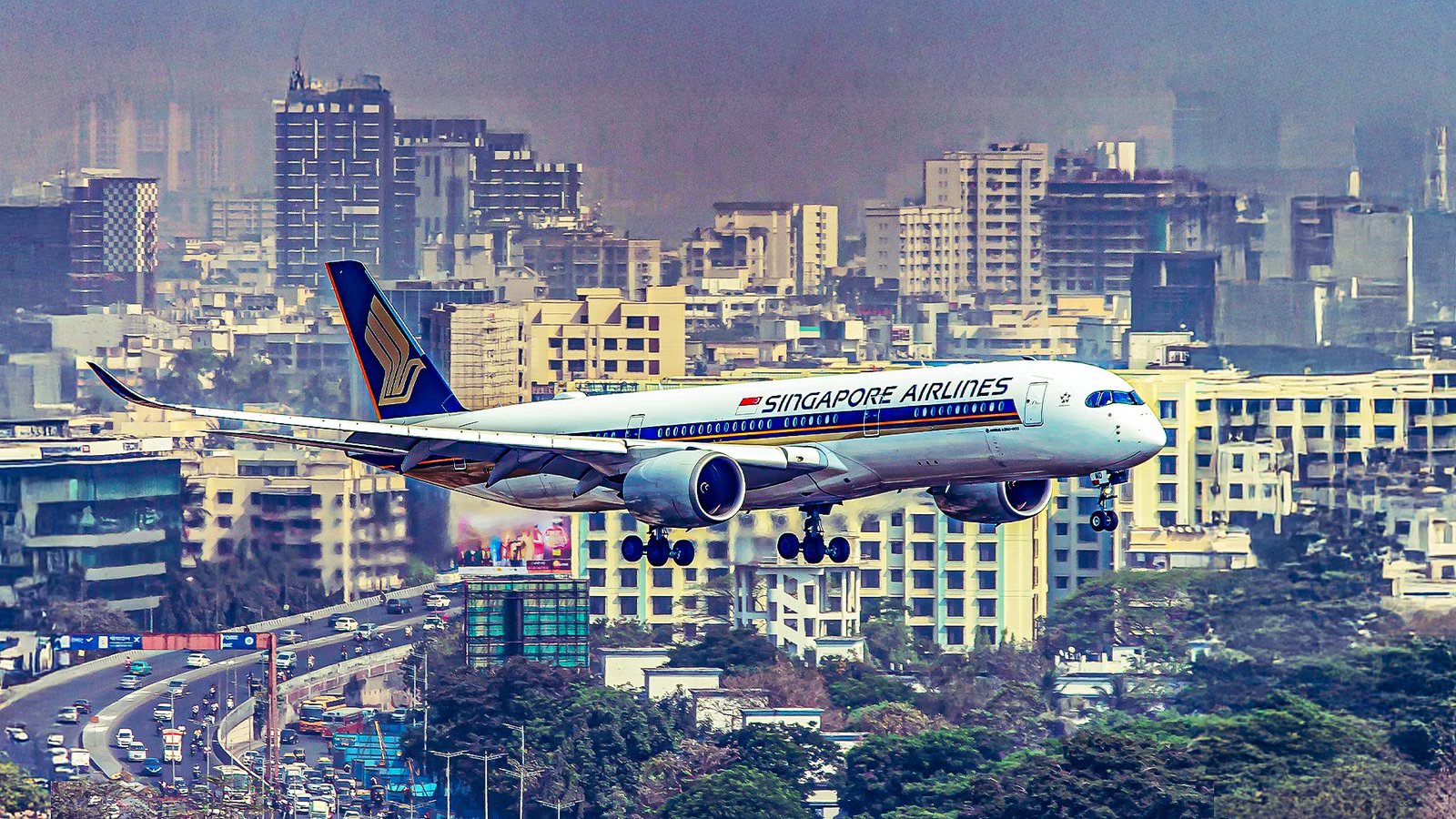
The A350-900 is a prolific jet in Airbus’ repertoire, with great success among many airlines around the world. A special variant, the Airbus A350-900ULR, promises to deliver a comfortable and fuel-efficient ride for travelers over even more astounding distances than ever before.
Flying further

Aiming to compete with the Boeing 777-200LR and the Boeing 787-10, Airbus asserted that the A350-900ULR performs better than the Boeing 777-200ER in terms of empty weight, fuel consumption, and operational expenses. The purpose of the A350-900ULR is to serve non-stop flights on ultra-long stretches, which typically last as long as 18 or 19 hours. Its design addresses the rising demand for greater flight durations without compromising passenger experience.
The extra range meets the needs of passengers on routes like  Singapore Airlines‘ flights to Newark and JFK. The carrier is taking advantage of the A350-900ULR’s capabilities to reach longer, new customer demographics that look for flights without stopovers.
The A350-900ULR increases the baseline Airbus A350-900‘s maximum nonstop range by about 1,400 nautical miles (2,593 kilometers). This ultra-long-range version is currently being used to connect city pairs over 17,000 kilometers (9,182 nautical miles) apart, specifically from Singapore to New York.
The Airbus A350 originally aimed at enhancing fuel efficiency in direct competition with Boeing’s 787Dreamliner. The platform has been essential for Airbus in its rivalry with Boeing to dominate the global airline market. The first A350 took its first flight from Blagnac Airport in Toulouse, France, in 2013.
The Dreamliner, popular since its 2009 debut, has faced issues since entering service due to various safety concerns. With rising fuel costs and unstable passenger numbers, airlines have been seeking ever more efficient planes. To heed this call, Airbus introduced the A350, which is powered by Rolls-Royce Trent XWB engines that consume about 25% less fuel than its predecessors.
The A350-900 emits 25% less CO2 than its predecessor, the Airbus A340-300, making it one of the most eco-friendly long-haul aircraft in the world. Constructed largely from advanced composite materials like carbon fiber, the A350 aimed to minimize its weight more than any big jet before it. Airbus secured over 600 orders for the aircraft before launching the production version.
The experience of the passenger is the focus of the Airbus A350-900’s design. In comparison to its predecessors, its interior has wider seats, bigger windows, and higher ceilings in the cabin area. Air filtering systems on the aircraft also provide cleaner air circulation and reduce passenger fatigue during long-haul flights.
The cabin is also quieter than previous generations of Airbus passenger jets. Today, the largest operator of this outstanding airliner is Singapore Airlines, which has 65 of the type in its fleet.
Ultra long-range in-action

According to Flightradar24, the longest scheduled flight in the world is Singapore Airlines flight SQ21, which runs from New York to Singapore for 18 hours and 45 minutes. Singapore Airlines regained the distinction of longest flight by distance when it resumed its Singapore-New York services in 2023. In a news release by Airbus, the European manufacturer stated that:
“With the delivery of the first A350-900ULR to launch customer Singapore Airlines, the A350 XWB Family is positioned to lead the way for new ultra-long-range operations.”
Singapore Airlines was only able to relaunch the world’s longest flight thanks to the A350-900ULR. As quoted in a report by Business Insider, the carrier said that “it is the only one that is, in our view, capable of doing this mission economically.” If you want to travel to Singapore, Europe, and North America, Singapore Airlines has a unique round-the-world ticket according to Round About Travel.
On this itinerary, you may fly from Singapore to any of its destinations in Europe, then use one of its two transatlantic routes from Manchester to Houston (although this route is ceasing shortly) or Frankfurt to New York JFK. You can then take the ultra-long-range A350 plane from Newark or New York JFK directly back to Singapore, or, if you end up out on the West Coast, there are flights from Los Angeles, San Francisco, and Seattle.
Rising fuel prices rendered it uneconomical to use Airbus A340-500s to travel the 8,285 NM Singapore-Newark route: no longer feasible, the route was suspended in 2013. Singapore Airlines and travelers who relied on this route were both left with no options due to the economic forces of the time.
Following its success at Singapore Airlines, Airbus has offered the A350-900ULR’s improvements on any future order of an A350-900 type. The larger winglets, increased wing twist, and greater maximum takeoff weight are all available. Even during the first deliveries of the A350-900ULR, Airbus has openly discussed the possibility of an A350-1000 ultra-long-haul version as well.
Thanks to the innovative design modifications to Airbus’ prolific widebody, this landmark air corridor was rescued from abandonment. Singapore Airlines and the flyers that count on its special air routes are once again able to make the epic journey between the hemispheres and over the Earth’s North Pole in comfort while flying the most efficient and environmentally friendly jet for the job.
Easily modified

The modifications to incorporate an A350-900 into the ULR had “no impact” on the production lines in Toulouse, said Marisa Lucas-Ugena, Airbus’ A350 Marketing Director, in an interview. She added that the two variants’ manufacture times are the same, and, in 2018, Airbus was aiming to produce 10 A350s every month to fulfill 832 orders for the A350 family.
Singapore Airlines had ordered 67 A350s, and as a 40-year customer with a big investment on the books, making the relatively minor customization was more than acceptable. Singapore only purchased seven units of the ULR in the end, and, thus far, no other airline has purchased any others.
The A350-900ULR beats out the standard A350-900 by 1,400 nautical miles (2,593 kilometers) using clever optimization of the existing airframe to minimize the differences between the two jets. Along with being a previous client of the Airbus A340, A330, A310, and A300, Singapore Airlines also operates the A380.
Singapore Airlines and Airbus have a strong relationship that made this unique aircraft possible. The long-legged jet flies a very special route that connects opposite ends of the globe, allowing thousands of travelers per year to make the epic journey across the earth.
If it were not for the ultra-long-range A350, this special air corridor would have fallen silent and empty. Thankfully, because the -900ULR is one of the most eco-friendly airplanes on the planet, it can continue to navigate the skies without fear of leaving any harm in its wake.
A350 by the numbers

In response to the Boeing 787 Dreamliner, the original A350 concept was put forth in 2004. It was meant to be an improvement on the Airbus A330 with composite wings, all-new winglets, and modernized higher-efficiency engines. The lack of market backing led Airbus to choose a clean-sheet ‘XWB’ (eXtra Wide Body) design in 2006.
“We are keen to expand our fleet size, acquiring the latest technology aircraft to offer a convenient and memorable onboard experience.” – Ethiopian Airlines Group CEO Mesfin Tasew
From Airbus, below is a comprehensive list of specifications for the standard A350-900:
- Maximum seating capacity: 440 seats
- Typical 3-class seating: 300–350 seats
- Maximum pallets/containers: 11 pallets / 36 LD3
- Range: 8,500 NM (15,742 km)
- Cruise speed: Mach 0.85 (approx. 488 knots or 903 km/h)
- Max ramp weight: 313.15 tons (283.90 tonnes)
- Max take-off weight (MTOW): 312.28 tons (283.00 tonnes)
- Max landing weight: 228.17 tons (207.00 tonnes)
- Max zero fuel weight: 215.87 tons (195.70 tonnes)
- Max fuel capacity: 43,953 US gal (166,488 liters)
- Overall length: 219.16 ft (66.80 m)
- Cabin length: 167.45 ft (51.04 m)
- Fuselage width: 19.55 ft (5.96 m)
- Max cabin width: 18.41 ft (5.61 m)
- Wing span: 212.46 ft (64.75 m)
- Height: 55.94 ft (17.05 m)
- Track: 34.78 ft (10.60 m)
- Wheelbase: 94.02 ft (28.66 m)
Since the A350-900ULR has no additional structural modifications, it bears the same type certificate and model name as the standard A350.
No supplementary fuel tanks are installed: instead, a modified fuel system is integrated to utilize the additional space in the center wing box, allowing for a greater fuel capacity. Due to operating constraints, the front cargo compartment is also deactivated unless a customer specifically requests for it to be restored.
The key metrics (per Aero Corner) of the ultra-long-range A350-900 are listed below:
- Typical seating: 161 seats (67 Business + 94 Premium Economy in Singapore Airlines’ configuration)
- Overall length: 219.16 ft (66.8 m)
- Wing span: 212.46 ft (64.75 m)
- MTOW: 617,294 lb (280 t)
- Max fuel capacity: approx. 34,500 US gal (130.7 t, or 288,000 lb of fuel)
- Range: 9,700 NM (17,964 km)
- Cruise speed: Mach 0.85 (approx. 488 knots or 903 km/h)
- Engines: 2 × Rolls-Royce Trent XWB-84