dailynewsnblog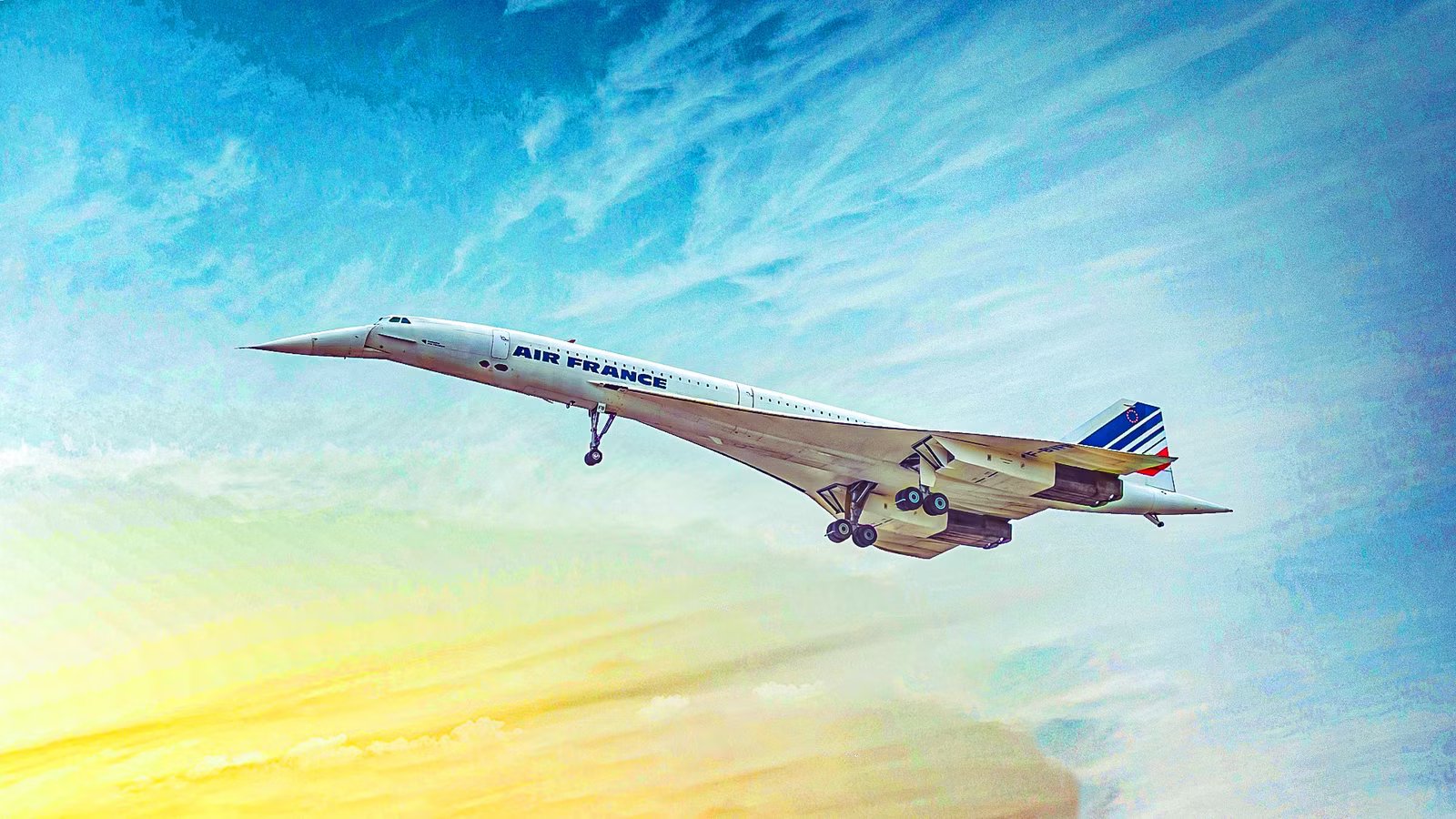
Concorde was famously a joint Anglo-French national project planned and funded by the two countries as a prestige project. The respective flag carriers, British Airways and Air France, were essentially gifted seven examples each by the governments, as the aircraft had no realistic chance of making a profit if the airlines had to buy them outright. So, which country had the honor of flying the aircraft on its inaugural paying flight?
The answer is both. January 21, 1976, saw two simultaneous inaugural flights, one from London’s Heathrow and one from Paris’ Charles de Gaulle, which had just opened as the city’s major aviation hub. The first flights of the Concorde were a celebration of national pride, engineering achievement, and were steeped in the geopolitics of the time.
Remembering The First Commercial Concorde Flight

It has now been 50 years since Concorde first flew its inaugural flight from London Heathrow on January 21, 1976, to Bahrain. The aircraft was to remain in service for 27 years before retiring in 2003. There are some who still remember Concorde’s first commercial flight. Francine Carville, from Sunbury, was a cabin crew member for the first flight and told the BBC, “I couldn’t believe the number of people standing on the roads around the airport waiting for takeoff.” She recalled that working on the supersonic aircraft was “very exciting.”
Carville remembered that people on the aircraft fell silent as the aircraft approached Mach 2. The passengers all had a glass of champagne and clapped and cheered as the aircraft reached the milestone. As a reminder, this was a different time. Being pre-9/11, passengers were allowed to go up and visit the flight deck, and “everyone was smoking cigars and having a brandy.“
Smoking was considered an indispensable part of the experience of flying in the early days. Even the hydrogen-filled Zeppelin airship, the Hindenburg, was built with a smoking room. To celebrate 50 years,  Air France released a documentary offering “40 minutes of immersion into the heart of the legendary aircraft,” interviewing five people who worked on the aircraft.
The First Two Inaugural Flights

The two inaugural routes were not what one might have expected. Concorde was banned from overland routes. What would be its famous London/Paris to New York flight was still in the future and uncertain. Its inaugural routes were very different. The British flight departed Heathrow and flew to Bahrain, while the French one flew to Rio de Janeiro in Brazil with a refueling stop in Dakar, Senegal. From the get-go, Concorde was hamstrung by banned or tightly restricted supersonic flights over the US, Canada, and most of Europe.
This made most routes unusable on Mach 2 until the ongoing political fights reached an agreement. The British route to Bahrain was chosen because it allowed supersonic cruises over the Bay of Biscay, Mediterranean, and Arabian Sea with only relatively short overland subsonic land legs. Bahrain was also a former British protectorate that had only been independent for five years (since 1971) and was willing to accept Concorde, noise or not.
|
Twin Concorde inaugural flights (per Heritage Concorde) |
|
|---|---|
|
British Airways |
|
|
Route |
London-Heathrow to Bahrain |
|
Duration |
4 hours, 10 minutes |
|
Aircraft |
G-BOAA |
|
Fare |
£676.20 ($1,366) |
|
Air France |
|
|
Route |
Paris-CDG to Rio de Janeiro (via Dakar) |
|
Duration |
7 hours, 26 minutes |
|
Aircraft |
F-BVFA |
|
Fare |
5,980 French francs ($1,272) |
The reasons for the Air France route were similar, including that the route was mostly overwater. The inaugural French flight stopped in the former French colony of Senegal (Dakar was also an aviation hub), and the long-haul nature of the route to Brazil allowed France to emphasize its global reach and that it was operating outside the Anglo-US world. In short, these flights and routes were very political.
Remembering The First Flights

Reporting on the 50th anniversary of the first commercial flight, the BBC interviewed Mike Bannister, who flew Concorde’s last commercial journey for  British Airways. Now 77, Bannister became the youngest person to fly the supersonic aircraft in 1977 when he was aged 28. Bannister said, “It’s fascinating to think that Concorde was designed in the late 1950s and early 1960s and there’s still nothing that can do all the things it could all that time ago.”
Bannister recollected that most of the customers were businesspeople or world leaders, although some just saved up to enjoy the once-in-a-lifetime flight on Concorde. He added, “We really enjoyed carrying those people who were doing the trip of a lifetime because they were the ones who got really excited.” In the end, Concorde flew almost 50,000 times and carried over 2.5 million passengers while in service with British Airways.
French people on the airline remember meals were served quickly, around an hour after take off. Air France’s Concorde flights had a separate dedicated check-in, and boarding occurred 35 minutes before departure directly from the lounge. Cabin crew from both BA and Air France remember that many of the passengers were regulars, and people all tended to get to know each other.
From Avoiding The US To Virtually US Only

While Concorde would become most famous for its transatlantic routes to the US, its inaugural flights deliberately avoided the United States. The US was the obvious market for the jet, but it wasn’t just unavailable; it was actively hostile to the European aircraft. Even subsonic Concorde flights over the US were an issue. The FAA had imposed a blanket ban on civil supersonic flights over US land in 1973, three years prior.
Limited permission was granted in May 1976 for it to fly to Washington Dulles on a trial basis, with BA and the Air Force both responding with thrice-weekly flights to the US capital. The first flights to New York—JFK started in late 1977 as an initial ban was lifted, although the Port Authority and local activists continued to protest. This shaky start highlights how the aircraft was developed without a market, and its popular transatlantic routes were uncertain when it entered commercial service.
While New York City tried (and failed) to block Concorde, it was more straightforward to fly it to Dulles, as that was federal territory. In the end, BA flew Concorde to Bahrain until 1980. By the time it ended in 2003, the British Airways routes it serviced were from London to New York-JFK and Barbados. The routes to Dulles, Miami, Singapore, and Dallas had come and gone. Air France’s Concordes ended with their singular route to JFK, while previous routes had included Rio de Janeiro, Washington Dulles, and seasonal flights to Venezuela’s Caracas.

A Timeline Of Concorde’s Development & Entry Into Service
The supersonic airliner entered service 49 years ago today.
The Twin Inaugural Concordes

The British Airways flight number was BA300, with the aircraft registered G-BOAA, and was flown by Captain Norman Todd. The flight to Bahrain took around four hours and 10 minutes, reaching Mach 2 along the way. The French Concorde was registered F-BVFA (Fox Alpha) and its flight took seven hours and 26 minutes, including the stop in Dakar.
According to Heritage Concorde, the aircraft G-BOAA was first registered in March 1974 with the British Aircraft Corporation and went on to be the first Concorde to complete the 12,000 flying hours’ maintenance check. It flew in 1990 to celebrate the 50th anniversary of the Battle of Britain. In 1993, the aircraft received a major upgrade to its rudder and had its last commercial flight in 2000. It is on display at the National Museum of Flight, East Fortune Airfield, Scotland.
The French aircraft (F-BVFA) first flew in 1975 before being delivered in December 1975. It completed a major overhaul in 1990 and had its final passenger flight (AF001) from New York-JFK to Paris-CDG in May 2003. The aircraft is now on display at the Smithsonian National Air and Space Museum’s Steven F. Udvar-Hazy Center at Dulles Airport in Washington. It flew for 17,824 hours and completed 6,780 landings with 5,504 supersonic flights.
Fares On The First Concorde Flights

As stated, paradoxically, the route that would define Concorde (London/Paris to New York-JFK) was banned on inauguration day. The first commercial flights may have been paid flights, but they were first and foremost national prestige flights. Even when the US granted Concorde an exception to serve New York-JFK, the airport fought back to keep Concorde out before a Supreme Court ruling overturned a lower-court ruling on October 17, 1977.
Reinforcing the prestige nature of flights, while they were technically revenue-generating, only around 27 of the BA flights had paying customers. Most were guests, although more were paying passengers on the Air France flight. Both aircraft carried around 100 people on these flights. The fares on the British flight were £676.20 (about $1,366 at that time). Adjusted for inflation, this was roughly comparable to the cost of flying first class today. At the time, Concorde fares were set at first-class plus 20%.
The fares on the French aircraft were around 5,980 French francs, which at the time was around $1,272, making the fare comparable to the British fare, even though it was a longer flight. The interior was set out in a single cabin with all seats considered “first class,” although flying was cramped compared with the more spacious Boeing 747. Seats were configured 2–2 with no middle seats. Additionally, the windows were small and widely spaced, while the seats were narrow with modest legroom. The favored seats were typically in the middle (rows 6 to 8).