dailynewsnblog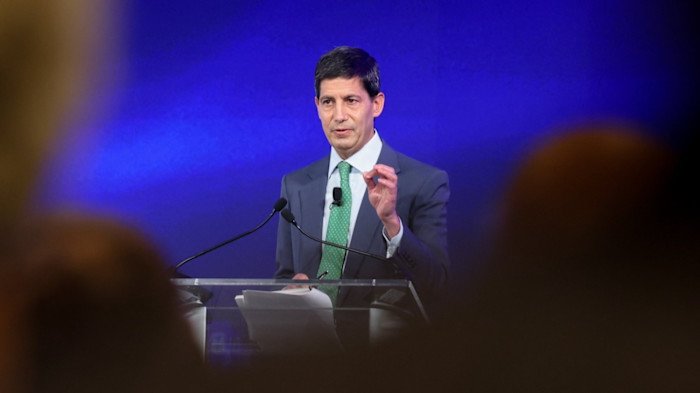
Donald Trump has said he will nominate Kevin Warsh as Federal Reserve chair, backing a well-known policymaker to run the US central bank at a time when it is facing one of the most severe tests of its independence.
In a post on his Truth Social platform on Friday, the US president wrote: “I am pleased to announce that I am nominating Kevin Warsh to be the CHAIRMAN OF THE BOARD OF GOVERNORS OF THE FEDERAL RESERVE SYSTEM.”
He added: “I have known Kevin for a long period of time, and have no doubt that he will go down as one of the GREAT Fed Chairmen, maybe the best. On top of everything else, he is ‘central casting,’ and he will never let you down. Congratulations Kevin!”
Warsh, a former Fed governor, will succeed Jay Powell when his term as Fed chair ends in May, subject to Senate approval.
The Stanford academic and partner at billionaire investor Stanley Druckenmiller’s family office is well regarded on Wall Street and his nomination will ease worries about the president’s relentless pressure campaign to force the Fed to lower borrowing costs.
Trump’s decision to nominate Warsh caps the most contentious race to head the world’s most important central bank in recent memory. It comes at a time when economic growth is strong, but inflation remains elevated and the jobs market is showing signs of cooling after years of robust hiring.
Warsh, who served as a Fed governor during the 2008 financial crisis, has echoed Treasury secretary Scott Bessent’s calls for an overhaul of the Fed’s governance, calling for “regime change” at the central bank.
However, some viewed him as a long shot since his calls to shrink the Fed’s balance sheet could clash with the president’s demands for low rates. Long-term US borrowing costs ticked up after reports on Thursday evening that Trump was preparing to choose Warsh for Fed chair.
Warsh had already interviewed for the top job once, in 2017, when Trump instead went for Powell, a man he quickly fell out with and has since labelled a “moron” and “stubborn mule” over his reluctance to slash rates.
Warsh’s candidacy received a boost after bond investors and Wall Street executives voiced concerns that the man who was for a long time his closest rival, White House economist Kevin Hassett, would lower rates indiscriminately.
Jamie Dimon, JPMorgan Chase chief executive, signalled his backing for Warsh, while Citadel’s Ken Griffin warned the president that picking a close ally for the job could hamper the Fed’s ability to fight inflation.
A late show of support for BlackRock executive Rick Rieder failed amid concerns over the bond-market veteran’s donations to leading Democrats and Trump’s Republican rival Nikki Haley.
Warsh built up his contacts on Wall Street in 2008, when he acted as the conduit between Fed officials and investors, helping to steer the central bank’s response to one of the most severe crises since the Great Depression.
He has since criticised elements of that response, arguing that the Fed’s balance sheet became bloated following vast bond-buying sprees under successive quantitative easing programmes.
Warsh shares Bessent’s view that the Fed has strayed beyond its original remit, becoming too powerful and taking actions that blur the lines between monetary policy and fiscal policy.
If he is confirmed by the Senate, Warsh will assume the top position at a central bank divided over whether to prioritise fighting persistently high inflation or seeking to bolster a faltering jobs market.
The Fed cut rates three times in 2025, bringing US borrowing costs to a three-year low. However, officials at the central bank kept borrowing costs on hold this week and have offered starkly differing assessments on the path of monetary policy in 2026.
Stephen Miran, a Trump ally who joined the Fed in September, has said rates should be far lower, arguing that “phantom inflation” caused by housing prices and other measures is distorting the central bank’s decisions.
Two of the regional Fed presidents who sit on the central bank’s rate-setting board — Lorie Logan, of the Dallas Fed, and her counterpart in Cleveland, Beth Hammack — have forcefully objected to further rate cuts.
The challenge facing the Fed deepened this month after US prosecutors launched a criminal investigation into Powell over a $2.5bn renovation of the central bank’s headquarters.
The probe drew a sharp rebuke from Powell, who said it was part of a series of threats from the White House intended to curb the Fed’s independence to set interest rates.
A backlash in the Senate against the probe, including from Republicans on the influential banking committee, could complicate the former Fed governor’s nomination.
Some Republican Senators, led by North Carolina’s Thom Tillis, have said they will refuse to advance Trump’s pick until the Department of Justice drops its investigation of Powell.
However Warsh has relatively strong contacts on Capitol Hill and support from traditional Republican lawmakers from his past stint on the Fed board, which could help him win approval.
Warsh’s capacity to reform the Fed could also be threatened by Powell’s decision on whether to stay on the board until his term as a governor ends in January 2028. The Supreme Court’s looming decision on whether to allow Trump to fire governor Lisa Cook will also be a crucial moment in shaping the future of the central bank.