dailynewsnblog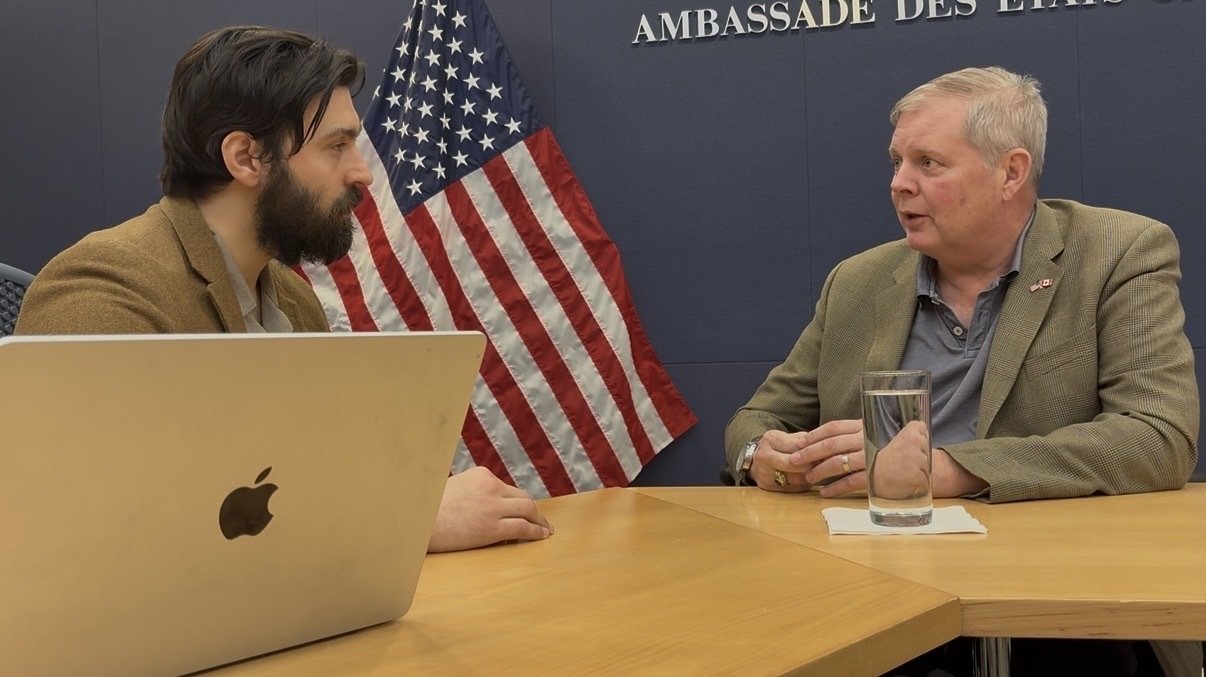
Rhetoric can be rhetoric but ultimately, we’re finding paths through to do the cooperation. That’s a good thing and I don’t see that going away, McGinn told iPolitics.
The United States Embassy hosted Dr. Jerry McGinn, an expert on defence acquisition and security policy, in Ottawa earlier this week. The event was part of a national speaker program focused on Canada-U.S. defence collaboration. McGinn, who serves as the director of the Center for Industrial Base at the Center for Strategic Studies, is meeting with industry members and military partners to talk defence innovation.
McGinn is spending the week in Canada, starting with a trip to Halifax for the Halifax International Security Forum. He stopped by the U.S. Embassy on Tuesday for the start of two-days of meetings in Ottawa, mostly with government officials and representatives of Canada’s defence industry. He wrapped up the visit with a trip to Winnipeg, home to the headquarters for the Canadian NORAD region.
The visit comes at a time when Canada is working to increase its defence spending significantly, all the while fending off rhetorical attacks on its sovereignty from the Trump administration in Washington.
iPolitics spoke with McGinn about how the U.S. sees Canada’s military obligations and where the bilateral relationship between countries will head next.
This interview has been edited for length and clarity.
Canada must make some big decisions for its defence system. What kind of role will the United States play in our country’s big procurement decisions like revitalizing our submarine or air fleets?
McGinn: The U.S.-Canadian relationship for defence has been, for many, many decades, very strong. As a matter of fact, under U.S. law, the United States and Canada are one industrial base. There’s always been a strong history of defence collaboration. It’s natural that you have a lot of Canadian subsidiaries of U.S. companies: Lockheed Martin, General Dynamics. Then you have Canadian companies that come to the U.S. as well. There’s a strong tradition of existing programs and past programs and will be in future programs too.
Canada has international obligations to bolster its defence spending through things like NORAD and NATO. How can it make sure it is pulling its weight for North American and broader, international defence.
McGinn: In many ways, the Russian invasion of Ukraine was the strongest way to strengthen NATO in the last 50 years because it helped member countries realize that we have to spend more on defence and that we have got to be smarter on how we do it. That’s why those commitments, the recent commitments of 3.5 per cent or 5 per cent on security, that Canada and the United States signed up to, have been a long time coming. It’s good to see that commitment but now comes the hard part of doing it.
We are having an international competition deciding on who will build our new submarine fleet. There’s a lot of international attention. Could it hurt our relationship with the U.S. if we partner with other countries for defence manufacturing?
McGinn: I don’t think so. It’s always been a global industrial base. There are components of the F-35 program that are built here in Canada. There’s always been this collaboration. There is still the desire, as there is in every country, to build as much of it here as you can. Your prime minister, your provincial leaders, they want as much to be built in Canada as possible. Likewise in America, it’s America-first. Likewise in Europe, there’s the SAFE program, which I understand Canada is trying to get involved with. Every country wants that because they want to build their industrial capacity, and that’s absolutely right. But there’s a recognition that we can’t do this all alone. It’s not America alone, it’s not Canada alone so it’s about finding that balance. I think as long as communication channels are open and there are real open competitions, then I think allies are going to find ways to partner.
Defence procurement is a sensitive point in this country because of how long our projects sometimes take. We’ve already seen a delay in the release of our defence industrial strategy. How far does Canada have to go in terms of actually getting these big projects done?
McGinn: These are hard things. You’re not alone! I do know the U.S. side much better, but the U.S. Navy just cancelled our program for future frigates because it had fallen way behind and it was way overbudget. It wasn’t because the companies were performing badly. In this case it was actually the navy who made all the mistakes. This is not a Canada problem; these are hard things to make. But do we need to do better in Canada? Do we need to do better in the U.S.? Yes. That’s been a big focus in the U.S. on being more efficient and effective and delivering at scale. Not just prototyping but delivering.
What kind of advice are companies coming to you for?
McGinn: There are a lot of small and medium-sized companies. You have the bigger contractors but really the largest number of companies are these small and medium-sized firms. They’re trying to understand how real these opportunities are. How real are they and how should they position themselves? That’s where the government really has to partner with industry. You need to have regular engagements, industry days or sessions to say: “this is what we’re looking to buy” and help industry position in terms of hiring people and making investments to go after these programs. They only know what they know, so if the government doesn’t communicate effectively with the companies, they aren’t going to be ready when the government is ready to spend.
Does Canada have an industry positioned to take advantage of these opportunities or would it require bringing in outside expertise?
McGinn: Companies are going to go where the opportunities are. If the government makes it clear they’re investing and going to buy a level of capabilities and communicate their timeline, companies are going to respond.
Is this what you’re telling people in these meetings, that urgency has to be a factor?
McGinn: It has to be real. When a company starts to see reality is when they really start to see governments looking to buy something that companies can respond to.
As NATO ramps up spending, is this a particularly busy period for countries asking to hear your insights?
McGinn: It is quite busy. We’re at the point now where we have to move beyond the commitments to how you actualize it. That’s when it comes to investment strategies and investment plans. Companies are going to go where the opportunities are. If the Canadian government is leaning forward, then you’ll get a lot of interested businesses here. There’s not going to be a shortage of opportunities it looks like. Unfortunately, the world is a dangerous place, and I think all the NATO allies and other close allies have to build their defence capabilities. There’s a lot of work to be done and it creates a lot of opportunities for Canadian companies.
It is a historic opportunity but now is the time. We’ve had the rhetoric but now it’s business time. We’ll see how it works out.
Is there anything else on your mind about this bilateral relationship right now?
McGinn: The only thing I would say is, the rhetoric at the top level, between the U.S. and Canada has not been great, obviously. But the reality is there is a lot of cooperation that goes on between Canada and the United States every day and that’s not going to change. There are real capabilities involved with NORAD, with the alliances, with NATO. I would encourage companies, and the public to focus on those things. Rhetoric can be rhetoric but ultimately, we’re finding paths through to do the cooperation. That’s a good thing and I don’t see that going away.