dailynewsnblog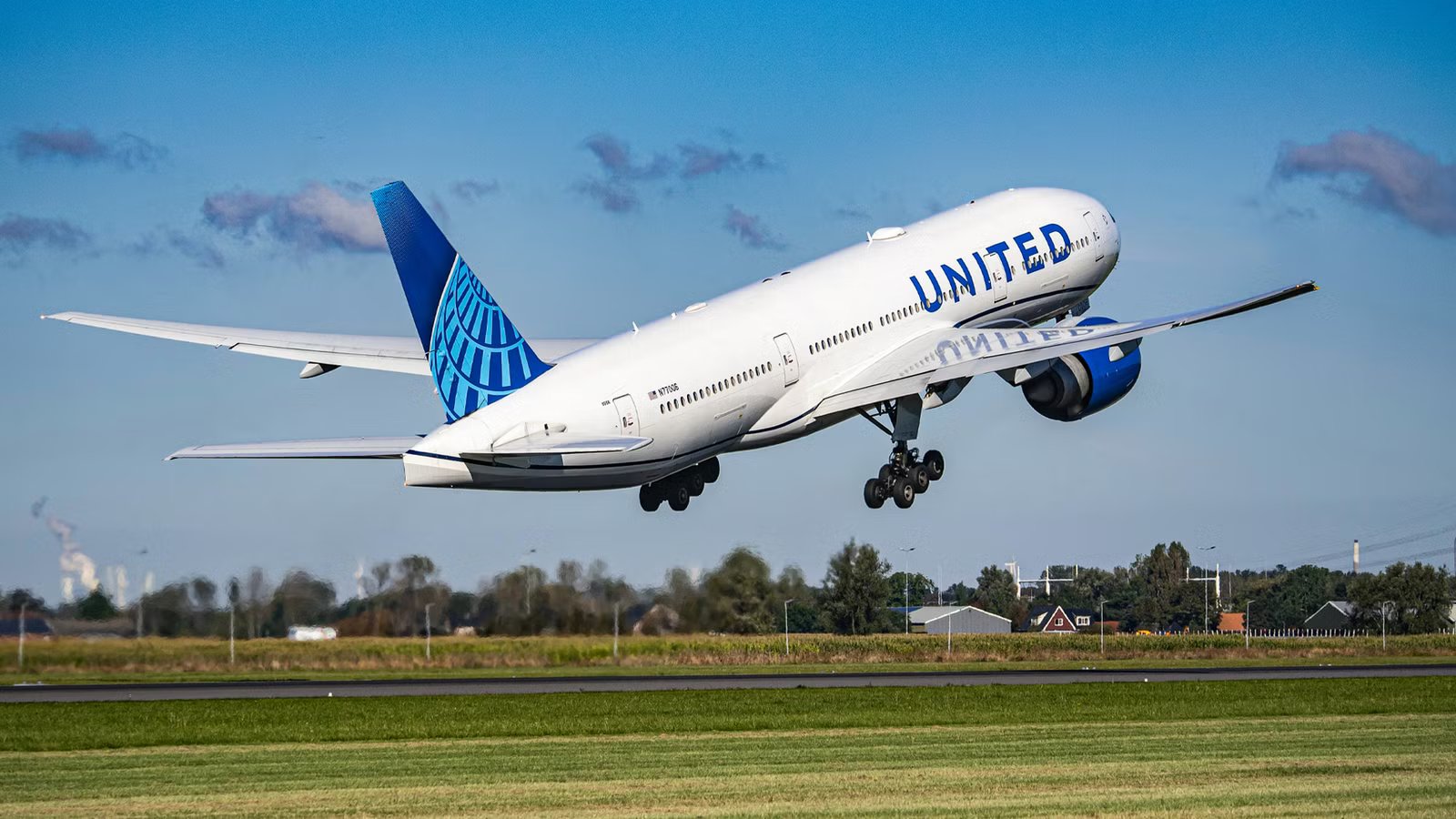
Emirates is the world’s largest operator of the Boeing 777 family, with 133 examples. Number two, however, is Chicago-based  United Airlines, with 96 777s. Unlike Emirates, which primarily operates the second-generation 777-300ER variant, United’s 777 fleet is mostly made up of the first-generation 777. The carrier operates the original 777-200 variant, as well as the 777-200ER. United operates 55 777-200ERs, which makes it the world’s largest operator of the Boeing 777-200ER, as per ch-aviation.
The 55 777-200ERs make up the vast majority of United’s 777 fleet, with the rest of the fleet being made up of 19 older 777-200s and 22 newer 777-300ERs. While United’s Boeing 777 fleet is massive, it only grew to this size in the 2010s, as a significant portion of its 777-200ERs came from the carrier’s 2010 merger with Continental Airlines. The 777-300ERs, meanwhile, were acquired after the merger. The 777-200ER fleet is also United’s largest widebody fleet, although the carrier is rapidly growing its Boeing 787 fleet.
Overview Of The Boeing 777-200ER

The Boeing 777 was produced across three generations, each coming with technological advancements, improved fuel efficiency, and greater capability than the last. The original 777 variants consisted of the 777-200, the 777-200ER, and the 777-300. The 777-200 was designed as a replacement for the McDonnell Douglas DC-10, while the 777-200ER added range and payload capacity. The 777-300 was a stretch of the 777-200ER. The second-generation 777 consisted of the 777-300ER, the shrunken 777-200LR, and the 777F, while the 777X is the third generation.
United Airlines was the launch customer of the original 777-200 variant in 1995, while British Airways was the first operator of the 777-200ER in 1997. The aircraft features additional fuel capacity and a Maximum Takeoff Weight (MTOW) of up to 297 tons, whereas the 777-200’s MTOW maxed out at 247 tons. The 777-200ER was a long-range airliner that directly rivaled the Airbus A340-300 and McDonnell Douglas MD-11. With 422 orders, the 777-200ER sold more than the A340-300 and MD-11 combined.
Unlike the second and third-generation 777s, which only come with General Electric engines, the first-generation 777 variants had three engine options. The General Electric GE90, which was the first engine to power the 777-200ER, was the largest and most powerful option, at the expense of weight. The Rolls-Royce Trent 800 was the most popular engine on the first-generation 777. The Pratt & Whitney PW4000-112, which was the first engine to power the 777-200, ended up coming in third place.
The United Airlines Boeing 777-200ER Fleet

United Airlines currently operates 55 Boeing 777-200ERs. The oldest of these, N787UA, is over 29 years old, while the youngest, N77022, is slightly over 15 years old. However, only two 777-200ERs in total are under 16 years old (N77022 and N76021), while another two (N77019 and N69020) are under 20 years old. The rest of the 777-200ER fleet was delivered between 23 and 29 years ago. While US carriers are known for operating older aircraft, many foreign airlines have retired planes of a similar vintage by now.
United operates two distinct subfleets of the 777-200ER. Four of these planes are coded as “77O” as they feature a domestic two-class layout with no seatback entertainment and an eight-abreast first-class cabin. The remaining 51 777-200ERs are coded as “77E” as they feature a three-class layout intended for long-distance flights. These planes feature the carrier’s long-haul Polaris business class cabins, along with Premium Plus, and are configured with 276 total seats. In comparison, the aircraft in the 77O layout features 362 seats.
However, while all 51 international 77E aircraft feature the same layout, they’re split between 29 777-222ERs and 22 777-224ERs. The last two digits are unique customer codes assigned by Boeing, and 22 is the code for United Airlines, whereas 24 was the code for Continental Airlines. While the 777-222ERs and 777-224ERs are used interchangeably and feature the same interior layout, they do feature differences in engine model (PW4000 vs GE90) as well as an MTOW rating.

How Do Airline Cabin Layouts On The Boeing 777-300ER Vary Across North American Carriers?
Three different North American airlines operate the Boeing 777-300ER.
The Legacy United Airlines 777-200ER Fleet

The legacy United Airlines Boeing 777-200ER fleet is made up of 33 aircraft. These aircraft were delivered between 1997 and 2002. In addition, United Airlines took delivery of five additional 777-200ERs during this period, but had sold these aircraft to Air India and Varig in the 2000s. All 38 777-200ERs, along with the 777-200s, were equipped with the Pratt & Whitney PW4000-112 series. The 777-200s feature the PW4077, whereas the 777-200ERs are equipped with the PW4090.
While the 777-200ER as a type can be specified with an MTOW of 297 tons, United’s legacy 777-200ERs with the PW4090 are only rated for an MTOW of 294 tons. The PW4090 engine ended up failing emissions requirements, and this meant that operators of PW4090-powered 777s had to limit the MTOW of their aircraft. Only Trent 800 and GE90-powered 777-200ERs could be certified with the 297-ton MTOW option. But despite this, the 777-200ER remained a workhorse for United, operating many of its longest routes to Asia, Australia, and the Middle East.
|
777-200/777-200ER Subfleet |
Polaris |
United First |
Premium Plus |
Economy |
Total |
|---|---|---|---|---|---|
|
77E |
50 |
N/A |
24 |
202 |
276 |
|
77G/77M |
N/A |
28 |
N/A |
336 |
364 |
|
77O |
N/A |
32 |
N/A |
330 |
362 |
The legacy United 777-200ERs feature registrations that begin with either N2 or N7 and end with UA, while their tail numbers begin with either 20, 27, or 28. The 29 aircraft currently in the 77E layout feature 50 Polaris seats, 24 Premium Plus seats, and 202 economy seats, totalling 276 seats, as per aeroLOPA. The four aircraft in the domestic 77O layout, meanwhile, feature 32 United First seats and 330 economy seats, totalling 362 seats. Compared to the 777-200s, the 77Os feature four additional United First seats, six fewer economy seats, and also feature crew bunks.
The Former Continental Airlines 777-200ER Fleet

Continental Airlines took delivery of 22 Boeing 777-200ERs, all of which remain in service with United Airlines. The carrier initially ordered 18 777-200ERs, which were delivered between 1998 and 2002, making them roughly the same age as the legacy United 777-200ERs. Meanwhile, two additional 777-200ERs were delivered in 2007, while another two were delivered in 2010, shortly before the United-Continental merger.
Continental Airlines equipped all of its 777-200ERs with the General Electric GE90-92B, which were later upgraded to the GE90-94B specifications. In addition, these aircraft came with the maximum 297-ton MTOW option. As such, Continental used these aircraft to open up new long-haul and ultra-long-haul routes primarily from its hub in Newark Liberty International Airport. These include routes such as Newark to Delhi, Newark to Mumbai, and Newark to Hong Kong, at the time the world’s longest flight.
The 777-200ER was Continental’s largest and most capable aircraft, and it operated out of Newark as well as Houston. Today, the Continental 777-200ERs feature the same interior layout as the legacy United 777-200ERs, but have a slightly longer range due to their higher MTOW. These planes can be distinguished by their GE90 engines, as well as their registrations and tail numbers. Continental Airlines used a three-digit tail number system, with the 777-200ERs being labeled from 001 to 022. Today, these numbers have a “3” added at the beginning online, and a “0” painted on the aircraft.

Why United Airlines Still Relies On The Boeing 777-300ER In 2025
The big Boeing is still going strong at United.
The Replacement For The Boeing 777-200ER

United Airlines currently holds orders for 45 Airbus A350-900s, which are set to be delivered starting in 2031. However, this order has been revised three times and was first placed over 15 years ago, with numerous delays. In the meantime, the carrier has ordered 150 Boeing 787s, and recently confirmed that 56 of them will be for the larger Boeing 787-10 variant, which matches roughly one-for-one with the 777-200ER fleet. However, this doesn’t tell the full story.
The 787-10 has been certified with a higher MTOW rating of 260T, which will increase its range. However, the type still doesn’t quite match the range of the 777-200ER. While the 787-9 can take over the 777-200ER’s longest routes, it comes with at least a 19-seat drop in capacity. The carrier has been upgauging routes across its entire domestic network, and it’s been reported that United is looking to follow the same strategy with its long-haul network. This is why the 777-200ER might not be replaced by either the Boeing 787 or similarly sized A350-900.
|
Aircraft |
Typical capacity |
MTOW |
Range |
|---|---|---|---|
|
Boeing 787-9 |
257 (United) 222 (United) |
259 tons |
7,875 NM (14,585 km) |
|
Boeing 777-200ER |
276 (United) |
297 tons |
7,065 NM (13,080 km) |
|
Airbus A350-900 |
270 to 300 |
283 tons |
8,500 NM (15,750 km) |
|
Boeing 787-10 |
318 (United) |
260 tons |
6,760 NM (12,519 km) |
|
Airbus A350-1000 |
300 to 330 |
322 tons |
9,000 NM (16,700 km) |
The 787-10 in its current configuration seats 42 additional passengers, but has six fewer Polaris seats. It’s been suggested that the 787-10 may be used to upgauge current 787-9 routes, while United is reportedly exploring the Airbus A350-1000 as a potential replacement for the 777-200ER fleet. The carrier has stated that it would only take the A350s in large numbers, close to 100 aircraft, so you could see a mix of A350-900s, A350-1000s, and 787s replacing the 777-200ER, especially considering that the A350 can carry additional payload over longer distances than any 787 variant.