dailynewsnblog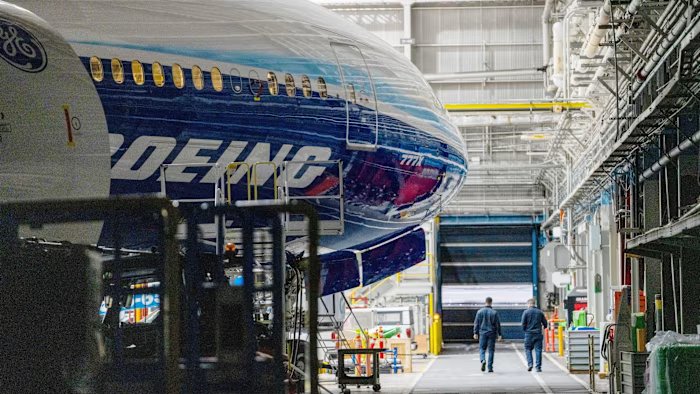
Unlock the White House Watch newsletter for free
Your guide to what Trump’s second term means for Washington, business and the world
The EU and UK would both pay a heavier price than the US in a tit-for-tat trade war if Donald Trump were to revive his tariff threat against Europe over Greenland, according to a new economic analysis.
European political leaders were forced to confront how to stand up to Trump this month when he threatened to impose new tariffs of up to 25 per cent on eight European economies in a bid to pressure Denmark into selling Greenland.
Analysis by Aston University in Birmingham showed Europe would have suffered more economic pain than the US had the two sides become locked in a full-blown trade battle, in which the EU and UK matched threatened duties.
“The modelling shows retaliation makes every European country worse off than if it absorbed the tariffs,” said Jun Du, professor of economics at Aston University, who led the research.
Trump last week dropped his tariff threat during a speech in Davos, Switzerland. But the study highlights the dilemmas facing European leaders over how to respond in disputes with Trump, and the challenge of maintaining a united front against the US when there are incentives for individual countries to hold back from retaliating.
The UK was among the nations threatened by Trump with tariffs of up to 25 per cent, but British Prime Minister Sir Keir Starmer indicated it would not retaliate, arguing that “a trade war is in no one’s interest”.

The Aston modelling found that if the Greenland-linked tariff war had escalated to 25 per cent, and the UK had retaliated in kind, it would have experienced an economic hit twice as large as if it had absorbed the blow, despite a significant impact on British exports to the US.
The research also found that it would not have been in UK economic interests to join any EU retaliation. The UK would experience half the hit to per capita GDP than the EU would face if it imposed 25 per cent tariffs on the US.
“It’s unambiguous: the UK is best off not retaliating,” Du said. “Co-ordinated UK-EU retaliation would have produced the worst outcome for Britain, while joint non-retaliation from the EU and UK produces the smallest losses.”
Despite Trump’s climbdown following the promise of a deal to expand US sovereign bases on Greenland, the threat of trade wars remains.
The US president this week threatened South Korea with 25 per cent duties for “not living up to” agreements struck with Washington last year. Both the EU and the UK are still negotiating with the Trump administration over elements of their respective tariff truces struck last year.
The Aston study concluded that while Europe would lose out in a scenario of full-blown retaliation against the US, it could nonetheless inflict some pain on the US through targeted measures.

Mindful of the risk of wider blowback, the EU had readied a carefully calibrated package of retaliatory tariffs on €93bn-worth of US imports, including Boeing planes, cars, bourbon and soyabeans, had Trump imposed his Greenland-linked duties.
Du said the research showed that Europe would have needed to expand its retaliation to include US services, such as tech and finance, where Europe is a key market, to hit America hard.
“The challenge is the threat has to be credible,” she said. “Europe can’t threaten to exclude Google or Microsoft, but it could take regulatory actions, for example, that would target new entrants to the market.”
William Bain, head of trade policy at the British Chambers of Commerce, said the paper clearly showed that tariff escalation was a “negative sum game” and pointed to the need to diversify the UK’s trading relationships.
“The UK can be agile on trade, and must pursue further agreements with key markets. We must also add new economic security powers to our armoury so we can negotiate from a position of strength in any future trade disputes,” he added.