dailynewsnblog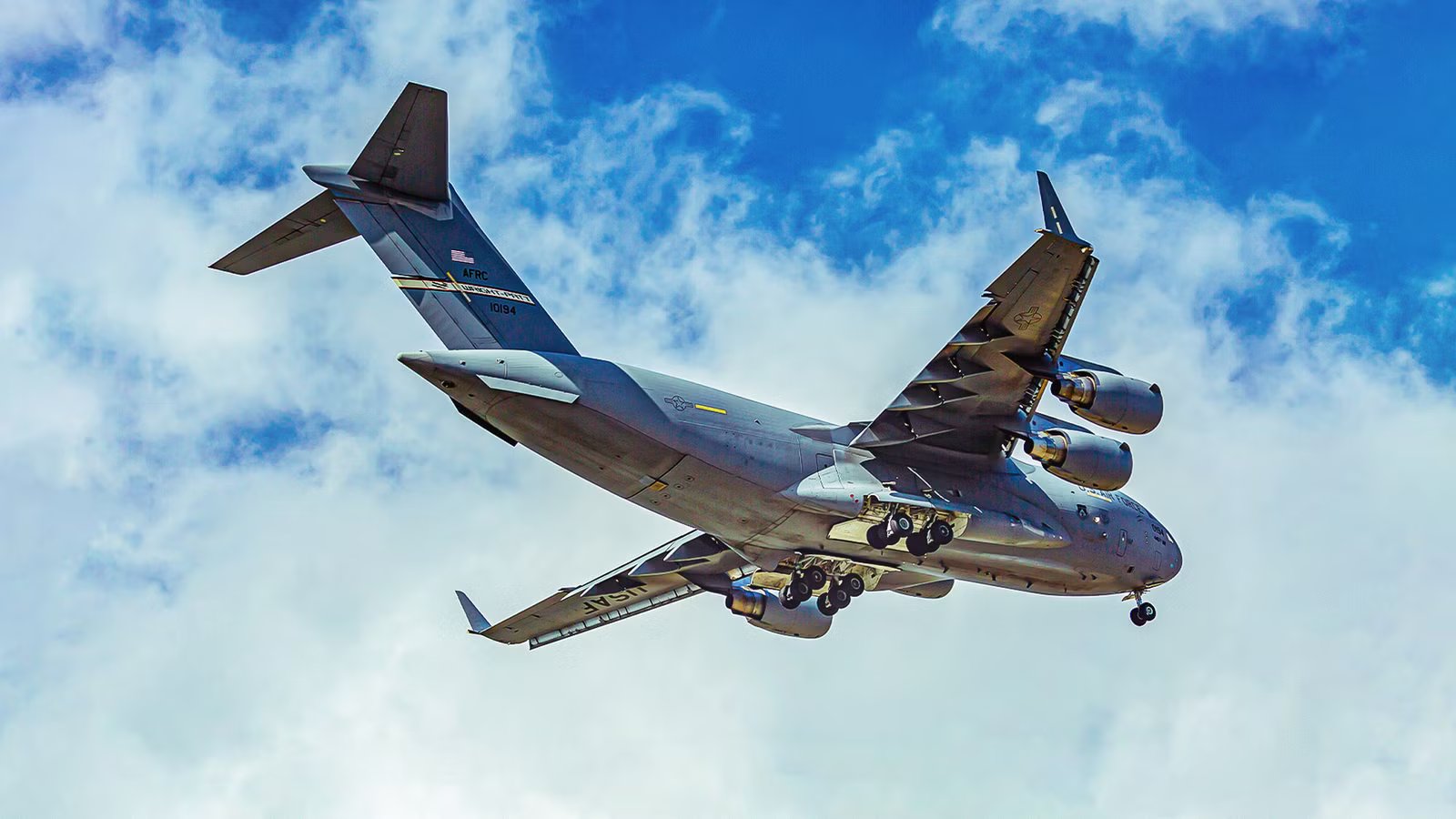
The C-17 Globemaster III has been a central part of global airlift operations for decades, quietly supporting military, humanitarian, and disaster-relief missions around the world. Since entering service in the 1990s, it has proven itself as a dependable workhorse, capable of operating in a wide range of environments and mission types. Its consistent presence in major operations has made it a familiar and trusted asset for both the United States and its allies.
Even so, questions about when the C-17 might be retired persist. The reality is that retirement is not imminent, largely because the aircraft still fills a critical role that no current platform can fully replace. Strategic planning, budget realities, and evolving global demands all indicate that the C-17 will remain in service for many years to come, ensuring it remains a key element of airlift capability well into the future.
C-17 Globemaster III: An Aircraft Overview

So what exactly is the Boeing C-17 Globemaster III? In brief, the C-17 is a strategic and tactical heavy-lift airlift aircraft designed to transport troops, vehicles, heavy equipment, and humanitarian aid worldwide. The aircraft first flew in 1991 under McDonnell Douglas, before being rebranded under the Boeing brand.
The C-17 was designed to solve a critical airlift gap identified by the United States military during the late Cold War, when existing transport aircraft were either too large to operate from forward airfields or too small to move heavy equipment over long distances. Military planners needed a single aircraft that could rapidly deploy forces worldwide while still landing close to combat zones or disaster areas, reducing reliance on vulnerable ground logistics.
The C-17 entered operational service in 1993, achieving full capability by 1995 with the US Air Force, which is the largest user of the aircraft, and still operates 223 of the type across various branches of its military. In total, 275 C-17s are active, leaving 52 operating across countries such as the United Kingdom, Australia, the UAE, and Canada, amongst others, when accounting for the United States’ share.
Impressive Performance And Design Strengths

The Boeing C-17 Globemaster III excels in its role thanks to its design and features. One of these features is its ability to operate from short, austere runway operations. The C-17 can operate from runways as short as 3,500 feet (approximately 1000 meters). It is also designed for semi-prepared, damaged, or dirt airstrips. This is essential for operations on the frontline where runways can become damaged, or temporary runways are created.
The aircraft’s ability to operate as a heavy-lift aircraft is helped by its payload capacity. The C-17 is capable of carrying 170,900 lb (77,500 kg) of cargo, including tanks, helicopters, and outsized cargo. Its rear cargo ramp and wide cargo bay support fast turnaround times thanks to rapid loading and unloading.
The C-17 Globemaster III was designed to meet a need for an airlifter that could move heavy loads efficiently across the globe without sacrificing access to front-line or austere airfields. It combines strategic range with tactical flexibility, offering an unrefueled range of about 2,400 nautical miles (approximately 4,445 km) with a heavy payload, and, with aerial refueling, effectively global reach. This capability is reinforced by its advanced fly-by-wire flight control system, which improves handling and safety while enabling precise low-speed landings in confined or challenging environments, a rare combination for an aircraft of its size.

The Striking Differences Between The C-17 Globemaster & The C-5 Galaxy
From strategic airlift to tactical flexibility, delve into the unique roles of the C-5 Galaxy and C-17 Globemaster III.
The Elephant In The Room: No True Replacement Exists

The Next-Generation Airlifter (NGAL) is often cited as the eventual successor to the C-17, but it remains decades away from operational service. At present, NGAL is still in the concept and early planning stages, with no finalized design or production timeline. Current projections suggest it is unlikely to enter service before the late 2030s or even the 2040s, meaning the C-17 must remain in service to avoid a critical airlift capability gap during that long development period.
Existing airlift aircraft also cannot fully replace the C-17. The Lockheed C-130 Hercules excels in tactical missions and short-field operations but lacks the payload capacity and range required for heavy, intercontinental transport. At the other end of the spectrum, the C-5 Galaxy can carry extremely large loads but depends on long, well-maintained runways, limiting where it can operate. Other transports, such as the Airbus A400M, Kawasaki C-2, and Embraer C-390, each offer strong capabilities, but none can match the C-17 across all mission requirements.
|
Specification (Boeing) |
Value |
|---|---|
|
Crew |
3 (two pilots, one loadmaster) |
|
Length |
174 feet (53 meters) |
|
Wingspan (to winglet tips) |
169 feet 10 inches (51.8 meters) |
|
Height |
55 feet 1 inches (16.8 meters) |
|
Fuselage Diameter |
22 feet 6 inches (6.9 meters) |
|
Wing Area |
3,800 sq ft (353 m²) |
|
Engines |
4 Pratt & Whitney F117-PW-100 turbofans (40,440 lbf thrust each) |
|
Maximum Takeoff Weight (MTOW) |
585,000 lb (265,300 kg) |
|
Maximum Payload |
170,900 lb (77,500 kg) |
|
Cargo Compartment Dimensions (L × W × H) |
88 feet × 18 feet × 12 feet 4 inches (26.8 m × 5.48 m × 3.76 m) |
|
Cruise Speed |
450 knots (Mach 0.74/830 km/h) |
|
Range |
2,400 nmi (4,445 km) with heavy payload; global with aerial refueling |
|
Service Ceiling |
45,000 ft (13,700 m) |
This leaves the C-17 in a one-of-a-kind position within global airlift fleets. No other aircraft combines heavy-lift capability, long-range performance, and short or austere runway operations in a single platform. Until a new aircraft can replicate, or exceed, this balanced set of capabilities, the C-17 will remain indispensable to military and humanitarian operations worldwide.
Strong Structural Life Remaining

The C-17 was designed for long service, with airframes built to withstand decades of heavy use thanks to significant fatigue margins. This robust construction ensures the aircraft can endure the stresses of repeated takeoffs, landings, and heavy payload operations without compromising safety or performance over time. To further extend its operational life, the Air Force has implemented Service Life Extension Programs (SLEPs), which include ongoing inspections, reinforcements, and structural upgrades, allowing the fleet to remain in service for decades beyond its original design expectations.
In addition to structural longevity, the C-17 has substantial modernization potential. Avionics, communications, navigation, and defensive systems can all be upgraded to keep pace with evolving military requirements. These enhancements ensure the aircraft remains relevant in increasingly complex operational environments, from contested airspace to humanitarian missions in austere locations.
The C-17’s proven reliability also contributes to its long-term viability. Compared to other heavy airlifters, it maintains high mission-capable rates, meaning it is available and ready for operations more consistently than many alternative platforms. This combination of durability, upgradeability, and dependable performance makes the C-17 a cornerstone of global airlift well into the future.

The 9 Countries That Operate The C-17 Globemaster III
The United States operates the largest C-17 Globemaster III fleet.
Critical Role In Modern Military And Humanitarian Operations

The C-17 plays a critical role in global Military logistics, enabling the rapid deployment of troops, vehicles, and heavy armor to virtually any location in the world. Its ability to operate from short or austere runways makes it especially valuable for contested or dispersed operations, where traditional airlift assets might be unable to deliver forces or equipment safely and efficiently. This flexibility ensures that military planners can project power and respond quickly to crises across the globe.
Beyond combat operations, the C-17 is frequently called upon for humanitarian and disaster relief missions. It is often among the first aircraft to arrive after earthquakes, floods, or other emergencies, capable of delivering critical aid directly to damaged or remote airfields that would be inaccessible to larger, less versatile aircraft. This rapid response capability has made the C-17 a trusted asset for both military and civilian agencies.
The aircraft’s importance is further reinforced by allied dependence. The C-17 is operated not only by the United States but also by the United Kingdom, Australia, Canada, India, and various NATO partners, creating long-term incentives for sustainment and interoperability. This international reliance ensures that the platform remains central to both US and allied operations for decades to come.
Strategic And Budgetary Reality

The C-17 production line has been closed, meaning that no new aircraft can be built without enormous cost and time. Reconstituting production would require rebuilding specialized tooling, requalifying suppliers, and reestablishing a highly skilled workforce, an undertaking that would likely take many years and cost billions of dollars. As a result, rapid replacement of the fleet is effectively impossible. Replacing the C-17 outright would also be extraordinarily expensive, requiring the procurement of hundreds of new aircraft to match existing airlift capacity and global coverage, a process that would likely span several decades from development to full operational fielding.
This reality reinforces the importance of avoiding capability gaps in strategic and tactical airlift. Retiring the C-17 too early would leave the United States and its allies with insufficient heavy airlift capacity, directly affecting the ability to rapidly deploy forces, sustain overseas operations, and respond to humanitarian crises or natural disasters. The aircraft’s unique combination of intercontinental range, heavy payload, and short-field performance allows it to operate from austere or damaged airfields, capabilities that cannot currently be duplicated by any existing or planned platform.
Historical precedent further supports retaining proven aircraft well beyond their originally envisioned service lives. Platforms such as the B-52 Stratofortress and the KC-135 Stratotanker demonstrate that robustly designed military aircraft can remain relevant and operational for 70 years or more through disciplined maintenance, avionics upgrades, structural life extensions, and incremental modernization. This proven approach is directly applicable to the C-17, which continues to provide irreplaceable capability and remains a cornerstone of global air mobility.