dailynewsnblog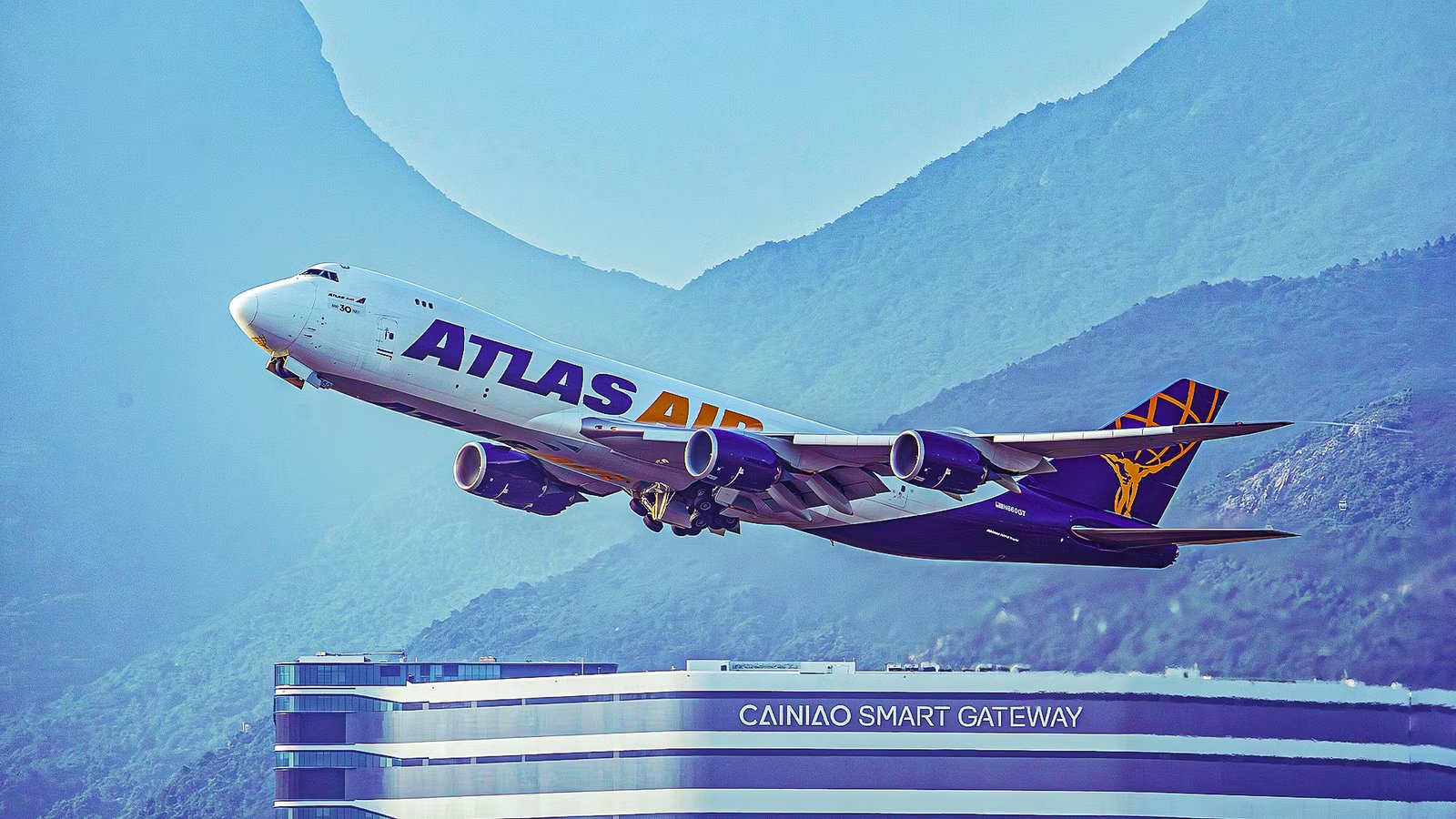
The  Boeing 747-8 is a rare model now, but not one that is set to leave our skies. The numbers still in the skies in today’s active fleet paint a clear picture of how the model will remain in the skies for years to come. Today, there are 28 active Boeing 747-8 aircraft in service across five different operators, and most are relatively young by the standards of modern widebody fleets. The youngest of these models is around eight years old, while the oldest is approaching 15 years old since delivery. This age profile matters since a well-maintained long-haul aircraft can keep working well into its 20s, especially when it serves a purpose that no other model on the market can replicate. This is especially true for the Boeing 747-8. The aircraft not only offers high passenger volumes, but also strong belly cargo capacity and premium cabin real estate.
From an operational perspective, the Boeing 747-8 is expected to survive because its service network is concentrated in a few places that can justify its continued operations. Lufthansa, on its own, accounts for the majority of the active passenger fleet in our dataset, while Air China and Korean Air keep smaller subfleets for high-density trunk flying. On top of airline demand, the aircraft type has a second life in state and special-mission use, all while replacement cycles are slower and missions are increasingly non-negotiable. Even at the point where retirements begin, they look selective rather than sudden. We note that one Lufthansa airframe in the fleet data, provided to Simple Flying by aviation data firm ch-aviation, has a projected retirement date of mid-2026. Korean Air’s fleet is set to begin the retirement process in 2031. Collectively, the 747-8’s retirement will be determined by individual carrier decisions, but is increasingly unlikely to occur any time soon.
What Exactly Is The Boeing 747-8 And What Does It Offer?

The Boeing 747-8 is the final, most modern member of Boeing’s iconic Boeing 747 family. It stretched the best-selling Boeing 747-400 airframe and re-engineered it for the 21st century. The aircraft is significantly longer than the early 747s, with a redesigned wing, raked wingtips, and greater fuel capacity. This supports the plane’s long-range mission set, with a signature upper deck hump. The aircraft is powered by a set of four General Electric GEnx-2B engines derived from the Dreamliner program, improving efficiency and noise performance significantly over older 747 models.
Boeing has built two main variants, including the Boeing 747-8 Intercontinental passenger model and the 747-8 Freighter, each of which serves its own unique purpose within the market today. In a typical three-class layout, the passenger 747-8I is commonly cited as having around 467 seats, with a near industry-leading range. The freighter, on the other hand, trades a long upper deck for payload and main-deck cargo volume.
Crucially for today’s argument, the Boeing 747-8 is a bridge between multiple different eras. The type delivers Airbus A380-like scale on routes that still require large amounts of seats while retaining the jet’s operational flexibility. This also includes substantial amounts of belly cargo on passenger flights. While production of the type has ended, the aircraft’s design remains a purpose-built answer to the specific question of how to move a lot of people, very far, very efficiently.
What Passenger Airlines Operate The Boeing 747-8 Today?

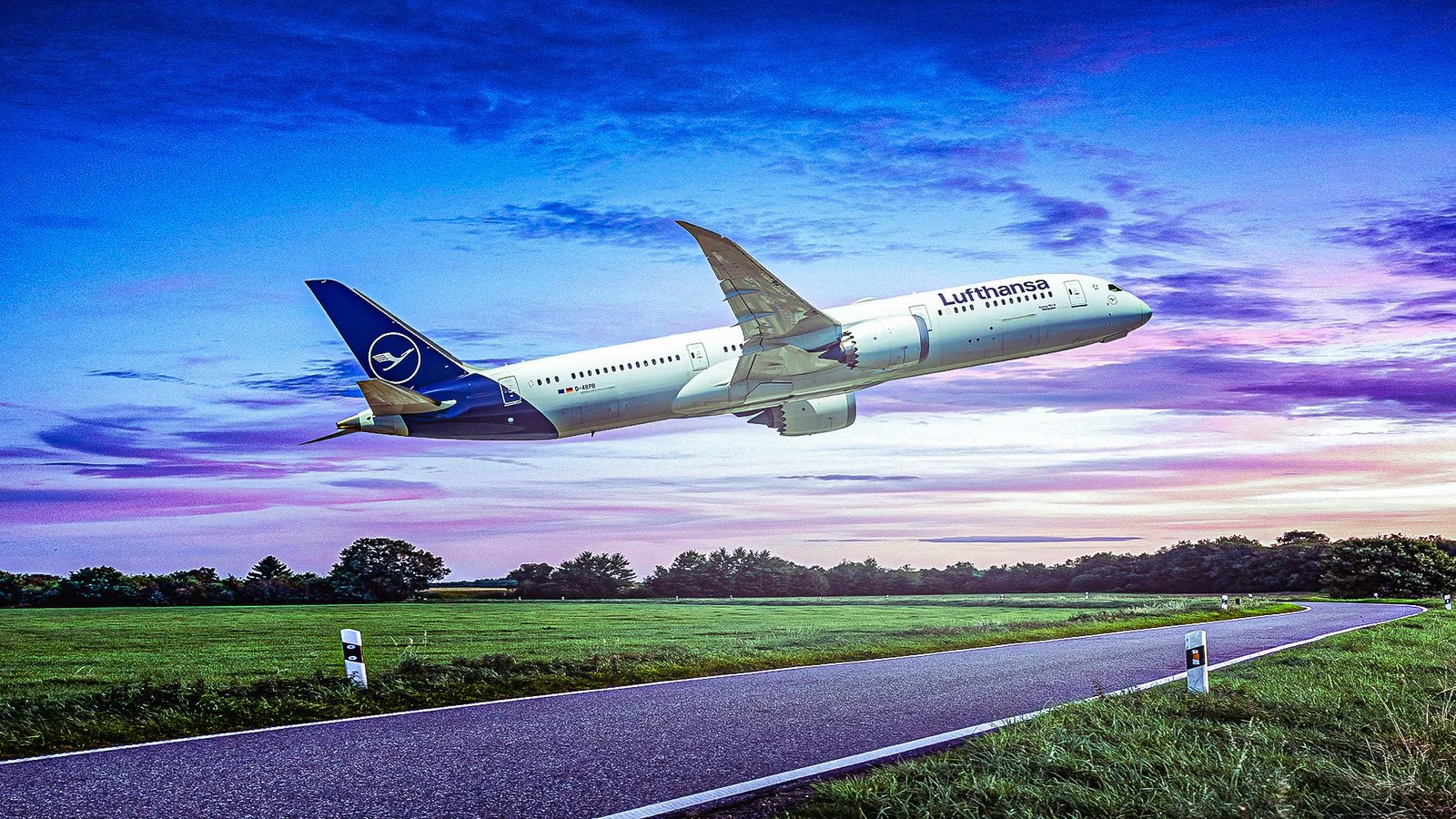
The flying of passenger Boeing 747-8 models has historically been limited to just three carriers. Of the 28 active jets in the skies, sixteen are operated by German flag carrier  Lufthansa. Air China operates another six models, and Korean Air operates the final four. This means that these three carriers collectively account for 26 of the 28 passenger airframes ever created.
|
Carrier: |
Passenger 747-8I Aircraft In Operation: |
|---|---|
|
Lufthansa |
16 |
|
Air China |
6 |
|
Korean Air |
4 |
Lufthansa’s fleet sits mostly in the 10-14 year age range, with one aircraft already showing a projected retirement date for the rest of this year, while other models have no predetermined service exit. This highlights a selective drawdown rather than a mass market exit. Air China’s Boeing 747-8s cluster around 10–11 years of age, a point where economics can still work if the jet is used on dense trunk routes and peak long-haul banks. Korean Air’s four examples are all younger and carry projected retirement dates starting in January 2031.
This is a clear signal that the type remains in the airline’s long-haul fleet plans. Strategically, these operators keep the Boeing 747-8 because they can exploit what it does uniquely well. The model can carry a lot of premium and economy seats on slot-constrained routes, offer a distinctive upstairs cabin, and still move meaningful belly cargo. When a network has big-day, big-city demand spikes, having a jumbo jet already in service can be extremely effective.

This Is The Fastest Boeing Jet In Service
The fastest Boeing found on the flightline today is more than just that, it’s also the last Queen of the Skies to ever take to the air.
Non-Passenger Boeing 747-8 Operations

Outside of commercial passenger airline service, the Boeing 747-8’s potential to remain in service for decades becomes even stronger. Many governments operate the aircraft, and have significantly different retirement timetables for them. Two non-commercial passenger operators are important to keep in mind here. The Egyptian Air Force and the Republic of Korea Air Force each operate a passenger Boeing 747-8, each of which has been configured as a VIP transport to be used by each nation’s respective air force.
These jets feature fewer seats, longer-range capabilities, and interiors that are mostly built around conference space, offices, rest areas, and secure communications rather than seat-mile economics. The Boeing 747-8 is attractive in this capacity because it combines long-range capabilities with physical volume. The plane can carry senior delegations, vehicles, and equipment. The plane is also fitted with mission systems that are not comfortable additions to smaller widebodies.
Just as importantly, state fleets value continuity. A head-of-state platform is a program with decades-long support planning, unique security modifications, and specialized crew training. This is all before we even begin to analyze the Boeing 747-8F, a cargo model that serves destinations all across the globe. Multiple cargo carriers currently rely on dynamic fleets of Boeing 747-8F cargo models, and they are also certainly not going to be leaving service any time soon.
What Does The Future Hold For Passenger 747-8 Operations?

The story of the Boeing 747-8 has mostly been written, as Boeing has closed the production line and all deliveries have been completed. Boeing ended 747 production back when it delivered the final model in January 2023. The final passenger operators of the model will certainly keep them in the skies for a bit longer. As a result, they will keep crews, spare parts, and maintenance capabilities in place until all models are retired.
Korean Air, for example, is already projected to keep its jets in service until at least January 2031, and Lufthansa’s fleet shows no near-term plans for large-scale retirement. Meanwhile, the wider Boeing 747-8 ecosystem is cushioned by production freighters. The Boeing 747-8F remains valuable for outsized cargo and high-volume lanes, with a large freighter population that helps sustain overall parts availability and engine overhaul demand.
The likely trajectory here will be a gradual thinning of Boeing 747-8 numbers as opposed to a sudden, large-scale retirement. The jet will serve fewer routes, be deployed in a more seasonal capacity, and see heavier concentration at core hubs where maintenance depth is strongest. The main threats are fuel costs and emissions rules, not actual airframe fatigue.

How Long Will The Boeing 747 Remain Flying?
With deliveries of the jumbo jet having only ceased in recent years, the type looks set to continue flying for several decades to come.
Why Might The US Government Be The Last Boeing 747-8 Operator?

The United States government makes one of the strongest arguments for why the Boeing 747-8 could remain relevant after airlines move on from the type. A pair of Boeing 747-8I models is being modified under the VC-25B program to replace today’s VC-25A (747-200-based) executive transport fleet. First deliveries of these jets are anticipated in 2028.
This timeline, on its own, pushes the jet’s horizon out by multiple years. Those jets will not be flown like an airline widebody and will rather be used as strategic assets with advanced communications capabilities, defensive systems, and customized interiors.
The Air Force is also buying two additional Boeing 747-8 aircraft that will be designed for training and sustainment support as the organization moves toward operating the new model. Since Boeing ended 747 production, the government needs additional airframes to train crews, source parts, and ultimately protect long-term program availability.
What Is Our Bottom Line?

The Boeing 747-8 will not be retired anytime soon because it is no longer behaving like a traditional commercial aircraft program. Instead, the aircraft is operated by a small set of operators that all have unique use cases for a jumbo-sized jet, all while still having airframes that are young enough to justify the upkeep.
We analyzed fleet data from Lufthansa, Air China, and Korean Air, which operate the vast majority of the global passenger fleet. None of these carriers is planning a full retirement until at least the 2030s.
However, as we have already noted multiple times, we expect the aircraft to remain in service far longer with non-scheduled passenger operators. These include cargo airlines like UPS Airlines and non-traditional operators like the United States Air Force. We will simply have to wait and see just how long this legendary jet stays in our skies.