dailynewsnblog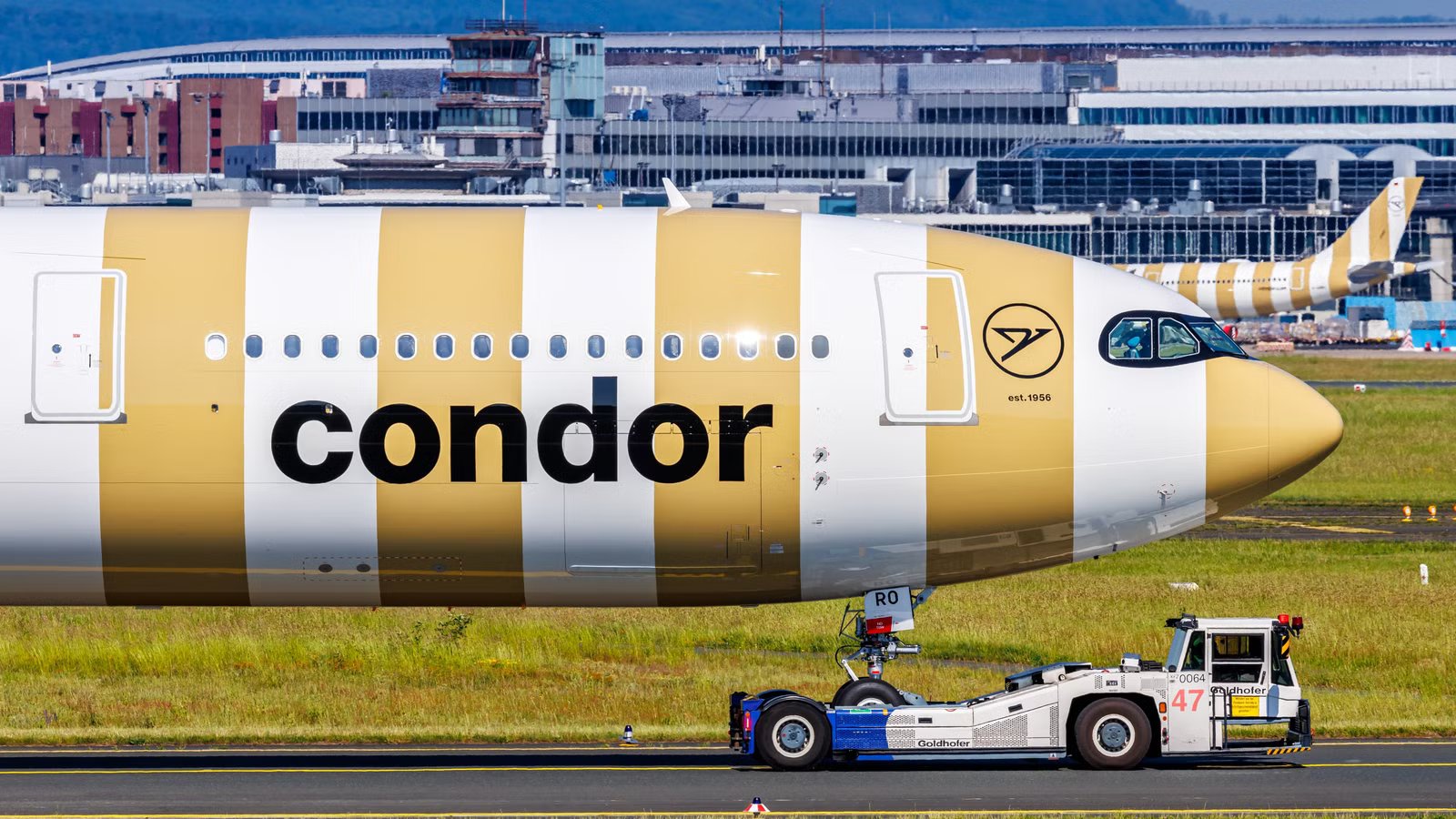
Aircraft are built for flying in the sky, which is something that they do with great finesse. However, maneuvering on the ground is not generally an aircraft’s forté, and it will often need some assistance when moving around an airfield in the form of an aircraft tug. These small machines are capable of moving aircraft as large and as heavy as the mighty Airbus A380.
In this article, we take a look at why tugs are needed, how they work, and the different types of tugs available to ground handling teams across the world. But first, how much does an aircraft weigh?
How Much Does A Commercial Aircraft Weigh?

Commercial aircraft can vary greatly in size and weight, from the Airbus A319, which comes in at just 40 tons when empty, to the Airbus A380, which weighs a staggering 453 tons. Once fuel, passengers, baggage, and cargo are added, these weights can increase significantly.
The typical empty weights of some of the most popular commercial aircraft in the skies today are shown in the table below:
|
Aircraft |
Weight |
|---|---|
|
Airbus A319 |
40 tons |
|
Boeing 737-800 |
72 tons |
|
Airbus A320 |
77 tons |
|
Boeing 787-8 |
227 tons |
|
Boeing 787-9 |
250 tons |
|
Airbus A330-900 |
251 tons |
|
Boeing 747-400 |
442 tons |
|
Airbus A380 |
453 tons |
Although modern aircraft are becoming lighter and lighter, thanks to new technologies and composite construction materials, the total weight of an aircraft that needs moving is huge. This is just one of the reasons why specialist tugs are used, rather than conventional road vehicles.
Why Are Tugs Used?

Pilots will avoid having the aircraft’s engines activated when close to an airport for a variety of reasons, but primarily for the safety of the people on the ground and of the aircraft itself. When activated, an aircraft’s engine can create high-speed wind that can cause damage to the airport terminal, the surrounding ground vehicles, baggage, and any people that may be in the way.
Loose items and even the tiniest amount of debris can also damage the aircraft’s engines. Given the high cost of such engines (which can be several million dollars per engine, depending on the aircraft type), airlines are naturally keen to avoid unnecessary damage and will often have strict regulations in place about engine use on the ground.
In addition, it is worth noting that pilots often have limited availability from the flight deck. As the aircraft is often operating in confined spaces around an airport’s aprons and taxiways, tugs are used to be able to move and position the aircraft with much greater precision. The tug driver will be in constant communication with the pilots throughout this process in order to ensure safe operations.
How Can A Tug Move An Aircraft?

Despite the considerable weight of most commercial aircraft, as listed above, surprisingly, not that much power is needed. Even the largest of aircraft tugs operate with only around 400 bhp. The main thing that the tug is required to do is to overcome the static friction and generate kinetic friction.
When an aircraft is still, static friction prevents it from moving. According to Science Direct, static friction can be defined as “the force that prevents relative motion between two contacting surfaces when they are at rest. It can vary from zero to a maximum value determined by the nature of the surfaces and the normal force, and is represented by the coefficient of static friction.”
Force is needed to overcome the static friction, which is provided by the tug. Once the aircraft has started to move, kinetic friction takes over, and makes the tug’s work much easier, with the weight of the aircraft effectively helping to move it. It is important that the tug itself weighs a significant amount in order to provide plenty of inertia, as well as good tread on the tires to ensure effective grip.
Conventional Tugs & Aircraft Towbars

The most common equipment used to tow aircraft is a combination of conventional tugs and aircraft towbars. According to tug manufacturer Eagle Tugs, “towbars are connected to the axle of an aircraft’s nose landing gear and the front or rear of the aircraft tug. Once connected, the driver can easily maneuver and tow planes from the tow-in gate out to the taxiway. The raised cabin of the airplane tug allows the driver to have a full 360-degree view to prevent any collisions or near misses – something especially vital when towing large aircraft.”
Although a number of towbars are interchangeable between different aircraft types, the size of the towbar generally depends on the size and weight of the aircraft being moved. If the aircraft towbar used is too small or too weak, it could warp and break. This could send the tug hurtling forward towards the aircraft itself, risking serious injury to personnel and potential damage to the aircraft.
For that reason, many airports have specific stands dedicated to certain aircraft types – for example, narrowbody aircraft will use specific stands while narrowbody aircraft will use others. This allows the appropriate machinery to be kept on hand for a quick and efficient turnaround.
Towbarless Tugs

Towbarless tugs work in a similar way to conventional tugs in that they connect to the aircraft’s nose landing gear in order to move it. However, as the name suggests, this type of tug does not use a towbar, and instead works by scooping up the aircraft’s nose wheel and lifting it from the ground.
Eagle Tugs goes on to explain the process in more detail, stating that a towbarless tug works “by reversing the tug up to the aircraft nose landing gear. The plane’s front tires are then placed against a stop while a locking arm closes around the other side of the tires. Once it’s secure, the airport tug will lift the landing gear tires off the ground. Then, the towbarless tug can easily move the aircraft around once the pilot has released the brakes.”
Due to their simplified design and versatility across different aircraft types and sizes, towbarless tugs are becoming more and more popular with ground handling companies and airlines around the world. They provide a cost-effective solution when working with multiple different aircraft types.

How Do Towbarless Tugs Work?
Towbarless tugs provide greater maneuverability and increased efficiency.
Electric Towbarless Tugs

As the aviation industry continues to work towards its ambitious net-zero targets, more and more ground handling agents and airlines are looking at how they can further reduce their carbon emissions. One way in which they can achieve this is by investing in electric tugs.
Much like electric cars, electric tugs run solely on electricity and do not rely on carbon fuels for their power. This is a much greener way of maneuvering aircraft and is likely to become more and more popular as technologies develop further.
One of the leading manufacturers of electric tugs is Mototok. Currently, Mototok offers electric tugs that are capable of moving aircraft that weigh up to 200 tons. This covers most commercial narrowbody aircraft such as the Boeing 737 and Airbus A320 family aircraft. The manufacturer has so far worked with the likes of:
- Airbus
- Boeing
- Bombardier
- Embraer
- Dassault.

3 Ways United Airlines’ Super Tugs Are Shaping The Future
Each electric tug saves $50,000 per year in diesel fuel.
A Small Machine For A Big Task

A surprisingly small amount of power is needed to move an aircraft with a tug. This is thanks to the clever design of aircraft tugs – their heavy weight creates a significant amount of inertia, and their deep-tread tires allow them to grip firmly to the ground.
The most challenging job for an aircraft tug is to get the aircraft moving in the first place. Once the aircraft has started to move, kinetic friction takes over from static friction and the task becomes much easier. This is similar to competitions featuring humans pulling heavy vehicles with rope (such as a bus, or even an aircraft).
With an ever-increasing focus on sustainability throughout the aviation industry, we will likely see more investment in electric tug technology in the future, as airlines and airports around the world strive to achieve their net-zero targets. We are also likely to see the increased prevalence of remotely operated aircraft tugs that will improve safety and reduce the risk of accidents related to human error.