dailynewsnblog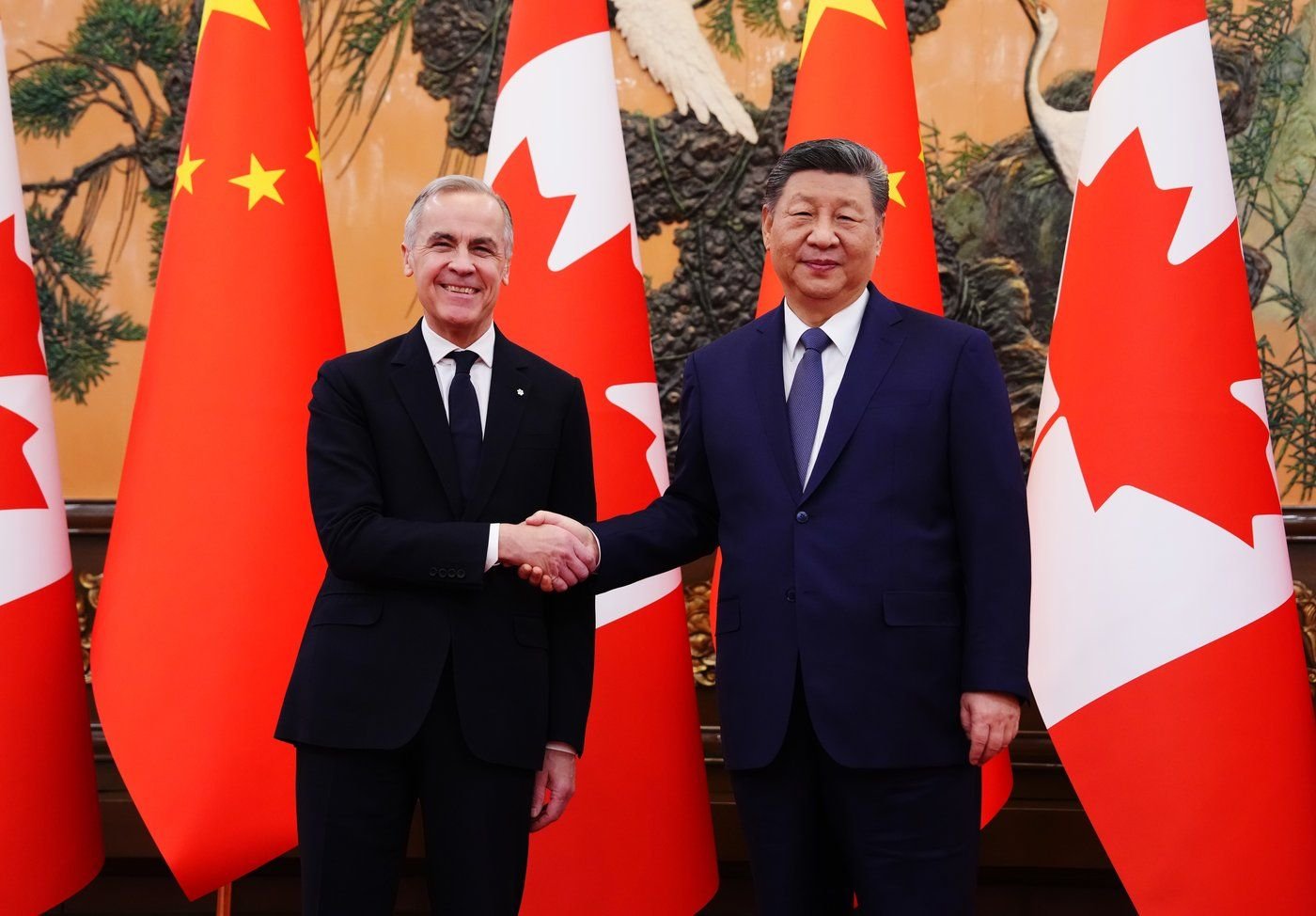
“The Canadian market is too small, so you would need some other market to give scale and whatnot to find a home for the production of that facility,” said David Adams, president and CEO of the Global Automakers of Canada.
Prime Minister Mark Carney’s recent trade deal with China drew criticism from Ontario Premier Doug Ford and automakers, worried that lowering tariffs on tens of thousands of Chinese electric vehicles would hamstring the reeling domestic industry.
In the immediate aftermath, media leaks indicated the Liberals were crafting a new auto policy that would offer preferential treatment for producers investing in Canada. The government also suggested the deal was the first step towards getting Chinese companies to build EVs in Canada.
But does any of this make sense from a financial perspective?
According to the Canadian Vehicle Manufacturers’ Association, 92 per cent of vehicles exported from this country were destined for the U.S. in 2024.
However, U.S. President Donald Trump last year imposed a 25 per cent tariff on the non-U.S. content in imported vehicles, walking back an earlier pledge to impose the levy on all imports of autos and parts.
The Centre for Economic Policy Research, a European think-tank, says estimates of the average non-U.S. content for Canadian vehicles land around 50 per cent, putting the effective tariff rate at 12.5 per cent.
Trump has only fanned the flames in advance of the start of renegotiations of the continental free trade agreement later this year.
Visiting an auto plant in Michigan earlier this month, he dismissed the importance of the U.S.-Mexico-Canada Agreement (CUSMA), saying Americans “don’t need cars” made in Canada or Mexico.
Without access to the U.S., does Canada make sense as a destination for new auto plants?
David Adams, president and CEO of the Global Automakers of Canada, told iPolitics that it would be challenging to entice vehicle producers to set up shop in Canada without guaranteeing access to the U.S. because the domestic market here isn’t large enough to make it viable.
“The Canadian market is too small, so you would need some other market to give scale and whatnot to find a home for the production of that facility,” he said.
“The challenge becomes, it’s a regionalized automotive industry. So, vehicles are being built essentially in the North American region for North America. They’re being built in Europe for Europe, and Asia for Asia. So, it’s difficult to sort of look at it and say, ‘well, can you use Canada as an export platform to other jurisdictions?’”
Canada’s auto industry is no small piece of the broader economy.
According to the federal government, it contributed $16.8 billion to our GDP in 2024, making it one of Canada’s largest manufacturing sectors.
In that year, the industry directly employed more than 125,000 people, while it indirectly supported another 427,000 jobs, including in body shops and dealerships.
Five auto giants — Ford, General Motors, Honda, Stellantis, and Toyota — assembled more than 1.31 million light-duty vehicles at their Canadian plants in 2024, while these plants contribute to some 700 parts suppliers.
But Trump has been clear. He believes auto jobs in Canada belong in the U.S., and his tariffs have been having an impact.
Stellantis announced in October that it was shifting of Jeep production slated for a Brampton assembly plant to Illinois as part of plans to invest $13 billion to expand production in the United States.
The Liberals threatened consequences if Stellantis didn’t honour commitments to keep jobs in Canada, but the company hasn’t backed down.
Stellantis signed a contract with the federal and Ontario governments in 2023 for $15 billion in subsidies for an under-construction Windsor battery plant that guaranteed production would continue at its Brampton facility.
If Trump is successful in taking U.S. automakers out of Canada, will we have an industry left?
For their part, the federal Liberals insist they’re making inquiries about bringing investment here.
A spokesperson for Industry Minister Melanie Joly said she was “advancing discussions with global companies, including Chinese companies, to further investments in Canada’s automotive industry and will continue to do so in the coming weeks.”
“The recent agreement with China will also catalyze considerable joint-venture investments, which will create good-paying and sustainable careers for Canadians across the country,” said Gabrielle Landry in an emailed statement.
It’s sentiment echoed by China’s envoy to Ottawa, who recently told The Canadian Press that Beijing wants to partner with Canadian autoworkers to create good jobs and build cheaper cars.
“The character of China-Canada practical co-operation is complementarity and mutual benefit,” Ambassador Wang Di said through his interpreter, the outlet reported.
“China encourages and supports Chinese companies to make investments and start up companies here in Canada, on the basis of the market rules. At the same time, we hope that the Canadian side will provide a fair, non-discriminatory and predictable business environment for the Chinese companies that come here.”
The union representing Canadian auto workers said it doesn’t believe Chinese vehicle producers will make significant investments in this country.
Unifor national president Lana Payne told reporters at a press conference on Wednesday that China’s massive over-capacity in EV production provides “little reason for those companies to establish real and meaningful manufacturing operations in our country.”
But even if those investments do materialize, she said they likely wouldn’t provide the same employment footprint seen by automakers already in Canada.
“Experience in other parts of the world shows the core supply chain remains in China, supported by heavy state subsidies…. very, very low wages and suspect labor conditions, while parts are shipped in for final assembly,” she said.
“This model creates few jobs and fails to establish a meaningful or durable industrial base.”
As for the automakers already here in Canada, Adams said what they need the most right now from the government is clarity. And while Canada can’t predict what Trump will do next, he said there are levers that Ottawa does control, such as the electric vehicle sales mandate.
Carney announced in September the mandate — which has been criticized as unrealistic and disruptive by producers — would be reviewed and its implementation delayed. But since then, the Liberals have refused to reveal whether it was being scrapped or revived.
“That’s been hanging out there for months now, and it’s always, ‘oh, we’re gonna use in a few weeks.’ Well, you know, it’s enough time. We need the decision,” Adams said.
Adams said the Chinese EV agreement was adding “more uncertainty” for automakers because the government hasn’t offered any details than what was announced last week, adding the Liberals haven’t agreed to meet with industry representatives.
The agreement will pave the way for up to 49,000 Chinese electric vehicles to enter the Canadian market at a 6.1 per cent tariff rate.
Some of the lingering questions, according to Adams, include if the Chinese imports will have to conform to Canadian motor vehicle safety standards, would they be required to be sold through dealerships and whether companies will have to report their sales.
with files from the Canadian Press