dailynewsnblog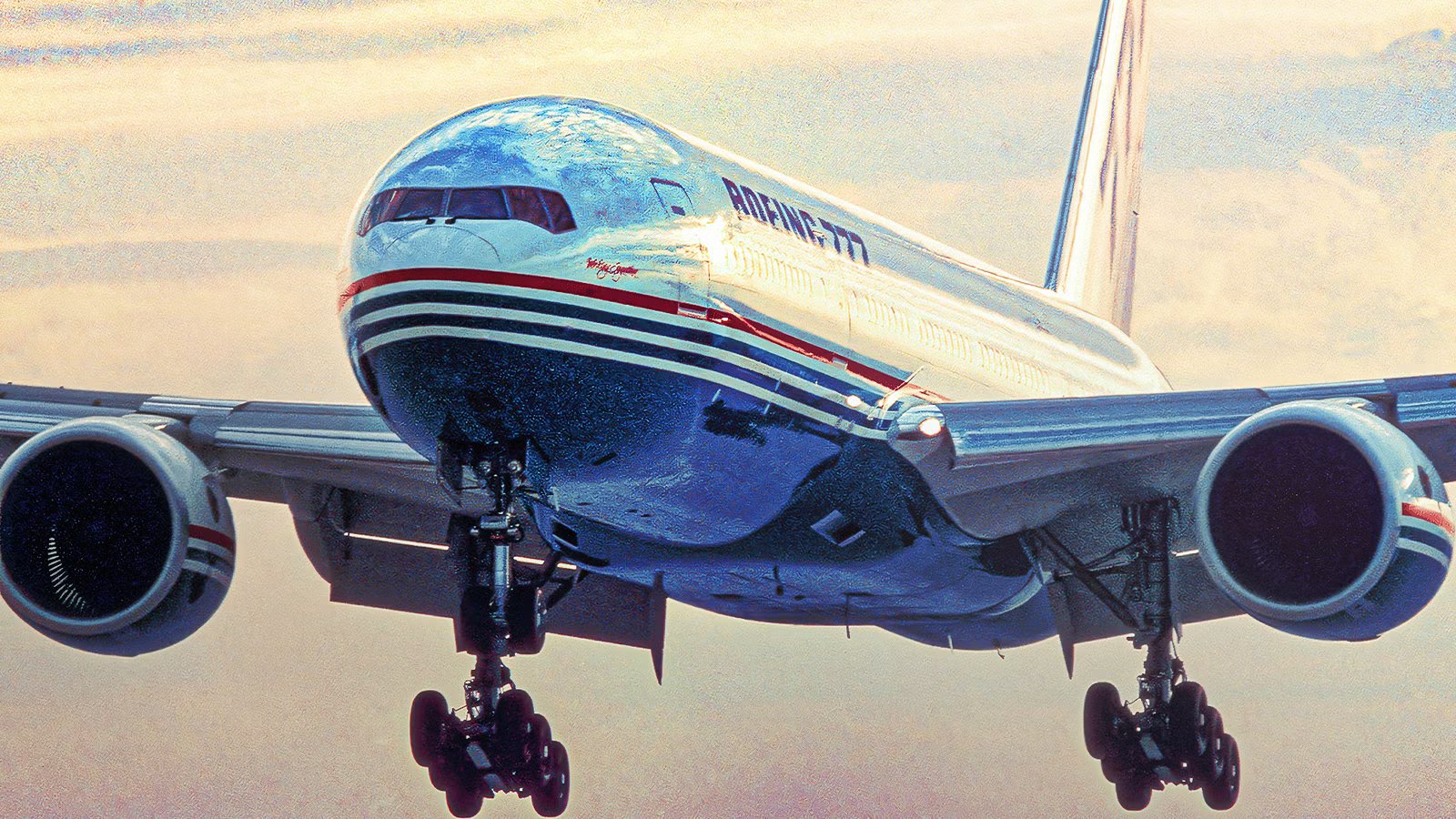
When the Boeing 777-200 was launched in the mid-1990s, it marked a new era for long-haul twin-engine aircraft. One unusual feature, however, was the choice of not one or two, but three different engine options. Airlines could select between engines from Pratt & Whitney, General Electric, or Rolls-Royce, each offering distinct performance and economic characteristics.
This decision was not accidental – it reflected airline preferences, competitive dynamics among engine manufacturers, and the operational flexibility  Boeing wanted to offer its customers. In this article, we will take a look at the different engine options available for the Boeing 777-200 and will examine how the iconic aircraft went on to shape today’s commercial aviation industry.
Three Different Engine Options

The vast majority of Boeing 777-200s were equipped with either Rolls-Royce Trent 800 or Pratt & Whitney PW4000 engines. However, a small number of 777-200s, operated exclusively by British Airways, were powered by General Electric GE90 engines.
Each of the engine options for the Boeing 777-200 had its own strengths. The Pratt & Whitney PW4000 was a proven design, valued for reliability and familiar maintenance procedures, making it attractive to airlines already using the manufacturer’s engines. The General Electric GE90 was a game-changer in terms of power, becoming the most powerful turbofan at the time. It offered exceptional thrust and was ideal for ultra-long-haul routes.
Meanwhile, Rolls-Royce’s Trent 800 focused on efficiency and smooth performance, appealing to airlines prioritizing fuel economy and passenger comfort. Now, let’s take a closer look at why Boeing chose to offer several engine options to customers of the 777-200.

Which US Airlines Operate The Most Boeing 777s?
Two major US airlines currently operate the Boeing 777.
Airline Choice & Market Strategy

When Boeing designed the 777-200, it was entering a highly competitive long-haul market dominated by aircraft like the Boeing 747, Airbus A340, and Airbus A330. One of Boeing’s key goals was to make the 777-200 as attractive as possible to a wide range of airlines, and offering three different engine options by way of the Pratt & Whitney PW4000, General Electric GE90, and Rolls-Royce Trent 800 was a major part of that strategy.
Airlines often have long-standing relationships with engine manufacturers, and these are built around existing maintenance infrastructure, spare-parts inventories, training programs, and even financial agreements. By offering three engine choices, Boeing allowed airlines to select an engine that best matched their current fleets and operational experience. For example, an airline already operating Pratt & Whitney-powered aircraft could reduce costs by staying within the same engine family. This flexibility lowered barriers to entry and made the 777-200 easier to justify as a fleet addition.
There was also a competitive reason, as in the 1990s, engine manufacturers were eager to secure positions on new aircraft programs because engine sales generate long-term revenue through maintenance and overhauls. By allowing all three major manufacturers to compete, Boeing encouraged aggressive pricing and performance guarantees. This competition benefited airlines, who could negotiate better deals, and Boeing, which could market the 777 as a customer-focused aircraft rather than one locked to a single supplier.

This Is How Powerful The Boeing 777 Is
The aircraft offers some impressive capabilities.
Performance Needs & Technological Developments

Another reason for the three-engine options was the wide range of flights that the Boeing 777-200 was expected to operate. The aircraft was designed for long-haul routes, but different airlines planned to operate it under very different conditions, including hot and high airports, ultra-long oceanic routes, and high-frequency trunk services. Different engines offered different strengths in thrust, fuel efficiency, weight, and maintenance needs, making them more or less suitable for different types of operation.
The General Electric GE90, for example, represented a major technological leap. It was the most powerful turbofan engine ever built at the time and introduced advanced composite fan blades. This made it ideal for airlines that needed high thrust and long-range performance, particularly on demanding routes. Rolls-Royce’s Trent 800, on the other hand, focused on efficiency and smooth operation, appealing to airlines that prioritized fuel burn and reliability. Pratt & Whitney’s PW4000 offered a more traditional design, which some operators valued for its familiarity and proven maintenance practices.
From Boeing’s perspective, offering multiple engines also reduced production risks, as relying on a single engine supplier could have delayed the aircraft’s entry into service if technical problems arose. With three options, airlines could continue taking deliveries even if one engine type experienced issues. At the same time, the 777-200 became a platform for advancing engine technology, especially as thrust requirements increased with later variants.
In the end, the three-engine-option approach helped the Boeing 777-200 gain broad market acceptance. It balanced airline economics, manufacturer competition, and technological innovation, setting a pattern that influenced how widebody aircraft were marketed in the years that followed.

Why The Boeing 777X Will Evolve Long-Haul Flying
The aircraft features many new innovations from the older generation 777s.
About The Boeing 777-200

The Boeing 777-200 is the original variant of the popular 777 family and represented a major step forward in widebody aircraft design. Boeing officially launched the 777 program in October 1990, and the aircraft was designed to bridge the gap between smaller widebodies like the Boeing 767 and larger aircraft such as the 747, while also taking advantage of new twin-engine operational rules for long-haul flights.
The Boeing 777-200 made its first flight on 12 June 1994, following one of the most extensive testing programs that the US manufacturer had ever conducted. A key feature of the program was Boeing’s close collaboration with airlines, using digital design tools and direct airline input to shape everything from cockpit layout to maintenance access. This approach helped ensure the aircraft met real-world operational needs from the outset.
The Boeing 777-200 entered commercial service on June 7th, 1995, with United Airlines, operating a flight between Washington Dulles International Airport (IAD) and  London Heathrow Airport (LHR). The 777-200 featured a spacious cabin with a wider fuselage than previous aircraft, allowing for more seats in economy class and improved cargo capacity, and the aircraft quickly gained a reputation for reliability, passenger comfort, and efficiency.
The Boeing 777-200 was capable of long-range operations while carrying a full passenger load. Although later variants like the 777-200ER, 777-300, and Boeing 777-300ER offered greater range and capacity, the original 777-200 laid the foundation for what would become one of the most successful widebody aircraft families in aviation history.
United Airlines & The Boeing 777-200

 United Airlines played a central role in the development and early success of the Boeing 777-200, working closely with Boeing throughout the design process. This partnership was unusual for its time, with United Airlines pilots, engineers, and maintenance staff providing direct input on cockpit layout, systems design, and operational features. Their feedback helped shape an aircraft optimized for long-haul efficiency and airline practicality.
The Boeing 777-200 allowed United Airlines to replace older widebodies while offering improved fuel efficiency, greater reliability, and enhanced passenger comfort. Over time, the 777-200 became a key part of the  Star Alliance carrier’s international fleet, operating transatlantic and transpacific routes. Its success with United Airlines helped validate Boeing’s design approach and cemented the 777’s reputation as a versatile, dependable long-haul aircraft that would go on to serve airlines worldwide.
In addition to United Airlines, other major operators of the Boeing 777-200 have included (all since retired):
|
Airline |
Boeing 777-200 |
|---|---|
|
Japan Airlines |
15 |
|
Air China |
10 |
|
Thai Airways |
8 |
|
British Airways |
5 |
|
Cathay Pacific |
5 |
|
China Southern Airlines |
4 |
|
Varig |
4 |
|
Emirates |
3 |
How Does The Boeing 777-200 Fit Into United Airlines’ Wider Fleet?

Today, United Airlines primarily deploys its Boeing 777-200s on high-capacity domestic routes, such as  Los Angeles International Airport (LAX) to Honolulu Daniel K. Inouye International Airport (HNL), Chicago O’Hare International Airport (ORD) to Orlando International Airport (MCO), and
  Denver International Airport (DEN) to Washington Dulles International Airport (IAD).
The latest data from ch-aviation shows that United Airlines currently operates a total of 19 Boeing 777-200s powered by Pratt & Whitney PW4000 engines. Each of the Star Alliance carriers’ 777-200s is able to accommodate up to a maximum of 364 passengers in a two-class configuration — 28 in business class and 336 in economy class (including 102 extra-legroom seats). The table below shows how the 777-200 fits into United Airlines’ wider fleet:
|
Aircraft |
Number In Fleet |
Number On Order |
|---|---|---|
|
Airbus A319 |
77 |
– |
|
Airbus A320 |
71 |
– |
|
Airbus A321neo |
51 |
126 |
|
Airbus A321XLR |
– |
50 |
|
Airbus A350-900 |
– |
45 |
|
Boeing 737-700 |
40 |
– |
|
Boeing 737-800 |
141 |
– |
|
Boeing 737-900 |
12 |
– |
|
Boeing 737-900ER |
136 |
– |
|
Boeing 737 MAX 8 |
123 |
– |
|
Boeing 737 MAX 9 |
113 |
110 |
|
Boeing 737 MAX 10 |
– |
167 |
|
Boeing 757-200 |
40 |
– |
|
Boeing 757-300 |
21 |
– |
|
Boeing 767-300ER |
37 |
– |
|
Boeing 767-400ER |
16 |
– |
|
Boeing 777-200 |
19 |
– |
|
Boeing 777-200ER |
59 |
– |
|
Boeing 777-300ER |
22 |
– |
|
Boeing 787-8 |
12 |
– |
|
Boeing 787-9 |
47 |
141 |
|
Boeing 787-10 |
21 |
– |
|
Total |
1,055 |
639 |
The Boeing 777 family is still popular with United Airlines, although the majority of these aircraft are now the extended range version of the 777-200, known as the 777-200ER, and the larger 777-300ER, which the carrier deploys on some of its flagship routes across the Atlantic. United Airlines recently started the process of retiring some of its older 777-200s.