dailynewsnblog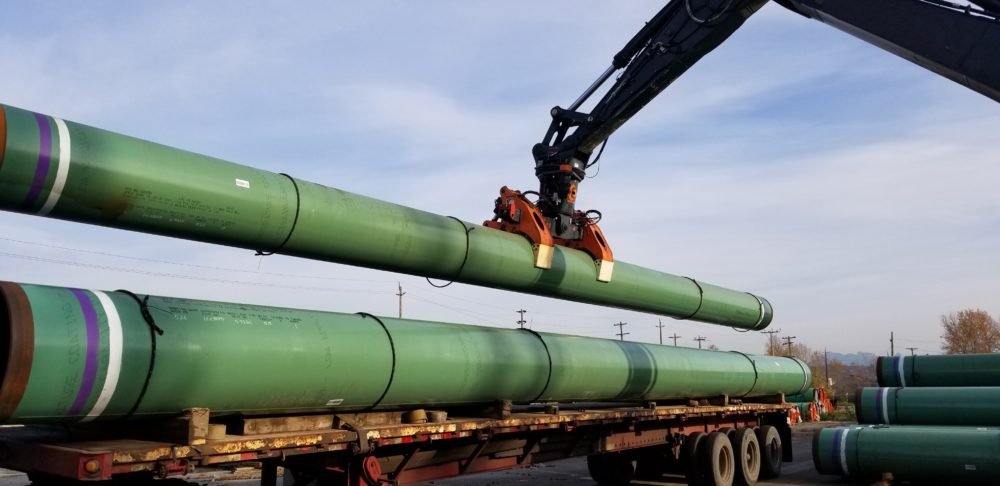
Welcome to Economic Insights, a Thursday newsletter focusing on major projects and the Canadian economy at large.
Stories we are following this week:
- As ALBERTA’s pipeline technical committee crunches the numbers on routes for a bitumen pipeline proposal, lessons from TMX loom large.
- MARK CARNEY’s Major Projects Office (MPO) is widening its net, getting involved in nuclear files that are not on the “official” referral list.
- TIM HODGSON gets briefed on how to communicate the role of the the MPO to Indigenous leaders in a Bill C-5 summit scenario note.

PIPELINE PIVOT
Alberta is eyeing the Pacific once again, and the Trans Mountain project offers a roadmap for meaningful engagement with rights holders can look like.
The route: Alberta’s technical advisory committee—which includes heavyweights from ENBRIDGE, SOUTH BOW, and TRANS MOUNTAIN — is narrowing in on possible routes that include Prince Rupert and Vancouver, with the former emerging as a front runner due to its deeper waters and faster sailing times to Asia. BONNIE GEE, president of Canada’s Chamber of Shipping, tells iPolitics that the northern route is the best bet for bitumen.
Lessons from TMX: The project changed significantly once Canada relaunched the consultation process with guidance from the court on how to make it meaningful.
- Avoidance: TMX required seven reroutes to move forward; Alberta hopes to hit “zero” by using early technical data to steer clear of sensitive cultural and ecological sites.
- Risk of an oil spill: Coastal First Nation leadership says the coast is not ready for increased traffic and oil tankers. WESTERN CANADA MARINE RESPONSE only has one base in the Prince Rupert area, and its federally mandated response time to an oil spill is 72 hours. In the Vancouver area, it’s 2 hours. Addressing concerns would mean boosting response capacity.
- First Nations and Métis: Former Supreme Court Justice FRANK IACOBUCCI says environmental concerns are legitimate, but can be addressed through meaningful engagement. He doesn’t know of any agreements that are perfect, but he knows of agreements that are “fair, reasonable and honorable.”
 Wabigoon Lake Ojibway Nation announced its willingness to move forward to the next phase of the site selection process for a deep geological repository for Canada’s used nuclear fuel in 2024. (Supplied by the Nuclear Waste Management Organization)
NUCLEAR ON THE RADAR
Prime Minister MARK CARNEY’s Major Projects Office (MPO) is involved in projects without official referrals, and recent meetings with WABIGOON LAKE OJIBWAY NATION suggest the organization’s mandate could extend beyond regulatory and financial co-ordination.
Nuclear waste: In 2024 the First Nation was selected to host Canada’s deep geological repository (DGR) for used nuclear fuel. The CARNEY government hasn’t identified it as being in the national interest, publicly, or in various internal briefing notes, even if its execution is critical for any future nuclear energy development.
Meaningful engagement: Yet MPO Vice-President ROB VAN WALLEGHEM met with Wabigoon leadership twice last fall, as the First Nation seeks investments in infrastructure, housing, roads, utilities, broadband and emergency services to host the waste.
Moving quickly: According to JACOB GORENKOFF, the head of Homeward the public affairs, the firm representing the First Nation in Ottawa, the MPO is moving at unprecedented speed on this file.
Broader mandate: How did the DGR end up on the MPO radar? A scenario note prepared during the Bill C-5 Summit with Métis leaders for natural resources minister TIM HODGSON offers a clue: the MPO was set up to provide regulatory oversight, but also to ensure meaningful Indigenous consultation.
BY THE NUMBERS
60 percent: The projected increase in vessel traffic along the B.C. coast by 2040 if the current slate of projects—including LNG Canada and Roberts Bank—all move forward.
9: The number of NHL hockey rinks that would be filled to the top of the boards if you stacked Canada’s entire historical inventory of used nuclear fuel like cordwood.
MAJOR PROJECTS WATCH
— The President and CEO of the Montreal Port Authority, JULIE GASCON, will give a talk Friday morning at the local chamber of commerce about opportunities and challenges that lie ahead in light of the expansion project in Contrecoeur, which is on the MPO priority list. The project obtained its final missing permit two weeks ago.
— BC HYDRO has signed a memorandum of understanding with KSI LISIMS LNG outlining how and when it will deliver as much as 600 megawatts of clean electricity to the proposed floating LNG facility on Nisga’a Treaty Lands. The agreement is being made ahead of a final investment decision and reaffirms support for the North Coast Transmission Line, a project referred to the MPO in November.
— Bill C-5, major projects and the MacKenzie Valley Highway proposal are high up on the agenda in this week’s three-day DENE NATIONAL ASSEMBLY in Fort Good Hope, N.W.T.
HEADLINES
THE KICKER
Economic Insights is iPolitics’ youngest newsletter and is evolving to meet the growing major projects space.