dailynewsnblog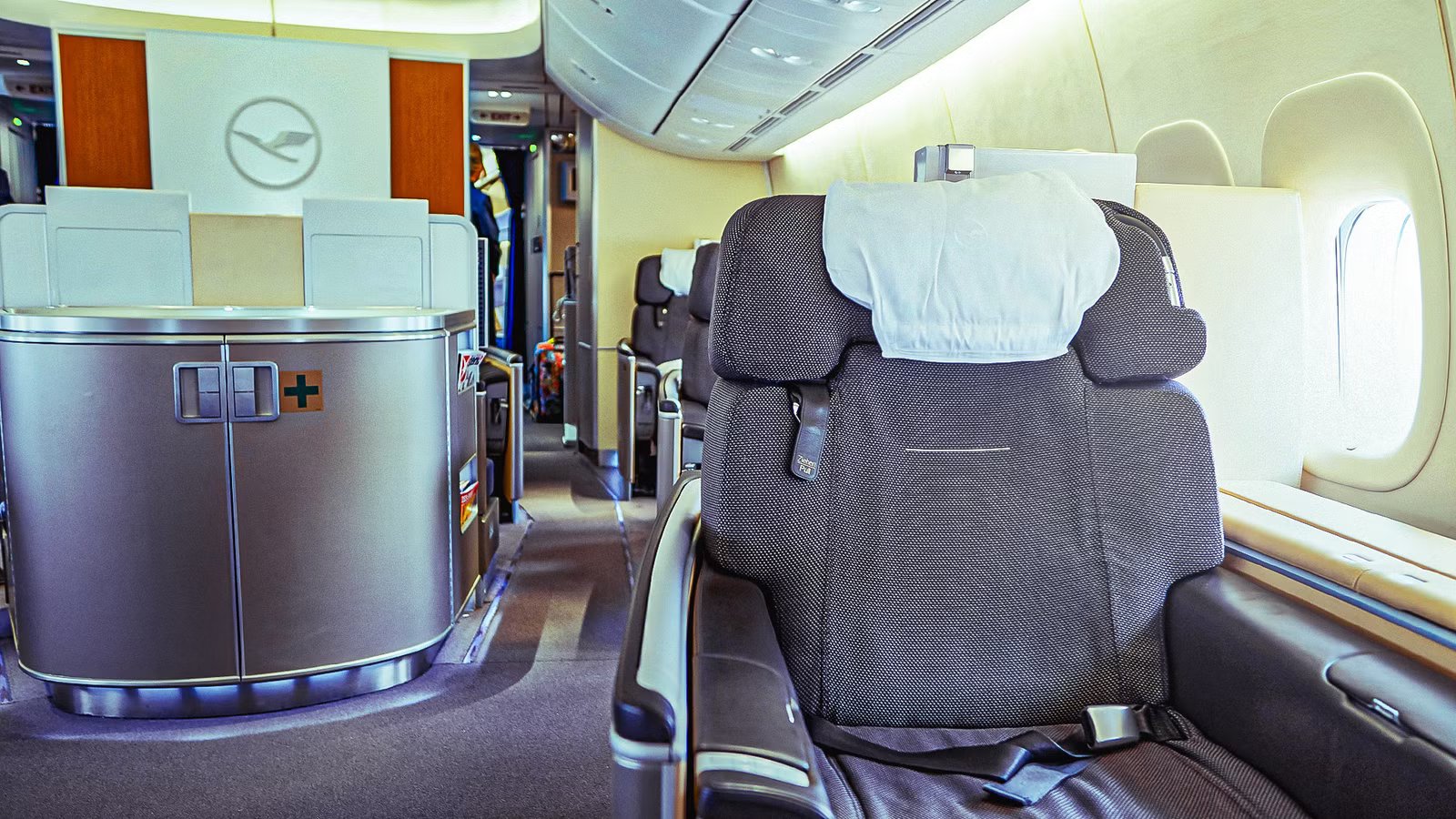
When it comes to being a passenger on any airliner today, while much of what makes a flight comfortable is the seat, not everything is about the seat itself. In 2026, passenger comfort is increasingly defined by the architecture of space, meaning the width of the cabin, the height of the ceilings, and the psychological impact of natural light. For  Boeing, this has meant moving away from the narrow cabin feel toward the sky interior designs that prioritize shoulder room and overhead volume. Gone are the days of feeling overly cramped and restricted inside the cabin, as now the focus is on making each passenger feel as comfortable and relaxed as possible.
Boeing’s shift toward the sky interior was far more than an aesthetic choice, and it was based on extensive psychological research into spatial anxiety. By using recessed LED lighting and cove architecture, engineers can trick the human eye into perceiving the cabin as wider than its physical dimensions. This is crucial for long-haul travel, especially today, where passenger well-being is linked to the view of the horizon. It’s a design rule ensuring that, even from the middle seat, a passenger can see a window to reduce motion sickness. This article takes a look at the five most spacious cabins across Boeing’s active fleet.
Boeing 767
The Widest Of The Classic Narrow-Body Successors

The Boeing 767 was the aircraft that originally brought wide-body comfort to thin long-haul routes. While it is the narrowest aircraft on this list with an internal width of 15 feet 6 inches, it remains a passenger favorite because of its unique 2-3-2 seating configuration in economy. This layout ensures that roughly 85% of the cabin consists of window or aisle seats, nearly eliminating the middle seat burden. A key technical reason for the 767’s popularity is the middle seat probability. In a standard 2-3-2 configuration, only 1 out of every 7 seats is a middle seat. This means only 14% of the cabin is stuck between other passengers.
Compare this to the 33% middle-seat ratio found in most 3-3-3 wide-body configurations and the appeal becomes far more apparent. This mathematical advantage makes the 15-foot-6 inch cabin feel more private and less crowded than newer, wider jets. Despite being a classic design, the 767’s cabin feels remarkably open due to its circular fuselage. The Boeing 767-400ER variant specifically updated the interior to match the more modern 777 style, featuring curved overhead bins that increase head clearance. For travelers, the window-side pairs offer a level of privacy that larger, higher-density aircraft simply cannot replicate in a standard economy class cabin.
This aircraft is included on this list because it represents the perfect middle-ground of Boeing cabins, not too big, not too small, but just right for lateral comfort. Airlines like  Delta Air Lines and
  United Airlines continue to favor the 767 for transatlantic routes because the cabin diameter allows for a more intimate flying experience while still providing the stability and storage capacity of a true widebody jet.
Boeing 787 Dreamliner
A New Standard For Environmental Space

The Boeing 787 Dreamliner revolutionized cabin space by using a carbon-fiber-reinforced polymer fuselage. This composite structure allows for a cabin width of 18 feet, supporting a 3-3-3 layout with more vertical sidewalls. These straighter walls provide passengers in window seats with significantly more shoulder room compared to traditional aluminum aircraft.
Beyond physical width, the Dreamliner uses perceived space to enhance comfort. The windows are the largest in the industry, measuring 19 inches tall, which allows every passenger to see the horizon. Furthermore, the higher cabin pressure, which is set to 6,000 feet, and increased humidity levels make the large volume feel fresher and less fatiguing during flights lasting 10 or more hours. Boeing’s research found that if a passenger can see the horizon from any seat in the cabin, even the middle, their heart rate slows and their spatial anxiety decreases, as per Psychology Today.
The Dreamliner earns its place here because it combines physical volume with environmental technology. The vaulted ceiling design and adjustable LED sky interior lighting can make the cabin feel like a wide, open room rather than a pressurized tube. It is the gold standard for modern passenger well-being, proving that air quality is just as important as floor space.

Why Did Boeing Build The 787 With The Largest Windows In The Sky?
The company wanted to further improve passenger comfort and well-being.
Boeing 777-300ER
The Benchmark For Single-Deck Wide-Body Volume

The Boeing 777-300ER remains the industry benchmark for single-deck cabin volume and is widely considered the ultimate long-haul workhorse. With an internal cabin width of 19 feet 3 inches, it provides a massive architectural space that feels significantly larger than smaller wide-bodies. This airframe was specifically engineered to maximize perceived roominess for passengers on ultra-long-haul transoceanic routes. There is a constant debate regarding the 9-abreast versus 10-abreast seating on the 777. While it was originally designed for 9 seats across, the 19-foot-3-inch width is so generous that many airlines now fit 10 seats.
Even in this tighter configuration, the 777 feels more spacious than the Airbus A350 when both are configured for 10-abreast seating. The 777 simply has more lateral breathing room at head level. The 777 architecture utilizes nearly vertical sidewalls, which significantly increases the shoulder room for passengers seated in the window rows. Its 777 signature interior includes large, pivoting overhead bins that tuck away into the ceiling, creating a vaulted, airy atmosphere. This design reduces the feeling of confinement, even when the aircraft is configured with a high-density 3-4-3 economy layout.
This cabin is uniquely spacious because it offers a single, continuous volume without the stairs or deck splits found in jumbo jets. Airlines like  Emirates and
  Qatar Airways benefit massively from this vast width, allowing plenty of space to install large premium suites while maintaining wider aisles in economy. It provides a sense of lateral openness that makes it a favorite for travelers seeking a less claustrophobic environment.
Boeing 747-400
The Iconic “Double-Bubble” Master Of Main Deck Volume

The Boeing 747-400 is the quintessential Queen of the Skies, defined by its unique double-deck fuselage. While the upper deck is often the focus of luxury and privacy, the main deck is where the airframe truly shines in terms of scale. With an internal width of 20 feet, it offers a grand and truly spacious feel that many modern twin-jets struggle to replicate.
This “double-bubble” cross-section provides a massive vertical clearance on the main deck, with ceilings reaching over 8 feet. The 747-400 was specifically designed to handle high-density passenger loads without feeling cramped, utilizing a 3-4-3 economy layout that remains wider and more open than almost any other commercial aircraft in aviation history. One of the most interesting spatial experiences is found in the nose. As a result of the fuselage tapering toward the front, the seats in the first 5 rows actually have windows that face partially forward. This creates an almost private jet-like feeling where the cabin feels like it is wrapping around the passenger.
The 747-400 is included on this list because of the sheer magnitude of its lower deck. Its circular fuselage allows for curved sidewalls that move away from the passenger at head level, creating a psychological sense of vastness. Even as it retires from many global fleets, step by step, its interior volume remains a treasure for international long-haul travel.

Queen Of The Skies: The Boeing 747’s 10 Most Popular Routes In The Last 20 Years
The jumbo once ruled the skies. But which airport pairs reigned supreme? The answers may surprise you.
Boeing 747-8
The Ultimate Evolution Of The Double-Decker Architecture

The Boeing 747-8 Intercontinental represents the final and most technologically advanced chapter of the jumbo jet legacy. Stretched by 18 feet 4 inches over its predecessor, the 747-400, this aircraft held the title of the world’s longest passenger plane for years. In 2026, it remains a flagship for carriers like  Lufthansa and Korean Air, offering a cabin volume that feels more like a building than a vehicle.
Unlike earlier models, the 747-8 incorporates the Boeing Sky Interior originally developed for the 787 Dreamliner. This includes dynamic LED lighting that mimics the natural progression of the day, helping to reduce jet lag across its massive 20-foot-wide main deck. The architecture features sculpted, curved panels and larger, pivoting overhead bins that maximize both head clearance and storage capacity for up to 467 passengers.
One of the most innovative uses of space on the 747-8 is the crown area, which is the triangular space located above the main deck, aft of the upper deck. Boeing developed a concept called the SkyLoft, which utilizes this previously wasted area for passenger sleeping berths or lounges. While most airlines use this for crew rests, the sheer volume available in the ceiling of the plane allows for over 40 individual berths without taking up a single square foot of the main passenger deck.
This aircraft is the pinnacle of Boeing’s spacious designs because it offers two distinct environments. The main deck provides a sense of horizontal vastness, while the stretched upper deck, which remains to this day the longest ever built, offers a private, boutique atmosphere. A signature grand staircase connects these levels, reinforcing the aircraft’s status as a masterpiece of aeronautical space and passenger comfort.