dailynewsnblog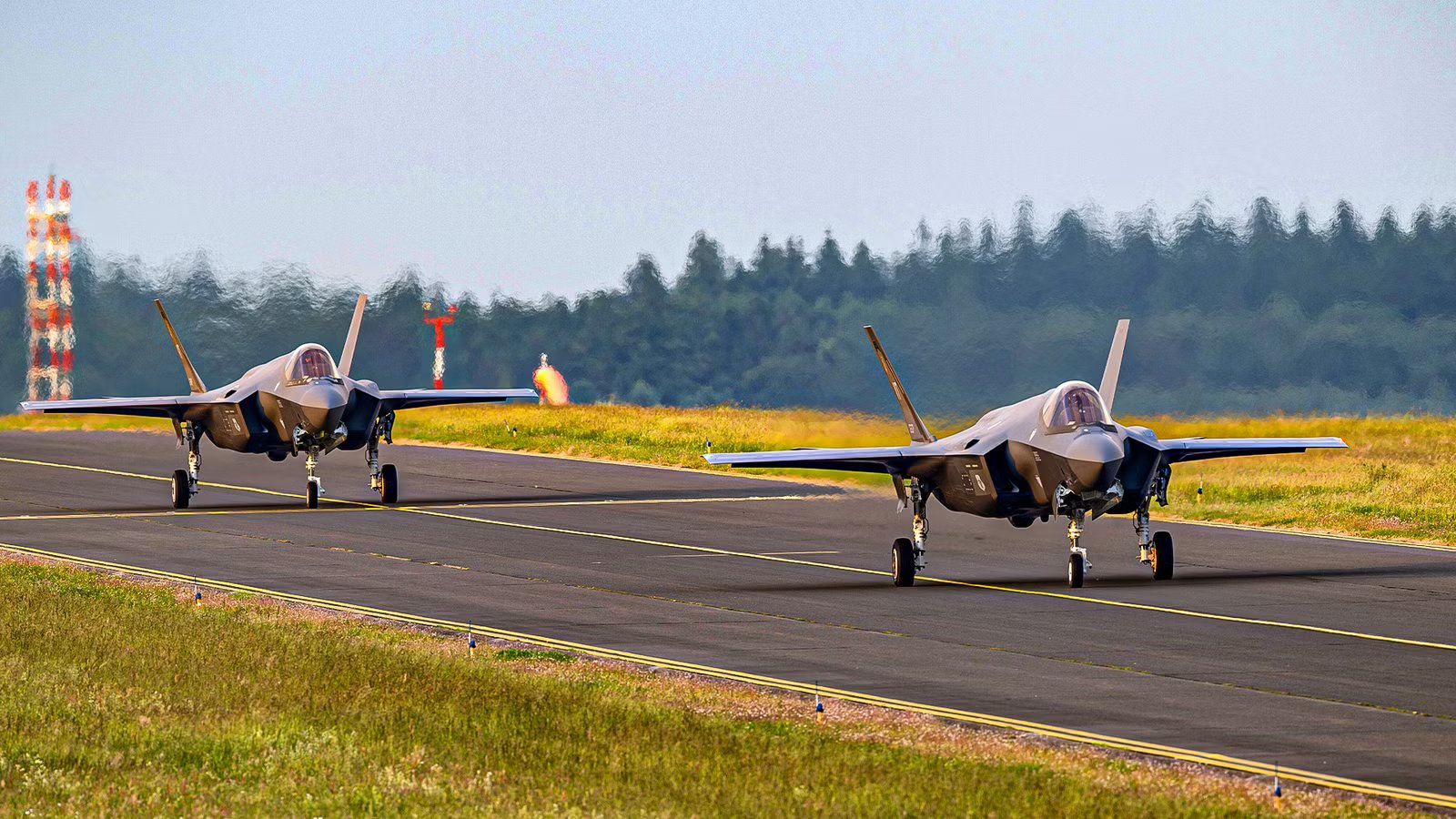
The United States Air Force maintains a powerful and enduring presence across Europe, anchored by a network of strategically vital air bases. These installations are logistical hubs, deterrence platforms, and rapid response nodes that allow the US and NATO to project airpower across multiple theaters.
From humanitarian airlift missions to frontline fighter operations, each base plays a distinct role shaped by geography, host-nation agreements, and evolving security challenges. This ranked list examines five of the US Air Force’s most important European bases, examining their overall strategic impact, operational scope, and influence on transatlantic defense posture.
Lajes Field, Portugal
A Transatlantic Waypoint In The Azores

Lajes Field, located on Terceira Island in Portugal’s Azores archipelago, occupies one of the most geographically advantageous positions of any US Air Force base in Europe, particularly for long-range aircraft such as the C-17 Globemaster III and KC-46 Pegasus operating across the Atlantic. Sitting roughly midway between North America and mainland Europe, the base has functioned for decades as a natural airborne bridge connecting continents. First established in 1943 during World War II, Lajes supported Allied ferry flights and maritime patrol operations, a role that continues to define its mission today.
During the Cold War, Lajes became an essential staging point for US and NATO aircraft moving between the continental United States and Europe, hosting a steady flow of tanker and transport aircraft while also supporting anti-submarine patrols in the North Atlantic. Unlike European bases dominated by tactical aircraft such as the Lockheed Martin F-35A Lightning II or McDonnell Douglas F-15E Strike Eagle, Lajes is designed almost entirely around mobility and sustainment. Its flightline is routinely populated by airlift aircraft, tanker platforms, and special-assignment aircraft, enabling the steady flow of personnel, equipment, and humanitarian cargo between theaters. Strategically, this makes Lajes one of NATO’s most important enablers for rapid reinforcement across the Atlantic.
Air Mobility Command has emphasized routing resilience for tanker and transport fleets, a strategy that places renewed importance on mid-Atlantic nodes like Lajes. Although the base does not host fighters or bombers, its role in enabling every other aircraft type gives it enduring strategic relevance. Lajes ranks fifth not because it lacks importance, but because its mission is intentionally narrow. Aircraft such as the C-17 and KC-46 dominate operations rather than combat jets, and its influence peaks during surge operations rather than daily tactical sorties. Even so, without Lajes, sustained US and NATO air operations across the Atlantic would become slower, riskier, and far less flexible.

Which Country Has The Most Superior Military Jets In The World?
Discover why the US leads global air power with over 13,000 aircraft, cutting-edge fighters like the F-35, and sixth-gen tech like NGAD and B-21.
RAF Fairford, United Kingdom
The US Air Force’s Forward Bomber Base

RAF Fairford occupies a unique and highly specialized position within the US Air Force’s European footprint. Although operated by the Royal Air Force, the base is maintained to US standards, allowing American strategic bombers to deploy with minimal notice. Fairford was originally built in 1944 as a Royal Air Force heavy bomber base, and it transitioned into a US forward bomber hub during the Cold War. In addition to its bomber role, RAF Fairford has long been associated with one of the US Air Force’s most enduring intelligence platforms: the Lockheed U-2 “Dragon Lady.”
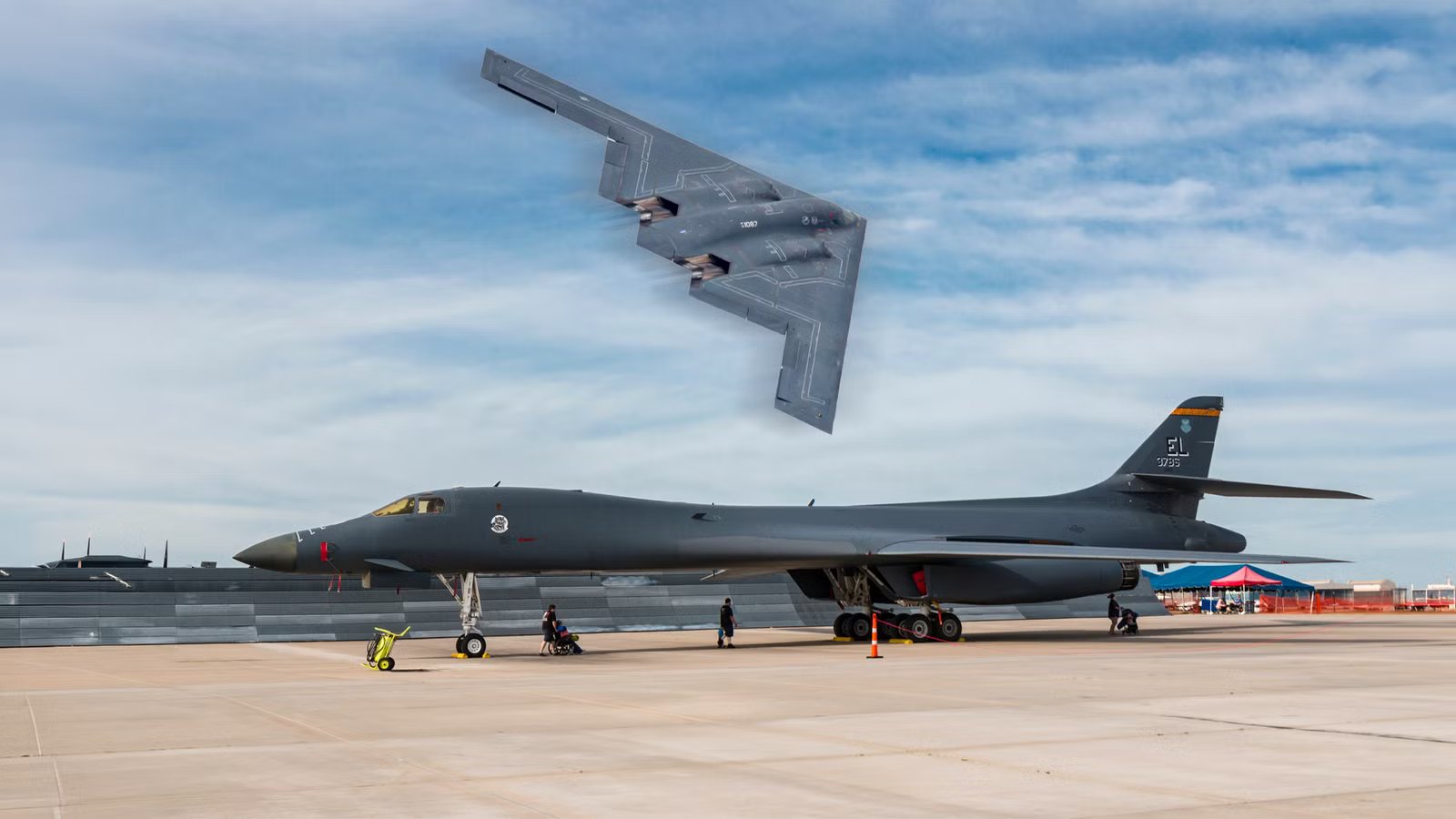
During the Cold War, Fairford regularly supported U-2 detachments conducting high-altitude reconnaissance missions over Eastern Europe, providing critical intelligence on Warsaw Pact military activity. That role has not disappeared. Even in the 21st century, Fairford has periodically hosted U-2 deployments in support of NATO intelligence, surveillance, and reconnaissance (ISR) operations. Over the past decade, the base has hosted regular Bomber Task Force deployments involving b-52H Stratofortress, B-1B Lancer, and B-2 Spirit Bomber , typically supported by KC-135 Tanker aircraft. These rotations are designed to demonstrate deterrence, rehearse long-range strike missions, and reassure NATO allies of sustained US commitment to European security.
From Fairford, bombers can reach targets across Europe, the Middle East, and North Africa, often integrating with allied fighters, intelligence platforms, and tanker support. This approach allows the US Air Force to project strategic airpower without the political and logistical costs of permanent basing. Since Russia’s invasion of Ukraine in 2022, deployments to RAF Fairford have taken on additional strategic weight. B-52 flights operating alongside NATO fighters over Europe, the Baltic Sea, and the North Sea have become a regular feature of deterrence-focused exercises, reinforcing alliance cohesion and signaling long-range strike capability.

The US Air Force Bases Assigned F-22 Raptors
From the heartland to global deployments, the F-22 Raptor provides air superiority, supporting US troops and allies worldwide.
Aviano Air Base, Italy
Southern Europe’s Fighter Powerhouse

Aviano Air Base, located in northeastern Italy near the foothills of the Alps, remains one of the most consistently active US fighter bases in Southern Europe. Its origins trace back to 1911, when it became one of Italy’s first military airfields. After use by Italian and German Luftwaffe forces during World War II, the base was captured by British forces in 1945 before entering the NATO era. The US Air Force arrived at Aviano in 1954, and the base evolved into a permanent fighter installation in 1994 with the activation of the 31st Fighter Wing. Today, this USAF wing operates F-16C/D Fighting Falcons capable of air-to-air combat, precision strike, and suppression of enemy air defenses.
Aviano’s geographic position gives it immediate access to the Balkans, Eastern Europe, the Mediterranean, and North Africa. During the 1990s, the base played a central role in NATO air campaigns over Bosnia and Kosovo, launching thousands of sorties that defined its identity as a forward combat platform. In more recent years, Aviano has continued to support NATO reassurance measures, rotational deployments, and joint training exercises, often integrating with allied aircraft such as Italian Air Force F-35As and European-operated F-16s.
Although the base does not host fifth-generation fighters on a permanent basis, its upgraded F-16 fleet remains relevant through interoperability and mission flexibility. Aviano Air Base remains the only US Air Force installation in Europe and Africa equipped with the Sikorsky HH-60W Jolly Green II for combat search-and-rescue (combat SAR) operations. Aviano ranks third because it combines permanent combat capability with forward positioning. Its mission remains tactical and sortie-focused, centered on F-16 operations, deterrence patrols, contingency response, and combat search-and-rescue support.
RAF Lakenheath, United Kingdom
Home Of America’s Most Advanced Fighters In Europe

RAF Lakenheath represents the cutting edge of US tactical airpower in Europe. It was originally constructed in 1943 as a bomber base for the US Eighth Air Force during World War II. Then, Lakenheath evolved through the Cold War into the US Air Force’s largest fighter base on the continent. Today, the base is home to the 48th Fighter Wing, which has multiple squadrons of F-15E Strike Eagles alongside a growing contingent of F-35A Lightning II stealth fighters.
This combination provides exceptional operational flexibility, pairing the F-15E’s range and payload with the F-35A’s stealth and sensor fusion. Lakenheath’s importance has grown significantly since 2022 and continues into 2026. Aircraft from the base regularly deploy forward to Eastern Europe, support quick-reaction alert missions, and participate in large multinational exercises designed to reinforce NATO’s eastern defenses.
The base’s hardened shelters, extensive maintenance infrastructure, and dispersal options support sustained high-tempo operations, making Lakenheath one of the most resilient fighter installations in Europe. Lakenheath ranks second due to its concentration of advanced combat aircraft and constant operational tempo. Only one installation surpasses it in overall strategic importance, largely because of responsibilities that extend far beyond tactical aviation.

What Is The Role Of The US Air Force’s Expeditionary Security Forces Squadron Fly Away Security Teams?
Empowering aircrews in remote warzones, Fly Away Security Teams ensure unwavering defense for US Air Force operations worldwide.
Ramstein Air Base, Germany
The Command And Logistics Heart Of US Air Power In Europe

Ramstein Air Base is the single most strategically important US Air Force installation in Europe. Established in 1952 on the territory of then West Germany, it has long served as the operational and logistical center of US airpower on the continent. Today, it hosts the headquarters of US Air Forces in Europe–Air Forces Africa (USAFE-AFAFRICA). From Ramstein, senior commanders oversee air activities spanning more than 100 countries, coordinating fighter deployments, bomber rotations, intelligence sharing, logistics planning, and multinational exercises. This command-and-control role alone makes the base indispensable.
Beyond leadership functions, Ramstein is a vast logistics and mobility hub. The airbase is supported operationally by the 86th Airlift Wing, which flies C-130J Super Hercules aircraft while overseeing base support for one of the largest US military communities overseas. In addition, units such as the 521st Air Mobility Operations Wing and 435th Air Ground Operations Wing coordinate airlift, logistics, and contingency response across Europe and Africa. Ramstein also plays a central role in aeromedical evacuation ( medevac), with injured service members routinely transiting the base en route to advanced medical facilities. This mission, often overlooked, has been a constant feature of US operations since the Cold War.
|
Function |
Primary Units / Capabilities |
Geographic / Operational Scope |
Strategic Value |
|---|---|---|---|
|
Theater Command & Control |
Headquarters, US Air Forces in Europe–Air Forces Africa (USAFE-AFAFRICA) |
Europe and Africa, spanning more than 100 countries |
Directs and synchronizes all US Air Force operations for two combatant commands, making Ramstein the central airpower command node across both theaters. |
|
Host Wing & Airlift Operations |
86th Airlift Wing (C-130J, C-21A, C-37A) |
Europe, Africa, Middle East |
Provides intra-theater airlift, distinguished visitor transport, and aeromedical support while sustaining day-to-day base operations for one of the largest U.S. overseas communities. |
|
Global Mobility Coordination |
521st Air Mobility Operations Wing |
Europe, Africa, Southwest Asia |
Manages command and control of strategic and theater airlift, en-route support, airspace coordination, and surge mobility during crises |
|
Expeditionary & Ground Support |
435th Air Ground Operations Wing |
Deployed and forward locations |
Enables rapid establishment and sustainment of airfields, communications nodes, and command elements during contingencies and expeditionary operations. |
|
Aeromedical Evacuation Hub |
86th Aeromedical Evacuation Squadron and staging facilities |
Global casualty evacuation routes |
Serves as the primary transit and staging point for wounded personnel moving from operational theaters to advanced medical care |
|
Allied & Multinational Integration |
US and NATO command elements |
NATO and partner nations |
Facilitates joint planning, combined air operations, and interoperability between US forces and allied air forces |
|
Communications & Network Integration |
Theater-level command, control, communications, and intelligence infrastructure |
Multi-domain, theater-wide |
Connects dispersed airbases, logistics hubs, and command centers into a unified operational air network |
The base’s communications infrastructure allows Ramstein to synchronize air operations across dozens of allied nations, tying together fighter bases, logistics hubs, and command centers into a single operational network. Ramstein ranks first because no other base combines leadership, logistics, communications, and operational coordination at this scale. Every other US Air Force installation in Europe, directly or indirectly, depends on Ramstein to function effectively.