dailynewsnblog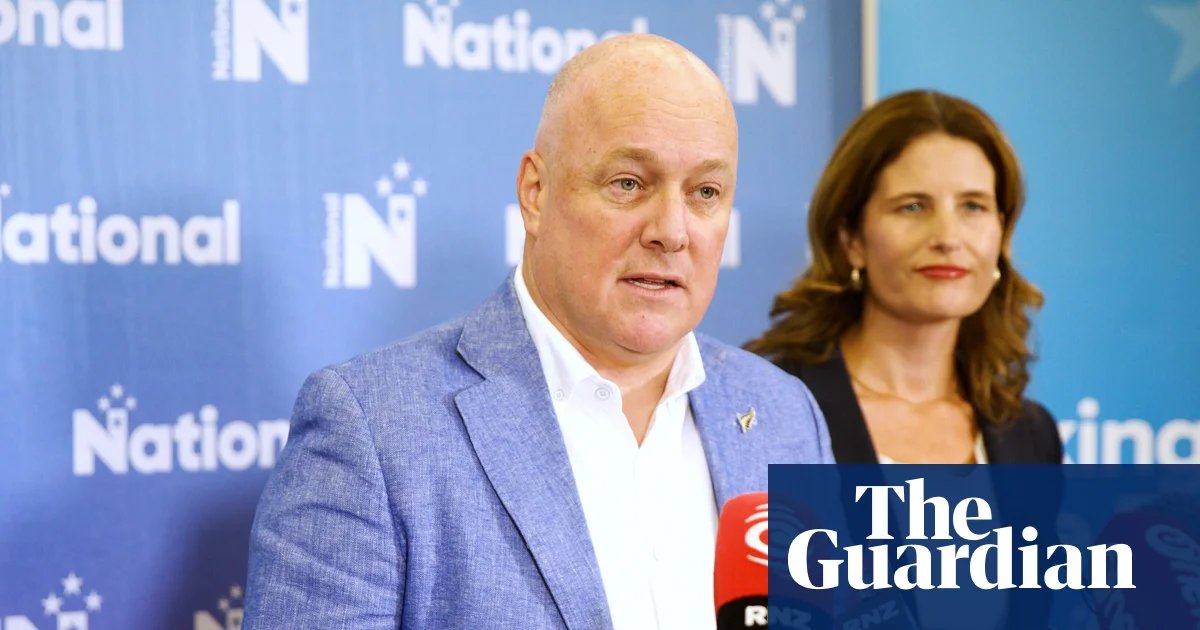
The prime minister, Christopher Luxon, has announced New Zealand’s next general election will be held on 7 November, kickstarting a campaign cycle that could become one of the country’s most contested in years.
On Wednesday, Luxon told reporters the National party would continue its agenda to “fix the basics and build the future”.
“In the lead up to the election, Kiwis will have to weigh up who is best placed to provide stable and strong government in a very volatile and uncertain world – a strong economy with responsible spending, lower taxes and more opportunity for you and your family,” Luxon said.
The economy and cost of living will be high on the agenda for the two major parties this year, with the issues consistently cited as two of the top concerns facing New Zealanders, according to the Ipsos New Zealand issues monitor.
New Zealand operates under a “mixed member proportional”, or MMP, voting system and holds general elections every three years – usually falling in October. There are 120 seats in New Zealand parliament and the two major parties – centre-right National and centre-left Labour – typically need to negotiate with minor parties to form a majority.
Luxon formed a coalition government alongside the minor libertarian Act and populist New Zealand First parties at the 2023 election. While open to working with those two parties again, Luxon said he would be making the case for a “very strong party vote for National”.
Since taking office, the coalition has ushered in sweeping policy changes to public services, infrastructure and environmental regulations, pitching its agenda as an effort to reboot the sluggish economy, drive overseas investment and boost industry.
Many of its policies have been met with controversy. The coalition’s far-reaching reforms to policies affecting Māori ignited the largest ever protest over Māori rights, its weakening of climate change goals alarmed scientists and environmentalists, while its opening up of land to mining prompted 30,000 public submissions on the bill, one of the highest numbers ever submitted about a piece of legislation.
Luxon will face a wobbly road to secure a second term. Polling for the coalition over the past year has been lukewarm, with the left bloc – made up of Labour, the Green party and Te Pāti Māori (the Māori party) – frequently polling close to, or higher, than the sitting government.
Luxon’s favourability as leader, meanwhile, has been consistently low, with the Labour leader, Chris Hipkins, regularly sitting ahead in the preferred prime minister stakes.
The political scientist Dr Claire Robinson told the Guardian the last 15 public opinion polls show Labour has averaged 2% more support over National.
“So even though [Luxon’s] trying to appear to be really calm about things, actually, the party will be in quite a lot of panic.”
The domestic economy would need to improve dramatically for National to secure a second term, and there was little sign yet that people were feeling positive about the outlook, Robinson said.
“[National] is going to have to try to pull some rabbits out of the hat quickly, and early on in the year.”
Hipkins, who led Labour during its 2023 election loss, meanwhile, would need to do very little, Robinson said, adding it was “National’s game to lose, not Labour’s to win”.
“But I think the opportunity for Labour is to be hammering National on that domestic economy front: what’s happening to wages, what’s happening to jobs, why are people still leaving, and what’s happening to house prices?”
Reacting to the announcement, Hipkins said his party was “fired up and ready to go” and promised voters his party was “refreshed” with new ideas and faces.
Hipkins said his party would offer a positive vision for New Zealand’s future, with a focus on employment, affordable healthcare, housing and tackling the cost of living.
“The sooner New Zealand gets rid of this government, the sooner the country can move forward,” he said.