dailynewsnblog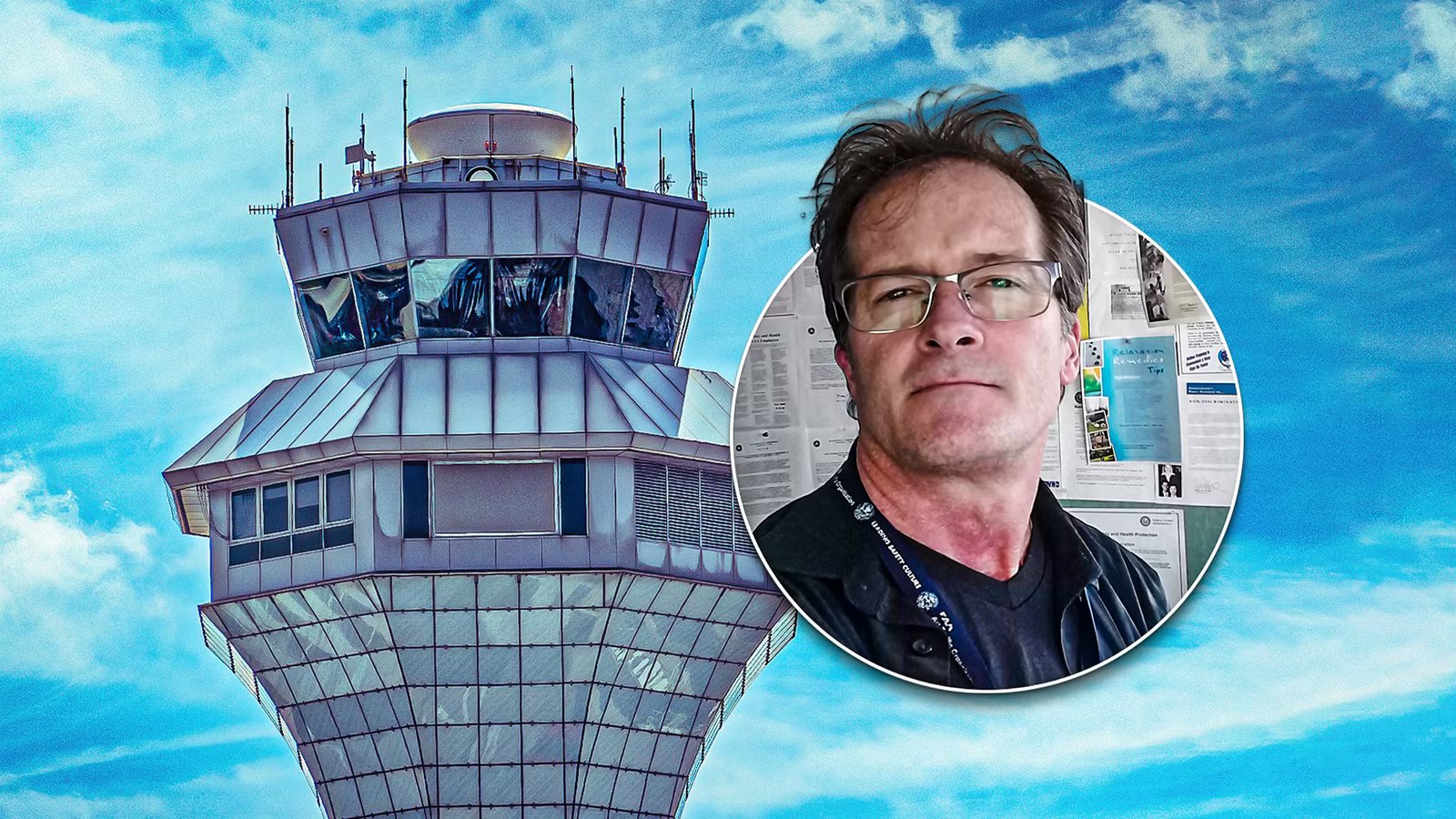
A book, published in 1974 by Robert M Persig, was titled Zen and the Art of Motorcycle Maintenance. Many have pointed out that his work had little to do with either Zen beliefs or motorcycle maintenance, but more to do with philosophy. Working as a career Air Traffic Controller, we find the philosophy is, in fact, similar. Like art, it is abstract.
Behind The Scenes Of Air Traffic Control
In the profession’s name, “Control” itself can be storied. An Air Traffic Controller, while plugged into a scope or console anywhere in the world, is subject to deficiencies in their equipment and that of the aircraft, a myriad of weather events, global warming regardless of how it came about, the ability of the next door Air Traffic Controller, the pilot in command of their flights (as it should be), economics and ever-advancing technology. We are subject to the needs of the flying public, the laws of our parent organizations, and essentially even the laws of nature. Added to the above is the ongoing difficulty of retaining Air Traffic Controllers, as the US and our neighbors to the North must sometimes adjust traffic volume and traffic flow to account for staffing levels. In essence, an Air Traffic Controller operates in real time by the seat of their pants, but they are still only human. They aren’t infallible, although that would be the lofty goal.
Career Progression In FAA Air Traffic Control

There are those who, once they survive the rigors of training, are content to remain where they are their entire careers. I wished to learn every aspect of ATC, however. I recall at one point counting all the positions I had trained, certified, and worked in over 37 years, and came to a number over 70. Keeping in mind, in the Air Traffic Control Tower looming above your favorite or, for that matter, your least favorite airport, there may be as many as ten different positions with people plugged into them. Granted, there are two airports in the US that do have more than one Air Traffic Control Tower (ATCT):  Chicago O’Hare International Airport and
  Dallas/Fort Worth International Airport.
Prior US Military Air Traffic Control Experience Is Sought After For FAA Hiring

Prior to the Gulf War, of which I was not even aware, I elected to leave the US Air Force. I had been certified in the Radar Approach Control and the Tower at a US Air Force base. But I wished to move over to the Federal Aviation Administration (FAA), as in the Military, different options (Tower, Approach Control, or EnRoute) were somewhat limited, other than geographically. Once hired by the FAA, from 1989 until 2001, I first worked in two separate cities’ FAA Air Traffic facilities, both with Terminal RADAR Approach Controls (TRACONs) and towers.
Air Traffic Controller Roles Simplified
Tower Controllers work the taxiways, runways, landings, and takeoffs, while TRACONS “work” that airspace around their airports, giving arriving aircraft to the tower Controller a short distance from their airport(s) – say ten miles — and all their departures transiting from or through their allocated airspace. The Approach Controls “hand off” their departing or over-flying aircraft to the Air Route Traffic Control Center (ARTCC) Controllers, who work the aircraft across from, say, Los Angeles to Miami, Florida. Center Controllers may also hand the aircraft off, destined for Keflavík International Airport, Iceland, as an example, to another country’s Air Traffic Controllers, such as Nav Canada in this case. Understanding, of course, this is but a minimal description of what each does. Essentially, ARTCCs work all the EnRoute traffic across the top, above the airport’s Approach Controls, and sometimes from the surface of the ground to infinity and beyond, as well as across some of the Oceans.

FAA Looks To Hire Nearly 9,000 Air Traffic Controllers Over The Next 3 Years
Why the FAA needs to boost hiring at the US’s ATC towers.
Air Route Traffic Control Centers (ARTCCs)

I also wanted to give this EnRoute Controller thing a shot. It is important to note that the two options, Terminal or EnRoute, evolved very differently. In the early 1960s, all the ARTCCs in the US were moved away from the cities where Approach Controls and Towered Airports are located. This was done for their security during the Cold War. In the “lower 48” of the US, there are twenty Air Route Traffic Control Centers operating the airspace above the cities for which they are named, but few are located in the cities themselves. For instance, “Atlanta ARTCC” is not in Atlanta, Ga, it is in the town of Hampton to the Southeast. Boston Center is not even in Massachusetts; it is located in New Hampshire. Being physically separated and performing different forms of ATC with longer-range, multiple RADARs, ADS-B, and differing regulations for higher altitudes and incredible speeds, over time the equipment, interface, and methods all diverged completely from the Terminal RADARs.
Description Of The Enroute Center – ARTCC Breakdown

Every US Center is then broken down into what are called “Areas.” Some Air Traffic Control Centers have as few as four Areas, and those Centers may handle around 3,000 operations daily, while in the larger, busiest Centers, there may be six or more Areas providing ATC services to more than 12,000 aircraft daily. And each Area in the center may be comprised of, or “staffed,” with upwards of around 50 controllers, if they are lucky, and five Operational Supervisors, rounded, who oversee their assigned Areas. Each Area, then, is reduced to as many as ten sectors to be worked by an individual Controller. During lighter periods of traffic, these may be combined, for example, on the overnight shifts. A Controller must be “checked out,” or certified in all the positions encompassing their Area to have completed training and become a fully Certified Professional Controller (CPC).
I then worked for a few years in two different Areas of the same Center. Changing Areas is somewhat uncommon due to the downtime required when a Controller who was certified to work in one Area must train in a new one, which is expensive. However, in my ARTCC, volunteers were sought for an airspace redesign, which was creating a new Area, number six. Afterward, ambition ensued yet again, so I tried out the Operation Supervisor position, then afterward the Traffic Management Unit (TMU), which directs the flow of air traffic into and out of airports, the other Centers, and the entire US. Thereafter, I returned to work in one of the top five US airports’ Air Traffic Control Towers, then Air Traffic Manager at another. District Support Management followed in two different locales, until at last, when I managed and instructed the Enhanced Traffic Management Course (ETMC) contracted by the US Government at the FAA Command Center (ATCSCC) outside of Washington, DC, until the end of February 2025.
US Government Shutdowns Only Add To The Issues – Of Which There Are Many

The government shutdown of 2025 brought to light in the media once again the controller staffing dilemma in the US and the stress the controllers faced as they continued to work while missing an untold number of paychecks. This was widely reported by numerous different news outlets that repeated the same. However, I don’t recall having seen reporting on Air Traffic Controllers, while focusing on the human perspective, being done before. Notwithstanding, at the end of January 2026, at the time of this writing, another shutdown even appears probable. Never in modern history have there been two shutdowns so near to being back-to-back.
All impacts on an ATC operation require a much deeper look. Staffing came to light again. However, we must consider that this has not only recently become a concern. I can recall that at the end of the last century, the National Air Traffic Controllers Association (NATCA) tried to bring this to Washington, DC’s attention. The reasoning then was much simpler than today’s issue.
Tackling ATC Staffing 2026

During the PATCO strike of 1981, President Reagan had included in statement, “Let me read the solemn oath taken by each of these employees, a sworn affidavit, when they accepted their jobs: ‘I am not participating in any strike against the Government of the United States or any agency thereof, and I will not so participate while an employee of the Government of the United States or any agency thereof.'” Due to President Reagan firing 13,000 Air Traffic Controllers during the PATCO Strike in 1981, attrition would naturally come in a wave around the turn of the century, NATCA asserted. A number of those hired to handle the loss of the fired former Union’s PATCO Controllers may have had prior military Air Traffic time under their belts as well, and the minimum 20 years’ active control time for retirement may have already been met.
The ATC Stress Factor Everyone Is Always Talking About
Stress also deserves more attention in another article. However, I must mention any opportunity to creep into the controller’s mind while they are in position are those distractions: Is the next area so short they will have to start re-routing all of their traffic around; are there holding stacks while aircraft wait to get into the New York Metro area, (meaning more stacks of holding traffic further out, not to mention diversions which can introduce an immense workload); is an Area going to be working short, which means a heavier traffic volume where normally there is not; or, is the individual struggling to make a choice of their own, between coming in sick and infecting everyone or staying home, increasing the burden on their remaining crew members? And despite how it’s being reported, as I personally recall, the last thing on most Air Traffic Controllers’ minds while “strapped in” to a position is whether that paycheck a month out is going to come or not.
Bear in mind that when not “signed in” to a position, the time the Controller should be using to unwind and de-stress may be spent on more pressing personal matters due to the shutdown. For the many US Air Traffic Controllers scheduled to work six days with only a single day off, this may be how that time off is spent as well. However, ATC in the FAA can be quite a lucrative career. Some do make a good living, but not all. A Controller at the highest pay level may earn four or five times the pay at lower-volume level facilities.
US Government Shutdowns Exacerbate Stress
The depth these shutdowns reach cannot be understated and warrants a closer look as well. It is not only Air Traffic Controllers who are overly affected. The TSA is in a very similar situation. They also strive to go to work and have a routine day. But in the back of their minds is the hope that a lithium battery doesn’t erupt into flames on their watch, or a passenger at a checkpoint won’t become too problematic, which is, of course, preferable to them becoming unruly once they’re in the air. In closing, government shutdowns only create more stress and worry for everyone involved in what are already stressful environments. In the aviation sector, government shutdowns involve the airlines, their dispatches, the entire crew aboard the aircraft, as well as the flying public.
FAQ
Q: Do Air Traffic Controllers remain active/operational their entire career?
In the US an FAA Controller cannot remain “operational,” actively controlling beyond the month of their 56th birthday. There is a waiver process, but they are certainly not guaranteed. If a non-operational “Staff Specialist” position is available, classroom training, for example, one can continue their employment, but these can be competitive. The 56th birthday month applies to first level Supervisors as well, as they must maintain currency every month by working positions a set number of hours each month. If a Controller or Supervisor is still considered “operational,” at that point, they are automatically Retired.