dailynewsnblog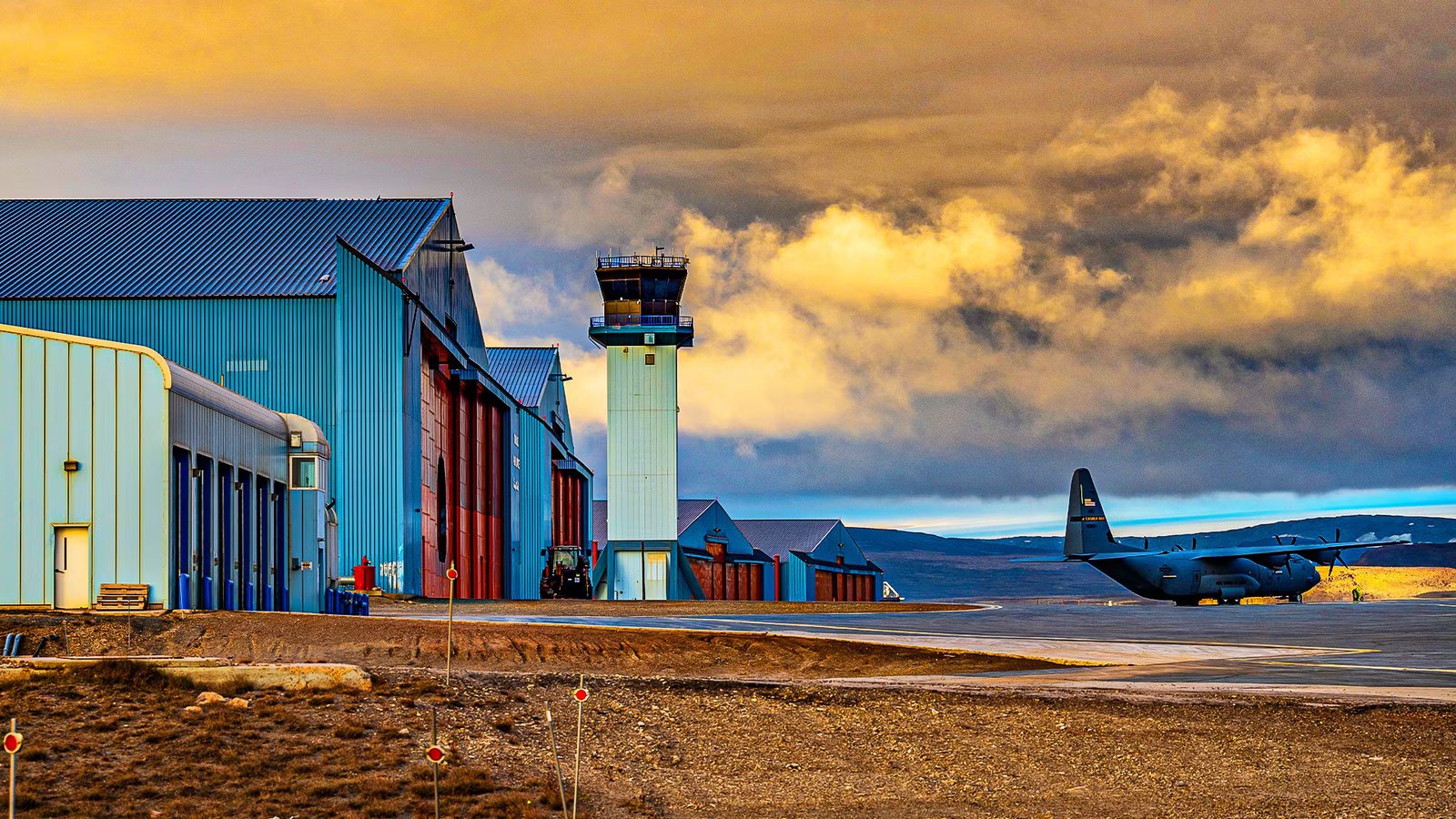
Pituffik Space Base is the new name of the United States Air Force’s former Thule Air Base in Greenland, as of 2023. It is the northernmost military installation in the United States Department of Defense, and it plays an important strategic role in the missile warning and defense system that protects the country from ballistic missile threats. That mission began under the USAF and has continued to endure under the stewardship of the US Space Force.
This is not only an important part of the nuclear deterrence defense network, but it is also a key component of the United States’ and NATO’s modern space surveillance programs. The base’s primary strategic value stems from its unique geographical location in the Arctic, which provides an important vantage point for monitoring air and space approaches between North America and Russia.
First Line Of Defense

As an integral part of North American Aerospace Defense Command’s (NORAD) missile warning mission, the base at Pituffik serves as a key sensor node. The 12th Space Warning Squadron, which uses an Upgraded Early Warning Radar (UEWR) system, is based in Pituffik. This potent solid-state phased-array radar is intended to track and identify ballistic missiles launched at sea and across continents, giving NORAD early warning.
Operation Noble Defender (OND), a regular dynamic exercise involving US and Canadian personnel, uses the base as a hub for NORAD. These operations show how NORAD can quickly deploy forces into the Arctic to maintain “Total Domain Awareness” and discourage rival behavior. Pituffik, which is situated in the Arctic’s “center sector,” closes vital capability gaps that could otherwise be exploited.
Pituffik is part of a global network of satellite tracking stations that provides telemetry, tracking, and commanding services to the United States and its allies’ satellite programs. It monitors thousands of objects in orbit, contributing to space domain awareness. Pituffik is the focal point for NORAD’s modernization efforts. Current investments are filling infrastructure gaps to support new refueling hangars and personnel recovery facilities.
Pituffik is also a key Forward Operating Location (FOL) for NORAD’s air defense operations. Its large runway is one among the few in the High Arctic that can accommodate contemporary fighter operations, such as the F-35 Lightning II and F-16. The facility operates under a 1951 defense pact between the United States and the Kingdom of Denmark, cementing a long-standing alliance and including Greenland into NATO’s Arctic security framework. It superseded interim arrangements from World War II and will stay in existence indefinitely as part of NATO’s structure.
Pituffik By The Numbers

Pituffik Space Base is distinguished by its highly specialized Arctic engineering and sophisticated sensor capabilities. The base maintains its own closed-loop systems, which include primary and auxiliary power plants, heating plants, and specialized communication centers capable of withstanding temperatures as low as -85°F. The facility, managed by the 821st Space Base Group, accommodates a multinational workforce of anywhere from 150 to 600 people, depending on seasonal scientific surges.
Pituffik has a single asphalt runway measuring 10,000 feet (3,050 meters) and an elevation of 251 feet. The base is undergoing projects to install bi-directional advanced approach lighting and navigational aids to improve safety during severe weather. The base has the northernmost deep-water port in the US Armed Forces’ network of installations. It is capable of receiving large supply ships such as the Pacer Goose, which visits the base every year during a three-month window in the summer when the sea ice is at its lowest point.
The base is built in a way that safeguards the permafrost beneath it. All permanent structures are raised at least three feet above the ground on spread footings or concrete columns to prevent the 350-meter-thick permafrost from melting. To keep them from freezing and to avoid damaging the permafrost, utilities like heat, electricity, water, and sewage are constructed above ground.
The 12th Space Warning Squadron operates the AN/FPS-132 Upgraded Early Warning Radar (UEWR), which is a two-sided, solid-state phased-array system. It offers an expansive breadth of coverage and has a detection range of more than 3,000 miles. The Satellite Control Network (SCN) hosts Detachment One of the 23rd Space Operations Squadron, which provides telemetry, tracking, and commanding (TT&C) for US and allied satellite programs via its Remote Tracking Station.
Strategic Real Estate

Pituffik is a key outpost for monitoring the strategically important GIUK (Greenland, Iceland, United Kingdom) Gap, where NATO tracks Russian naval movements in the North Atlantic. It is also home to the world’s northernmost deep-water port, which is crucial for resupply and logistics in the Arctic region. The government of the Kingdom of Denmark granted the United States permission to build the base in defense of Greenland.
The 1951 agreement gave the US the authority to “construct, install, maintain, and operate” military installations in specific locations, most notably Thule Air Base (now Pituffik Space Base). Between these locations and across Greenland’s national territory, including its territorial seas and airspace, US forces are granted “unrestricted freedom of operation” under Article V. The Kingdom of Denmark’s authority over Greenland is expressly acknowledged in the agreement. The US has “exclusive jurisdiction” over its military troops and defensive zones, which includes exemption from several Danish laws and fees.
Pituffik’s role as a strategic hub for military operations and scientific research has grown in importance as the Arctic region becomes more accessible as a result of climate change, opening up new potential shipping routes and access to natural resources, particularly with rival powers like Russia and China showing an increased interest.

Top 5: The Largest International US Air Force Bases By Area
The United States Air Force operates many sprawling air force bases in allied nations and external territories of the United States.
Thule Air Base At A Glance

Throughout the Cold War and beyond, Thule Air Base (now Pituffik Space Base) provided support for a variety of vital operations, adapting to shifting defense priorities. During the early stages of the Cold War, the base served as a crucial staging area for the Strategic Air Command (SAC). It was utilized for the prepositioning of supplies and the possible staging of B-36 and B-47 bombers in the event of war. Its vast infrastructure included hangars for heavy bombers and a 10,000-foot runway.
Thule was central to the missions “Operation Chrome Dome” and “Operation Hard Head,” which involved nuclear-armed B-52 bombers flying continuous airborne alert patrols over the Arctic. One mission, known as “Thule Monitor,” had bombers continuously orbiting above the base to visually confirm the status of its critical radar system and report any communication disruptions.
The base helped to build and operate stations for the Distant Early Warning (DEW) Line, a network of radar stations built across the Arctic to detect Soviet bombers. The Ballistic Missile Early Warning System (BMEWS) radar was installed in 1961 and became operational. This was one of three radar systems (the others were in Alaska and the United Kingdom) designed to provide a 15-minute warning of a Soviet intercontinental ballistic missile attack on North America. The radar mission became the base’s primary focus as its strategic role changed from bomber base to warning station.

Top 10 Active US Military Aircraft With The Longest Range
Endurance is a game-changer in modern combat missions—discover the ten US military aircraft the range envelope further than ever.
Historic Moments At Thule

Thule provided logistical support to a variety of scientific and military research projects. Most notably, it served as the primary staging point for the construction and operation of Camp Century (1959-1967), a top-secret US Army research facility carved into the ice that was both a scientific research base and the site of the covert “Project Iceworm” to test the feasibility of a sub-ice missile launch site.
A cabin fire caused a B-52 bomber on a “Thule Monitor” mission to crash onto the sea ice close to the base on January 21, 1968, rupturing its four hydrogen bombs (also known as “Broken Arrow“) and resulting in extensive radioactive contamination. Nuclear airborne alert missions were discontinued as a result of the incident, and “Project Crested Ice,” a massive cleanup effort that followed, involved returning contaminated ice and debris to the United States.
The “Thulegate” scandal surfaced in 1995 when declassified documents showed that the USAF had kept nuclear weapons on the base for years after the 1968 contamination, even though they had agreed to keep them off. According to the documents, the government had actually decided behind closed doors to “green light” the existence of nuclear weapons, despite Denmark’s official “nuclear-free” stance in public.

How Many B-52 Stratofortresses Are Left In 2026?
A closer look at the last ‘BUFFs’ still standing.
Greenland In The Headlines

While some US politicians have proposed buying or annexing the island, officials and legal experts stress that the 1951 treaty already grants sweeping military access and that such claims are not necessary for security reasons. A new Defense Cooperation Agreement (DCA) expanded US access to Danish territory in December 2023.
The local Greenlandic population was forced to relocate to a new settlement further north when the modern air base was established in the early 1950s because the base’s noise and activity interfered with their custom of hunting and fishing. Operation Blue Jay was the code name for the covert construction of the base. With an armada of 120 ships and 12,000 men, the project was enormous, on par with the Panama Canal.
Denmark announced significant Arctic defense packages in 2025, including billions for increased surveillance and situational awareness in Greenlandic waters in response to US concerns about regional security. The original treaty that established the base requires that both the US and Danish flags fly over defense areas to reflect “joint responsibility” for the island’s defense under the NATO partnership.