dailynewsnblog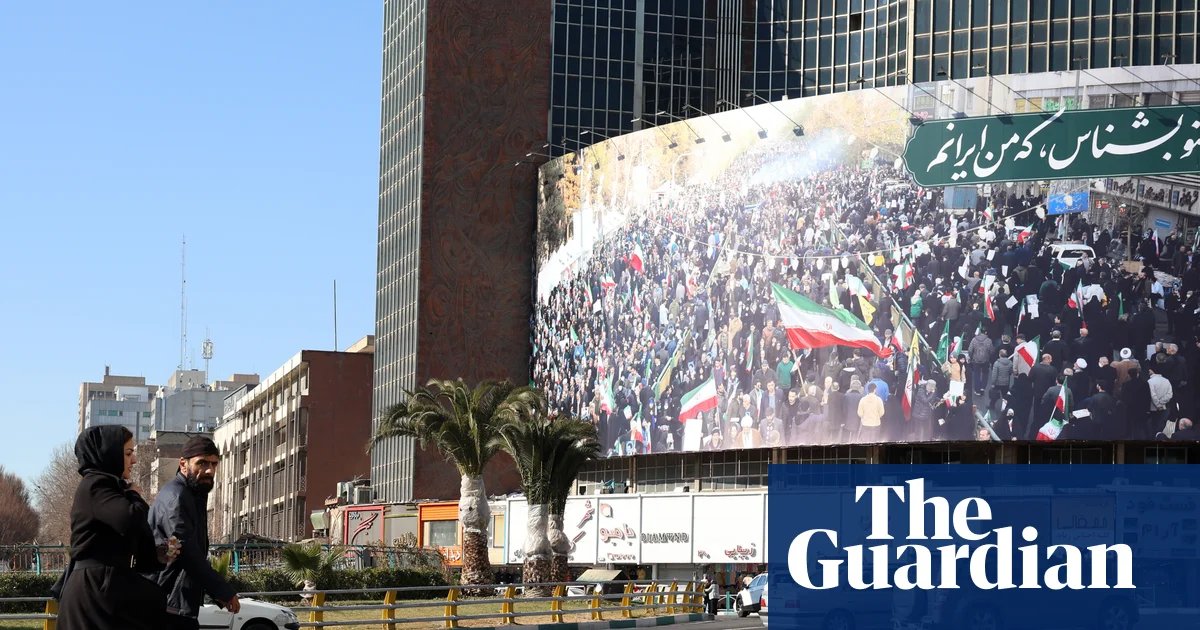
Iran is planning to permanently break from the global internet, only allowing individuals vetted by the regime to connect online, according to Iranian digital rights activists.
“A confidential plan is under way to turn international internet access into a ‘governmental privilege’,” according to a report from Filterwatch, an organisation monitoring Iran’s internet censorship, citing a number of sources in Iran.
“State media and government spokespersons have already signaled that this is a permanent shift, warning that unrestricted access will not return after 2026.”
Under the plan, Iranians who had security clearance or passed government checks would have access to a filtered version of the global internet, said Amir Rashidi, the leader of Filterwatch. All other Iranians would be allowed to access only the national internet: a domestic, parallel internet cut off from the broader world.
Iran’s ongoing internet shutdown began on 8 January after 12 days of escalating anti-regime protests. Thousands of people have been killed, although the demonstrations appear to have slowed under the weight of a brutal crackdown.
Only limited information is filtering out of the country because of the blackout, which is one of the most severe internet shutdowns in history, lasting longer than Egypt’s 2011 internet shutdown during the Tahrir square protests. A government spokesperson reportedly told Iranian media that the international internet would be shut off until at least Nowruz, the Persian new year, on 20 March.
A former US state department official who worked on internet censorship said the idea that Iran might attempt a permanent break from the global internet was “plausible and terrifying”, but also costly.
“It’s not out of the question that they’re going to do it, but seeing these situations unfold, the economic impact and the cultural impact will be really massive. And they may overplay their hand.”
Rashidi said: “It looks like [authorities] are happy with the current level of internet connectivity, and they believe this kind of shutdown helped them to control the situation.”
Iran’s current shutdown is the culmination of a 16-year effort to cement the regime’s control over the country’s internet. One side of this effort involves a sophisticated system to filter internet traffic, allowing a select few to access the global internet and blocking everyone else – a practice known as whitelisting.
This whitelisting was probably enabled by technology exported by China, said researchers focused on Iran’s internet at Project Ainita and Outline Foundation, who asked not to be named owing to Iranian reprisals against digital rights researchers. This is made possible by high-capacity middleboxes, devices that attach to network cables to monitor and manipulate internet traffic. Systems commercially available now could be scaled up to allow authorities to inspect the internet traffic of entire countries – spying on individual users, as well as blocking websites, protocols, and certain VPN tools.
“Basically, there’s this censorship equipment that is sitting on every network, and the government can prevent connections going in both directions,” they said.
The other side of this is Iran’s national internet, which can only be accessed inside the country. It allows all Iranians to use a handful of websites and applications purpose-built by the regime, including Iranian messaging services, search engines, navigation apps and a video streaming service similar to Netflix. It is monitored and has virtually no links to the broader internet.
Iran has been working towards national internet since 2009, after authorities briefly shut down the internet during mass protests after the re-election of Mahmoud Ahmadinejad and realised that a wholesale shutdown had extreme costs.
“They literally just pulled the plug without thinking. They had never done it before,” said the researchers at Outline Foundation and Project Ainita. “And it basically threw the entire internet, and it really damaged a lot of things on their end as well.”
By 2012, the government had established the Supreme Council of Cyberspace and started to plan for a splintered, domestic internet. Over time, authorities started to refine their internet shutdowns – blocking services such as Facebook, Twitter and Google during the 2012 protests, but leaving other economically valuable services running.
In the 10 years that followed, Iranian authorities used a “carrot and stick” approach to force online businesses, banks and internet service providers to move their key infrastructure – datacentres and offices – inside the country, said the researchers at Project Ainita and Outline. Authorities provided tax breaks to those who did, and prevented those who refused from working in Iran.
In 2015, a group of researchers used Bitcoin to buy server space in Iran and began to scan the country’s IP address space; the range of addresses allocated to devices on a network.
They made a startling discovery: Iran was building a domestically connected internet entirely partitioned from the outside world, using the same protocols to connect the internal network for a corporate office or home.
“It’s like when you’re in your office space, you’ve got file servers or you’ve got HR systems, which, if you go to a coffee shop, you’re not going to be able to reach them because it’s in an internal network. It’s impossible to route outwards,” said one of the researchers.
Iran succeeded. The national internet has been working throughout the protests, and is now the only option most Iranians have to go online. It is likely to evolve, but it remains inaccessible to outside users, and unconnected to the broader internet.
The former US state department official said the powers Iran had revealed in recent days, in terms of its ability to control the internet, were considerable; beyond those of some other authoritarian regimes who might wish to do the same.
But it remains to be seen if Iran can create a new, permanent online reality. “The digital rights community is right to raise the alarm. But the impacts of this will be really severe for Iranian authorities, who will bear responsibility for that harm to their economy.”