dailynewsnblog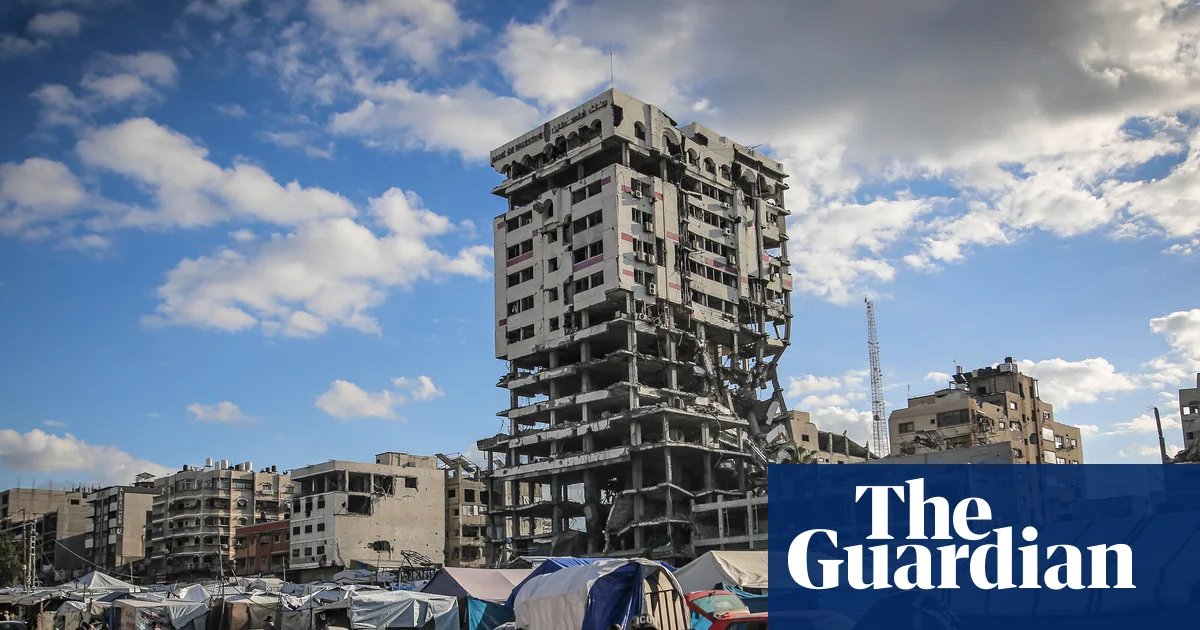
Donald Trump has issued a fresh ultimatum to Hamas, adding to calls for the group’s disarmament as the second phase of the US-brokered ceasefire with Israel begins, even as key elements of the first phase remain unfulfilled.
In a late-night post on social media on Thursday, Trump vowed to push for what he described as the “comprehensive” demilitarisation of Hamas, warning of severe consequences should the group refuse to comply. He also demanded the return of the remains of the final Israeli captive still believed to be held by the group, sharpening tensions at a fragile moment in the truce process.
“Hamas must IMMEDIATELY honor its commitments, including the return of the final body to Israel, and proceed without delay to full Demilitarization,” Trump wrote on Truth Social. “As I have said before, they can do this the easy way, or the hard way.”
No agreement has yet been reached on the disarmament of Hamas, which remains one of the most contentious elements of the second phase of the ceasefire, alongside the withdrawal of Israeli armed forces and the easing of restrictions to allow significantly more humanitarian aid into Gaza – measures that Israel has yet to fully implement.
Hamas has so far refused to give up its arms.
Trump has said that Hamas would be stripped of its weapons and its vast tunnel network would be dismantled with the backing of Egypt, Turkey and Qatar. However, it is unclear how such an objective could realistically be enforced.
According to the plan, Hamas would give up its heavy weapons completely. As for smaller weapons, the US is considering launching a “buy-back” programme where rifles, pistols and machine guns will be handed over by the owners in exchange for money.
The focus of the second phase has shifted from simply stopping the fighting to establishing transitional governance, demilitarisation, and reconstruction in the territory – a dramatic escalation of diplomatic ambition amid persistent violence from the Israeli military.
At least 451 Palestinians have been reportedly killed since the ceasefire took effect in October last year.
Trump has announced he will chair what is being called a “board of peace” to govern Gaza, tasked with supervising reconstruction, economic recovery, and the broader transition process across Gaza. The former UK prime minister Tony Blair is reportedly expected to join a separate executive board alongside Trump’s advisers Jared Kushner and Steve Witkoff, with Nickolay Mladenov, a former UN Middle East envoy, playing a central on-the-ground role.
The board will oversee a 15-member Palestinian committee that has been formed to supervise Gaza’s civil administration during the transition.
Formally known as the National Committee for the Administration of Gaza (NCAG), it is meant to be apolitical and staffed by technocrats and experts rather than political factions. Ali Shaath, a former deputy minister in the Palestinian Authority, has been appointed to lead the group.
Israel’s war in Gaza has created a “human-made abyss”, and reconstruction is likely to cost more than $70bn (£53bn) over several decades, the UN has said.
After visiting Gaza on Thursday, Jorge Moreira da Silva, a UN undersecretary general and executive director of its office for project services, said “the level of destruction is overwhelming”.
“Homes, schools, clinics, roads, water, and electricity systems have been levelled or severely damaged,” he added. “Gaza has more than 60m tonnes of rubble: the capacity of nearly 3,000 container ships. On average every person in Gaza today is surrounded by 30 tonnes of rubble. It is likely to take over seven years to clear this rubble. I welcome the announcement of the second phase of the plan, this must finally mean the beginning of reconstruction. But meanwhile, early recovery must start right away including to restore access to basic services.”
On Thursday, medical sources at al-Aqsa Martyrs hospital in Deir al-Balah said six Palestinians were killed and others wounded in two Israeli airstrikes.
Life in the territory remains precarious. While airstrikes and gunfire have slowed, they have not ceased. At the same time, recent storms have compounded the crisis, causing deaths and flooding in displacement camps already stretched beyond their limits.
Strong winter winds caused walls to collapse on to flimsy tents housing displaced Palestinians on Tuesday, killing at least four people.
The UN Children’s Fund (Unicef) said on Tuesday that 100 children had been killed since the beginning of the ceasefire in October, including six who died of hypothermia.