dailynewsnblog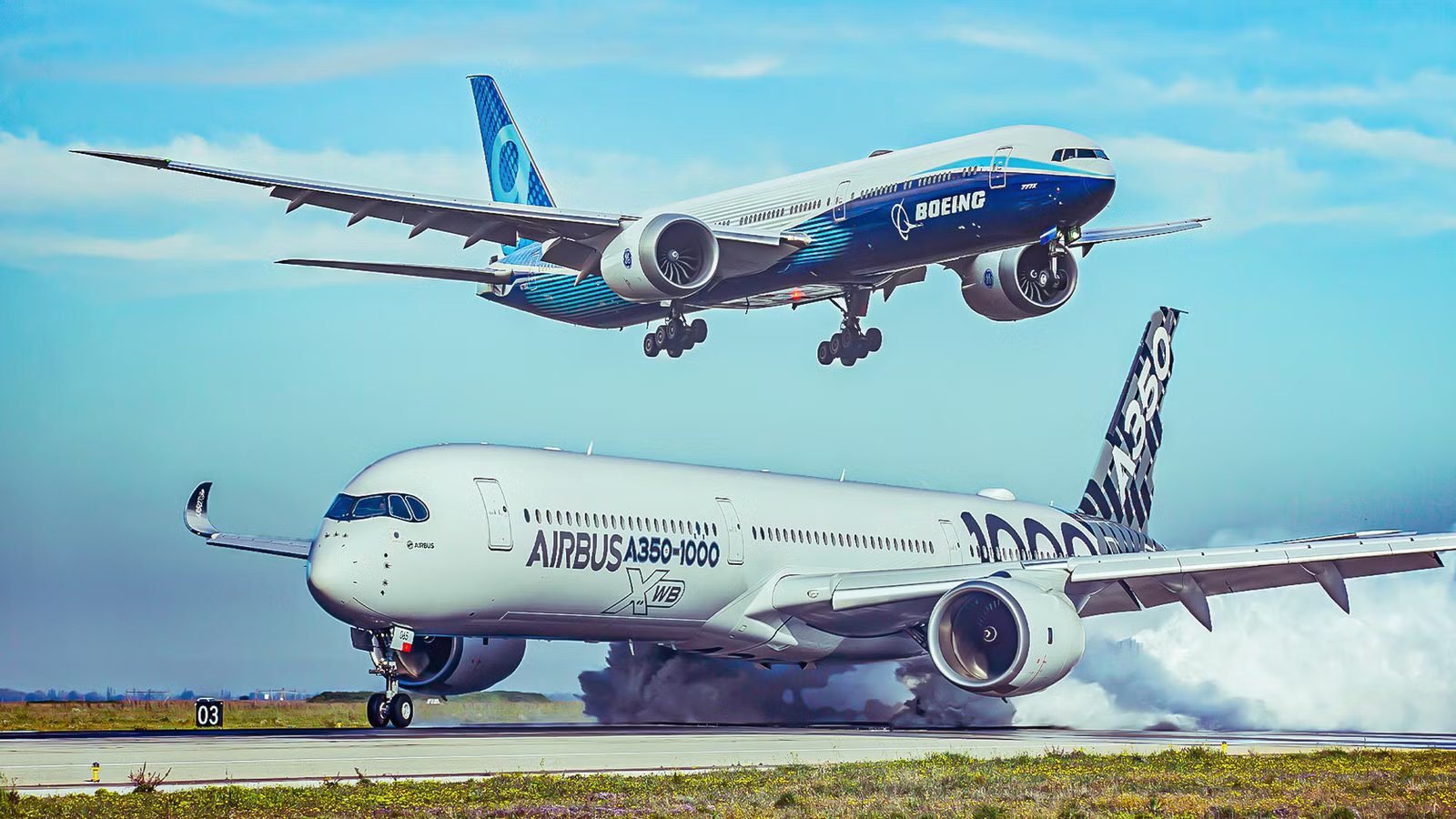
The aviation world enters 2026 with a central question that will define the next decade of travel: Airbus vs.  Boeing, who will actually rule the air? As airlines scramble to meet record-breaking passenger demand, the battle between the two giants has shifted from a race of who can sell the most to who can deliver the most. For travelers and investors alike, this competition dictates everything from ticket prices to the availability of new, nonstop routes across the globe.
The background of this rivalry is a tale of two very different trajectories. Airbus enters 2026 with its largest backlog in history, having successfully launched the Airbus A321XLR and stabilized production of the Airbus A350. Meanwhile, Boeing is in the midst of a massive culture-first recovery under CEO Kelly Ortberg, aiming to put years of regulatory hurdles and quality-control crises behind them. This article will explore the delivery targets, certification milestones, and geopolitical shifts that are deciding the winner of the commercial duopoly this year.
Airbus Coming Out On Top

The short answer for 2026 is that Airbus remains the undisputed king of deliveries and industrial reliability, while Boeing has surprisingly taken the lead in the order race for the first time in 6 years. Airbus is projected to deliver roughly 900 to 1,044 aircraft this year, far outpacing Boeing’s target of approximately 708 units. While Boeing is selling more planes right now, Airbus is actually putting them on the tarmac in high volume.
Airbus’s dominance is currently rooted in the narrowbody market, where the Airbus A320neo family continues to be the preferred workhorse for global carriers. In the first week of January 2026,  IndiGo took delivery of its first A321XLR, marking a new era of single-aisle long-haul travel that Boeing cannot yet match. Boeing’s recovery is gaining momentum, but the delivery gap of nearly 200 aircraft remains a significant barrier to reclaiming the top spot this year.
From a financial perspective, 2026 is the year Boeing expects to finally turn sustainably cash-flow positive for the first time since the pre-MAX crisis. Airbus, conversely, is focused on a stress test of its industrial system, attempting a double-digit increase in output compared to 2025. While Airbus has the quantitative lead, the industry sentiment is shifting toward a more balanced duopoly as Boeing resolves its most critical manufacturing bottlenecks.
Key Factors Shaping The Victory

The outcome of this fierce battle hinges on three critical factors: regulatory certification, supply chain stability, and shifting politics. For Boeing, the year is defined by certifications, specifically for the Boeing 737 MAX 7, the Boeing 737 MAX 10, and the massive Boeing 777X. Airbus, meanwhile, is battling an engine-led constraint, as issues with the Pratt & Whitney GTF engines continue to ground a small but significant portion of the global A320neo fleet.
Supply chain fragility remains the great equalizer in 2026. Both manufacturers are navigating a world where seats, cabin fixtures, and raw titanium are still in short supply. Airbus has addressed this by opening new final assembly lines in Tianjin and Toulouse to reach a production rate of 75 aircraft per month by 2027. Boeing is taking a different path, focusing on re-baselining its quality metrics to satisfy the FAA before seeking further rate increases beyond its current mid-40s target.
|
Metric |
Airbus |
Boeing |
|---|---|---|
|
Target Deliveries |
~900–1,044 aircraft |
~700–710 aircraft |
|
Narrowbody Output Focus |
A320neo / A321XLR |
737 MAX family |
|
Widebody Status |
A350 stabilized |
787 ramp recovery; 777X delayed |
|
Key Constraint |
P&W GTF engine availability |
FAA oversight & quality re-baselining |
|
Planned Rate Increase |
Up to 75/month (by 2027) |
Capped in mid-40s (2026) |
|
Order Momentum |
Strong backlog, slower growth |
New orders lead |
The third factor is the political landscape. In multiple interviews, Airbus CEO Guillaume Faury has pointed out that aircraft orders are frequently shaped by geopolitical dynamics and trade negotiations rather than pure market demand. Within this framework, Boeing has benefited from US-led trade agreements in which large aircraft orders formed part of broader diplomatic settlements, helping sustain its widebody backlog in the Middle East and Asia despite slower delivery performance.

Boeing Vs. Airbus: Which Manufacturer Is Set To Win In 2026?
As aviation looks to 2026, Airbus leads on stability, but Boeing’s delivery recovery and cash rebound could rapidly reshape the balance of power.
Quality Is The Priority

Industry leaders are expressing a mix of relief and caution as the 2026 production cycle begins. Boeing CEO Kelly Ortberg has been vocal about the multiyear cultural change required at the company, stating that Boeing will not prioritize speed over quality. United Airlines CEO Scott Kirby recently teased surprises for 2026 in a January 2nd memo, including the debut of a new Polaris Studio premium cabin on the Boeing 787-9 and the arrival of the airline’s first Airbus A321XLRs to replace aging Boeing 757-200s.
Financial and aviation analysts are increasingly viewing 2026 as a reset year rather than a definitive victory for either side. While Airbus enters the year with a structural advantage in deliveries, Boeing has greater rebound potential as it clears its inventory of stored jets and stabilizes production at 42 aircraft per month. AirInsight notes that for the first time in 6 years, Boeing has taken the lead in new orders, signaling that airline confidence is beginning to shift back toward a more balanced duopoly.
The implication of these insights is that the Airbus monopoly predicted by some for 2024 failed to materialize. Instead, airlines like  Air India and
  Alaska Airlines are doubling down on massive mixed-fleet orders to ensure they have enough seats to meet a record industry-wide load factor of 84%. The consensus among aviation analysts is that 2026 is the year when delivery certainty finally outweighs brand preference, forcing both manufacturers to prioritize their factory floors over their sales offices.
A Third Challenger

While Airbus and Boeing battle for the top spot, a third player is finally starting to cast a shadow, Comac. The Chinese manufacturer’s Comac C919 narrowbody jet has transitioned from a domestic curiosity to a legitimate regional contender in 2026. With over 1,000 orders on its books, COMAC is beginning to peel away customers in Southeast Asia, such as GallopAir in Brunei, and is making inroads in Brazil, where carriers are tired of the decade-long wait for an A320neo or 737 MAX delivery slot.
However, COMAC still lacks the global maintenance, repair, and overhaul infrastructure that defines the Airbus-Boeing duopoly. For an airline in South America or Africa, choosing a C919 over a Boeing 737 remains a significant risk due to the lack of local spare parts and certified mechanics outside China. Embraer also remains a strong niche player with its E2 family, but it primarily competes at the lower end of the capacity scale, serving as a vital gap-filler for airlines that cannot wait for the eight-year backlog of larger jets.
Contrasting these options shows that for the major airline alliances, the duopoly is still the viable option for long-haul and high-capacity routes. The sheer scale of the Airbus and Boeing order books, now approaching 15,000 aircraft combined, means that any new entrant would need decades to build the manufacturing capacity and global support network required to truly rule the air.

COMAC Aims To Grow International C919 Customer Base
COMAC has already secured a preliminary agreement from Brunei-based GallopAir in September 2023.
Crisis Incoming?

The primary risk for Airbus in 2026 is the deepening engine crisis. As of January 2026, nearly one-third of the global A320neo fleet remains grounded or in storage due to the Pratt & Whitney Geared Turbofan powder metal defect. While Airbus is meeting its delivery targets, many of these aircraft are being dismantled for parts or parked immediately after delivery because they lack serviceable engines. The financial impact is staggering, with engine turnaround times at maintenance centers ballooning from 60 days to over 300 days.
Boeing faces a different but equally severe delay trap regarding its widebody flagship. The Boeing 777X has officially seen its first delivery pushed to 2027, following a massive $4.9 billion charge in late 2025 linked to certification setbacks. This leaves major carriers like  Emirates and
  Lufthansa in a wide-body gap, forcing them to spend millions on life-extension programs for aging aircraft that were supposed to be retired years ago. Furthermore, Airbus’s rival freighter, the A350F, has also slipped into late 2027 due to supply chain issues at Spirit AeroSystems.
The most significant hidden drawback for both manufacturers is the aging of the global fleet. Because new planes are so difficult to get, the average age of aircraft in the sky has hit a record 15 years. This creates a parts drought because older planes aren’t being retired and dismantled to provide used spare parts. For travelers, this means a higher likelihood of technical delays as airlines struggle to maintain older metal while waiting for a delivery slot that might still be ten years away.
The Reset Year

The landscape of 2026 confirms that while Airbus is the winner by volume, Boeing is the winner by momentum. Airbus continues to dominate the tarmac, successfully executing an industrial ramp-up to deliver nearly 200 more aircraft than its rival this year. However, Boeing has effectively ended its crisis phase, moved into a sustainably cash-flow-positive state, and reclaimed the lead in the order race for the first time in six years. The duopoly is no longer a lopsided monopoly; it is now a functioning, high-stakes competition once again.
For travelers, the impact of this rivalry is felt directly in the cabin. The proliferation of the Airbus A321XLR means more long and thin direct routes, though it often trades widebody space for single-aisle efficiency. Meanwhile, Boeing’s focus on stabilizing its 787 and 737 lines, coupled with the unfortunate delays of the 777X, has pushed airlines to invest heavily in premium cabin retrofits. Whether on a new Airbus workhorse or a refurbished Boeing jet, changes will become very clear.
Looking ahead, the battle for the skies is transitioning from manufacturing speed to environmental sustainability. While Airbus manages its massive 8,600-plus aircraft backlog and tests its ZEROe hydrogen pods, Boeing is leveraging its $600 billion backlog to fund the next generation of fuel-efficient flight. Ultimately, 2026 serves as the industry’s reset year. While Airbus currently holds the crown for deliveries, the narrowed gap between the two giants ensures that the next decade of aviation will be defined by whoever can best balance high-volume production with the green technology of tomorrow.