dailynewsnblog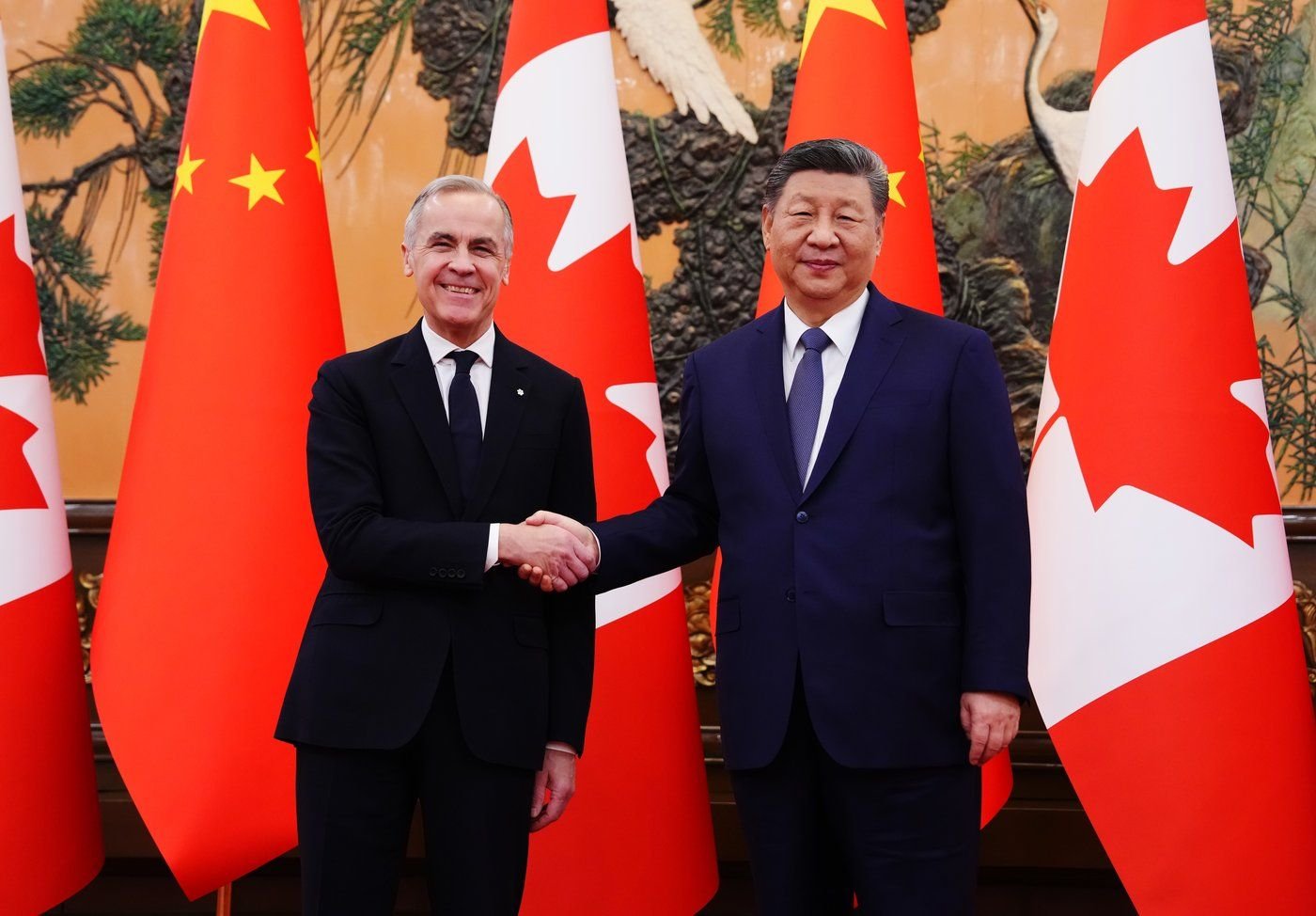
The agreement will see Canada ease tariffs on Chinese electric vehicles in exchange for China dropping levies on Canadian canola, lobsters, crabs and peas.
Prime Minister Mark Carney’s electric vehicle and agri-food deal with China won plaudits from canola producers and western premiers but garnered criticism from Ontario’s Doug Ford and automakers.
The agreement will see Canada ease tariffs on Chinese electric vehicles in exchange for China dropping levies on Canadian canola, lobsters, crabs and peas.
It marks a decisive U-turn in economic ties between the two countries that had been strained over the past year.
In a move seemingly aimed at appeasing the U.S., Canada in 2024 imposed a 100 per cent tariff on Chinese EVs and steel and aluminium.
China responded in March 2025 with a 100 per cent tariff on canola oil, peas and other products, along with 25 per cent on pork and seafood products, such as lobster.
As part of the pact reached on Friday, Canada will allow up to 49,000 Chinese electric vehicles into the Canadian market at a 6.1 per cent tariff rate.
By 2030, half of those imported vehicles will cost less than $35,000 — a measure that Carney said will ensure EVs are more affordable for Canadians.
Carney said Ottawa expects Beijing to drop canola seed duties to 15 per cent by March, and called that “enormous progress.”
Canadian canola meal, lobsters, crabs and peas will no longer be subject to Chinese tariffs from March to at least the end of the year.
Conservative Leader Pierre Poilievre accused Carney of misleading voters by declaring China Canada’s “biggest security threat” in the run-up to last spring’s election only to turn around and announce a deal with the economic powerhouse less than a year later.
He suggested Canada was offering too many concessions for an agreement that wouldn’t permanently remove Chinese tariffs and claimed the PM was “jeopardizing our security and auto jobs” by opening the door to Chinese EVs.
“It’s time for Canadians to have a government that will put our country first and protect our security, our jobs and our sovereignty.”
Carney reaches ‘landmark’ tariff-quota deal with China on EVs, canola
Ontario Premier Doug Ford condemned the agreement, saying Ottawa was “inviting a flood of cheap made-in-China electric vehicles without any real guarantee of equal or immediate investments in Canada’s economy, auto sector or supply chain.”
He said in a statement that lowering tariffs on Chinese also “risks closing the door on Canadian automakers to the American market, our largest export destination, which would hurt our economy and lead to job losses.”
“To fix this mess, Prime Minister Carney and the federal government need to urgently step up and support Ontario’s auto sector. That means making the sector more competitive by ending the electric vehicle mandate, harmonizing regulations with key trading partners and scrapping federal fees that do nothing but add thousands to the cost of making vehicles and chase away investments,” he said.
For his part, U.S. President Donald Trump, a frequent critic of China, refrained from criticizing Canada over the trade deal.
“That’s what he should be doing. It’s a good thing for him to sign a trade deal,” he told reporters in Washington. “If you can get a deal with China, you should do that.”
Ian Lee, a Carleton University business professor, said the U.S. likely isn’t fazed because Canada refrained from touching on industries that could have national security implications, such as high-tech chips.
He said Canada has been selling agriculture products to China for decades and dismissed the impact of nearly 50,000 EVs into the country as minimal, noting it would make up some 2 to 3 per cent of the marketplace and that Canada doesn’t currently produce inexpensive EVs that could be impacted by the presence of Chinese competitors.
“We do not make inexpensive EVs in Canada. In fact, we don’t even make expensive EVs in Canada. Most of the EVs available in Canada are coming in from the States, and they literally [cost] $70, 80, 90 $100,000s like the Tesla. We don’t make a $20 or $30 or $40,000 EV like the Chinese do,” he said, adding that China has been able to do thanks to massive state subsidies, which have allowed producers from that country to control of the world EV market share.
“I don’t accept the argument that it’s going to destroy this alleged industry that does not exist. And so it’s not going to happen.”
Lee added that Trump himself claimed last year that his plan was to stop Canada from exporting tariff-free completed vehicles into U.S., which would essentially close off the U.S. market to autos.
Parts, though, would be exempted.
However, a group representing automakers in Canada said the agreement “risks creating significant market distortions, could ultimately limit consumer choice and undermine the viability of the companies currently investing in and supporting Canadian jobs.”
“Our members are concerned that this announcement just adds one more piece of uncertainty into a highly uncertain environment for the automotive industry with a myriad of other issues impacting the operations of all manufacturers and distributors in Canada,” David Adams, president and CEO of the Global Automakers of Canada, said in a statement.
“We just heard about this this morning, like everyone else, so we need to better understand what has been agreed to and we require the federal government to consult with industry before implementation.”
Back to Ottawa, NDP interim leader Don Davies called the agreement “good for Canadian farmers, fishers, forestry, consumers, the environment & important for diversifying trade.”
In a post on X, he added the NDP will “continue to press for Chinese EVs to be built in Canada.”
“Access to our auto market should create Canadian jobs,” Davies said.
Saskatchewan Premier Scott Moe, who joined Carney in China, also celebrated the deal as a “very positive signal that will restore existing trade volumes and open avenues for further opportunities for Canadians.”
Saskatchewan is responsible for over half of the canola grown in Canada.
Under the agreement, starting in March, tariffs on canola meal would drop to zero and tariffs on canola seed would fall from 100 to 15 per cent. China committed to keeping these lower rates until at least the end of the year.
Rick White, president and CEO of the Canadian Canola Growers Association (CCGA), told iPolitics the changes were “helpful” but noted that canola seed is “by far the largest part of our trade, and most valuable part of our trade was China.”
“There’s lots of canola in farmers bins that have not been marketed or shipped yet, so the product is still there for the most part. Now, come March 1, we expect to see the reduction in tariff, which was holding everything back. Once it drops, we’ll see if it starts shipping to China,” he said.
“If it does, farmers will have opportunities to sell their grain, market their grain that they didn’t have because China locked us out. And that should help bringing price levels back up to where they should be in basis levels narrower than the than they were, making all of it more economical for farmers to to sell and be profitable in the selling of the canola.”
The CCGA said exports of canola and canola products to China were valued at approximately $5 billion in 2024. The group said it’s expected that volume to China plummeted to less than half that amount in 2025.
The deal also sees China remove the requirement for Canadians to have a visa before visiting the country.
with files from the Canadian Press