dailynewsnblog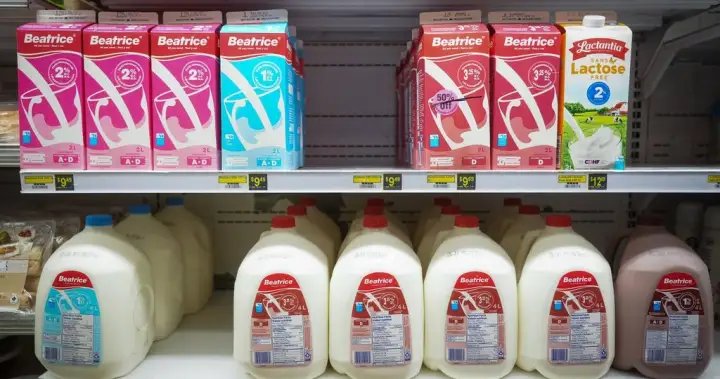
A group that represents independent grocers says its members are being hurt by the Manitoba government’s freeze on the retail price of one-litre cartons of milk.

The government’s move hits retailers at a time when their wholesale prices are going up, which will eat into thin profit margins, the Canadian Federation of Independent Grocers said Friday.
“It’s not sustainable,” Gary Sands, a senior vice-president with the group, said from Toronto.
“Independent grocers operate on roughly an overall margin of two per cent profit. That’s to pay your staff, keep the lights on, etc. If your (wholesale) price increases are beyond two per cent, how in anyone’s business model do you keep operating without passing that on to your customers?”

Get breaking National news
For news impacting Canada and around the world, sign up for breaking news alerts delivered directly to you when they happen.
Manitoba Premier Wab Kinew said the retail price freeze is needed to help people with the cost of living.
“We are squeezing the profit margins to save you money,” Kinew said.
“Rather than try to squeeze the dairy producer or the consumer, we’re saying that these grocery chains can help us out a bit during this cost-of-living crisis.”
Manitoba is among the few provinces that regulate the price of milk, and there are different maximum prices for skim, two per cent and other varieties. Maximum retail prices range from $1.93 a litre for skim milk to $2.10 a litre for homogenized, with higher amounts in rural areas to account for transportation costs.


The price limits only apply to one-litre containers, but the government is considering expanding its regulatory regime to cover two- and four-litre units as well. The government recently announced that the maximum prices, last adjusted 11 months ago, will be kept frozen for all of 2026.
Grocers across the country have recently been advised of wholesale price hikes by some processors, Sands said. In Manitoba, the NDP government is raising maximum wholesale prices for many purchasers by four cents a litre as of Feb. 1.
Independent grocers serve many rural and remote communities where there may not be another grocery outlet, Sands said.
“They have to run a business,” he said. “They have to be able to keep their doors open and if you’re going to talk about freezing prices, you just can’t go ‘Zap,’ pick one part of the supply chain and say, ‘You guys alone are going to bear the coast of freezing prices.”
© 2026 The Canadian Press