dailynewsnblog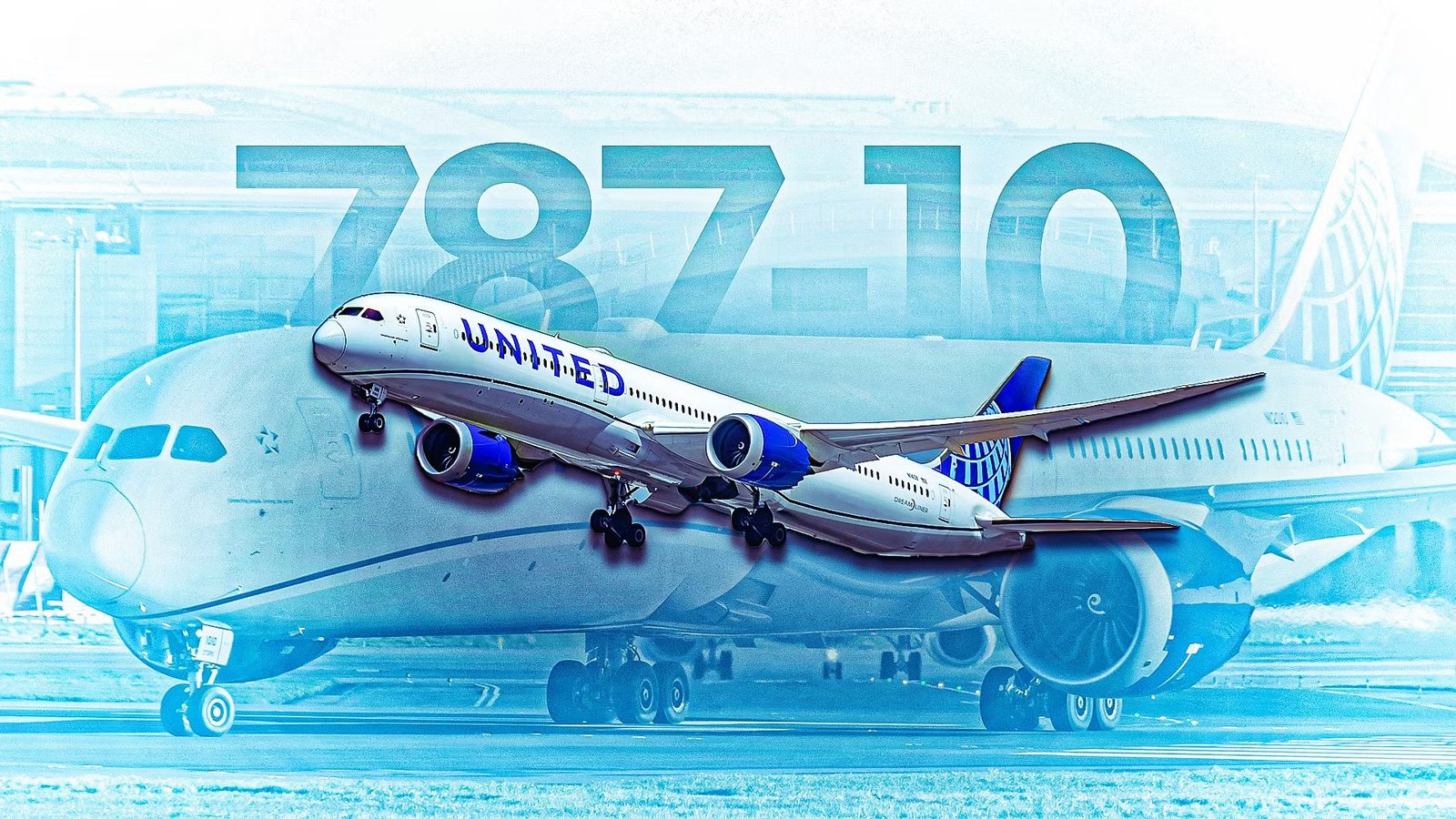
United Airlines has made a strategic change to its large order book for the Boeing 787 Dreamliner. As reported by Jon Ostrower at The Air Current, the airline has confirmed that it has converted 56 outstanding Boeing 787-9 orders to the 787-10. The larger Dreamliner not only has the best seat economics in the industry, but will allow United to deal better with increasingly constrained ground operations.
United Airlines is not alone in its thinking. Arch-rival  Delta Air Lines placed an order for 30 787-10s (with options for 30 more) earlier this week, and last year alone, six airlines ordered a combined 150 frames of the largest Dreamliner. All are making the considered decision that the increased capacity is worth the trade-off in range over the 787-9.
Adjustments To The Boeing Order Book

United is one of the largest operators of the 787 with 71 aircraft already flying in its colors, and it is one of the few airlines that operates all three variants of the type. It also has a massive order book for the type, with 140 outstanding frames still to be delivered over the next decade or more. Up until a few days ago, those were all booked as 787-9s, but the carrier has now split the outstanding orders to 56 787-10s and the balance of 84 aircraft to be 787-9s.
|
The United Airlines Boeing 787 Fleet |
||
|
Type |
Operational |
On Order |
|
787-8 |
12 |
– |
|
787-9 |
48 |
84 |
|
787-10 |
21 |
56 |
|
Total |
71 |
140 |
The 787-9 has a significantly longer range, able to fly more than 1,200 nautical miles further than the 787-10. But the larger variant has an extra 18 feet of length, and for United, that has meant being able to carry 61 more passengers with its current configurations. So the carrier is clearly trading off range for capacity, something that  Alaska Airlines recently did when it also adjusted Hawaiian Airlines’ legacy 787-9 order to swap in some 787-10s.
The big question is how United will choose to configure the incoming 787-10s. The carrier is currently shifting to its “Elevated” interiors with its 787-9s, which significantly increases the number of Polaris and Premium Economy seats on the aircraft, reducing total seat count from 257 down to 222. Its existing 787-10s have nearly a hundred more seats than this at 318, but it remains to be seen whether it will keep that capacity or whether it will also be reduced as it goes with a more premium layout.
Why United Is Picking The Perfect -10

The first reason that United is swapping orders to the 787-10 is that it has the best seat economics in the industry. It maximizes passenger capacity while utilizing the same wing and engine architecture as the smaller models, resulting in a lower Cost per Available Seat Mile (CASM). Industry data indicates that the 787-10 operating cost is approximately $19.54 per seat hour, nearly 25% lower than the $25.86 of the 787-9.
The reality is that for United, it doesn’t need the exceptional range of the 787-9 for the majority of its routes. The 787-10 can comfortably reach all of Europe from all of its US hubs, and can do so with higher yields due to its increased passenger and cargo capacity. So, for the United route planners, the mantra is “if you can fill it, fly it,” because the 787-10 delivers even better margins over the already-exceptional 787-9.
Another reason is that global airlines like United are increasingly constrained on the ground, with a scarcity of gates, stretched air traffic control, and often needing to deal with slot-controlled airports. This calls for larger aircraft to maximize more limited windows of opportunity, and this is especially true for United at hubs like  Chicago O’Hare International Airport and
  Newark Liberty International Airport when flying transatlantic routes to equally congested European airports.
Scott Kirby, CEO of United, emphasized the importance of the 787-10 as a Euro-centric aircraft due to its superior seat economics:
“They [the 787-10] are a phenomenal European airplane. They have the lowest seat mile costs in the industry, and are the right size for many of our markets. That’s why you see them flying a lot from Chicago and Newark.”
O’Hare is the largest United hub for the 21 787-10s currently in operation, from where they operate to seven European destinations including key  Star Alliance hubs such as Frankfurt, Munich and Brussels. But just to emphasize the versatility of the 787-10, it also serves three Hawaiian destinations from ORD, and still has the range for routes to São Paulo and
  Tokyo Narita Airport. The 787-10 is perfect for ORD where United is in a heated battle with
  American Airlines for limited gates in an increasingly congested airport.
There are a couple of other important considerations for United. The 787-10 offers the carrier flexibility to add even more premium configurations, as it is doing with its 787-9s, raising yields still further. And then let’s not forget that while the 787-9 is billed as the 767 replacement at United, the airline will also be retiring its 74 Boeing 777-200s, with an average age of nearly 27 years, in the near future. The 787-10, with its current 318 seats, is the optimal replacement.

Why Is United Airlines The Only US Operator Of This Modern Widebody Aircraft?
The 787-10 has sold fewer than 400 examples, and its only US operator is United.
United Is Not Alone In Its 787-10 Love

The 787-9 continues to be the best-selling Dreamliner for  Boeing, with the manufacturer reporting over 1,600 orders for the type, But of late, the 787-10 has been on a bit of a tear, with six airlines ordering a total of 150 787-10s in 2025 alone. This was the best year yet for 787-10 orders, including the following airlines:
But perhaps the most notable recent order for the 787-10 was Delta’s earlier this week. The Atlanta-based carrier has long looked to Airbus for the future of its widebodies, with some of the largest A350 and A330 fleets around, but placed an order for 30 787-10s with options for 30 more. Delta CFO Dan Janki explained that, much like its rival, the order was placed because “the 787-10 is an ideal addition to Delta’s Transatlantic and South American network,” where the Dreamliner will provide a fresh angle on long-haul routes with higher demand.