dailynewsnblog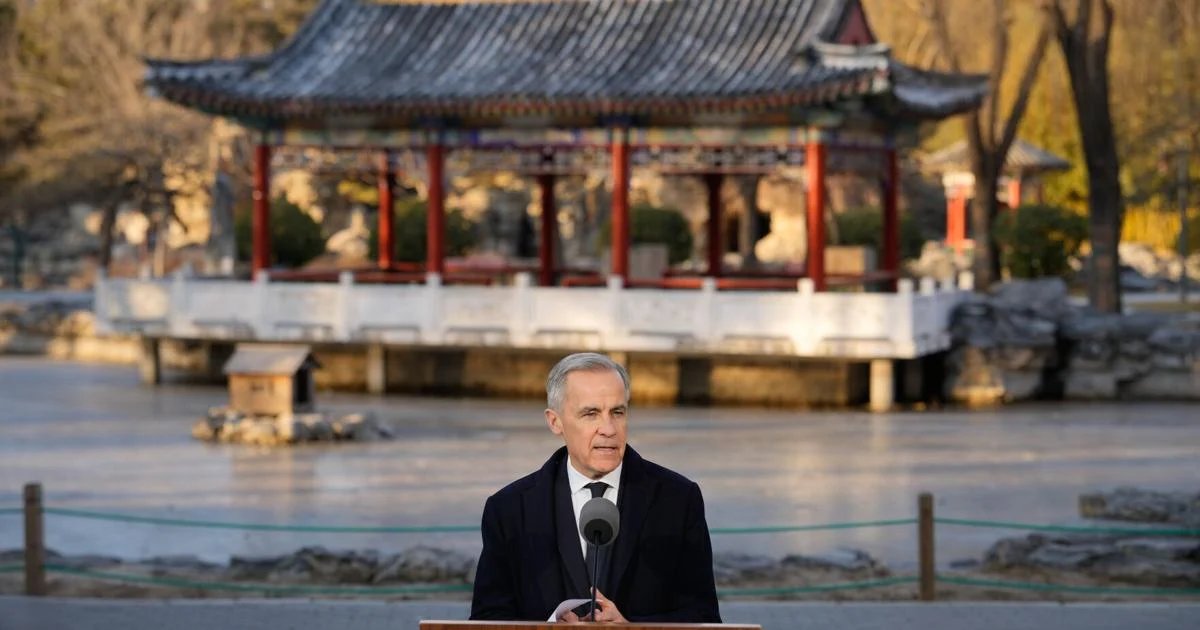
BEIJING—Talk about a reset.
Fresh off lowering tariffs on a small initial number of Chinese-made electric vehicle imports in exchange for President Xi Jinping’s reduction of tariffs on Canadian canola and seafood, Prime Minister Mark Carney departs China setting out a dramatic policy shift away from the United States, Canada’s biggest trading partner, closest neighbour and now unreliable ally.
In a series of frank and stunning statements at a news conference to wrap his two-day trip to China, Carney laid out a new “pragmatic” approach to China and global affairs that distances Canada from the U.S., and in its quest to find new allies, trading partners and “like-minded” global players, sets his government on course to risk President Donald Trump’s wrath.
It goes beyond an adjustment of customs levies that will see more Canadian canola, lobster, crab and peas sold here, and more of the stylish Chinese EVs that make a Beijing traffic jam an eerily quiet affair sold overseas.
Instead, Carney is invoking far-reaching changes to who Canadians should view as their allies.
Canada will undertake “pragmatic and constructive engagement” and “realistic, respectful and interest-based” relations with “like-minded” countries on a case-by-case basis, recalibrating as needed when interests align, the prime minister said.
Though Trump, in a brief comment to reporters on Friday, applauded Carney for landing the agreement with China, his trade representative told the American news network CNBC that Canada would come to regret it.
“I think it’s problematic for Canada,” said U.S. Trade Representative Jamieson Greer, who is part of the U.S. administration that has justified steep tariffs on Canadian goods — from autos to steel, aluminum, lumber and more — based on national security concerns and a drive to promote American jobs.
“I think in the long run, they’re not going to like having made that deal,” Greer said of Canada.
Now Carney heads to Doha, Qatar in search of billions more in investment dollars, stronger trade and diplomatic ties with a rising Middle East power broker before he travels to the World Economic Forum in Davos, where Trump will attend. The U.S. president continued Friday to threaten to use tariffs to pressure Greenland and Denmark to bend them to his will to control Greenland.
There is “more than one disruptive superpower in the world,” said Carney. “That is the world as it is. That is the truth, that is reality.”
Carney called China — an authoritarian regime — a more “predictable” trading partner and supporter of multilateralism than Trump’s America as he urged the U.S. to respect Greenland and Denmark’s sovereignty.
Carney said he discussed with Xi “the situation in Greenland, about our sovereignty in the Arctic, about the sovereignty of the people of Greenland and people of Denmark. And I found much alignment of views in that regard.
“We respect our obligations and our responsibilities in NATO, and we expect all NATO partners to do the same,” the prime minister said.
Carney did not mention whether Russia’s invasion of Ukraine, and China’s support for Russia’s brutal war effort, came up in his “pragmatic” discussions with Xi.
At Davos, Carney may also cross paths with his predecessor Justin Trudeau — whose policies he is increasingly ditching.
Standing in Beijing’s Ritan Park on a sunny, cold day, Carney said he did not agree with the Trudeau government’s 2022 Indo-Pacific Strategy which labelled China “an increasingly disruptive global power,” saying “I wasn’t there,” and “that wasn’t my opinion.”
Instead, Carney praised China as a globally “significant” player in the fight against climate change, and a strong advocate of multilateralism.
In talks with Xi, Carney said he reaffirmed Canada’s long-standing support for a “One China” policy when it comes to Taiwan, all while insisting he has not abandoned long-standing Liberal positions on human rights as he seeks to diversify markets.
“We fundamentally stand up for human rights. We stand up for democracy, territorial integrity, rights to self-determination.”
Carney said Canada helped craft a G7 statement in protest of China’s treatment of Hong Kong pro-democracy media tycoon Jimmy Lai that called for his release.
But lest there be any doubt, Carney suggested he was not into virtue-signaling or preaching to other nations.
“We take the world as it is, not as we wish it to be.”
Canada’s relationship with the U.S. is broader, deeper and more multi-faceted than it is with China, he acknowledged.
But the prime minister said he has had clearer discussions with the Chinese leadership in the past three months about their mutual desire for stable trade relations, and areas where they could co-operate, including on security, and where there are “guardrails” or red lines in the relationship.

Carney reached the agreement Friday with Chinese President Xi Jinping, capping an intensive six
“That sort of candid and consistent dialogue, frank dialogue — that leads to a more predictable and effective relationship,” said Carney. “But yes, in terms of the way that our relationship has progressed in recent months with China, it is more predictable and you see results coming from that.”
Carney touted the controversial deal to reduce those tariffs between Canada and China — condemned by Ontario Premier Doug Ford as a “mess” — as a breakthrough that will re-open canola and seafood markets, and accelerate Canada’s transition to a net-zero economy by bringing Chinese EVs and expertise to Canada. China has the know-how Canada needs to build its own electric vehicle industry, and will provide more affordable car options for Canadians, Carney said.
Xi, in remarks before their closed-door meeting, said his meeting with Carney in November marked “a turnaround” in the Canada-China relationship.
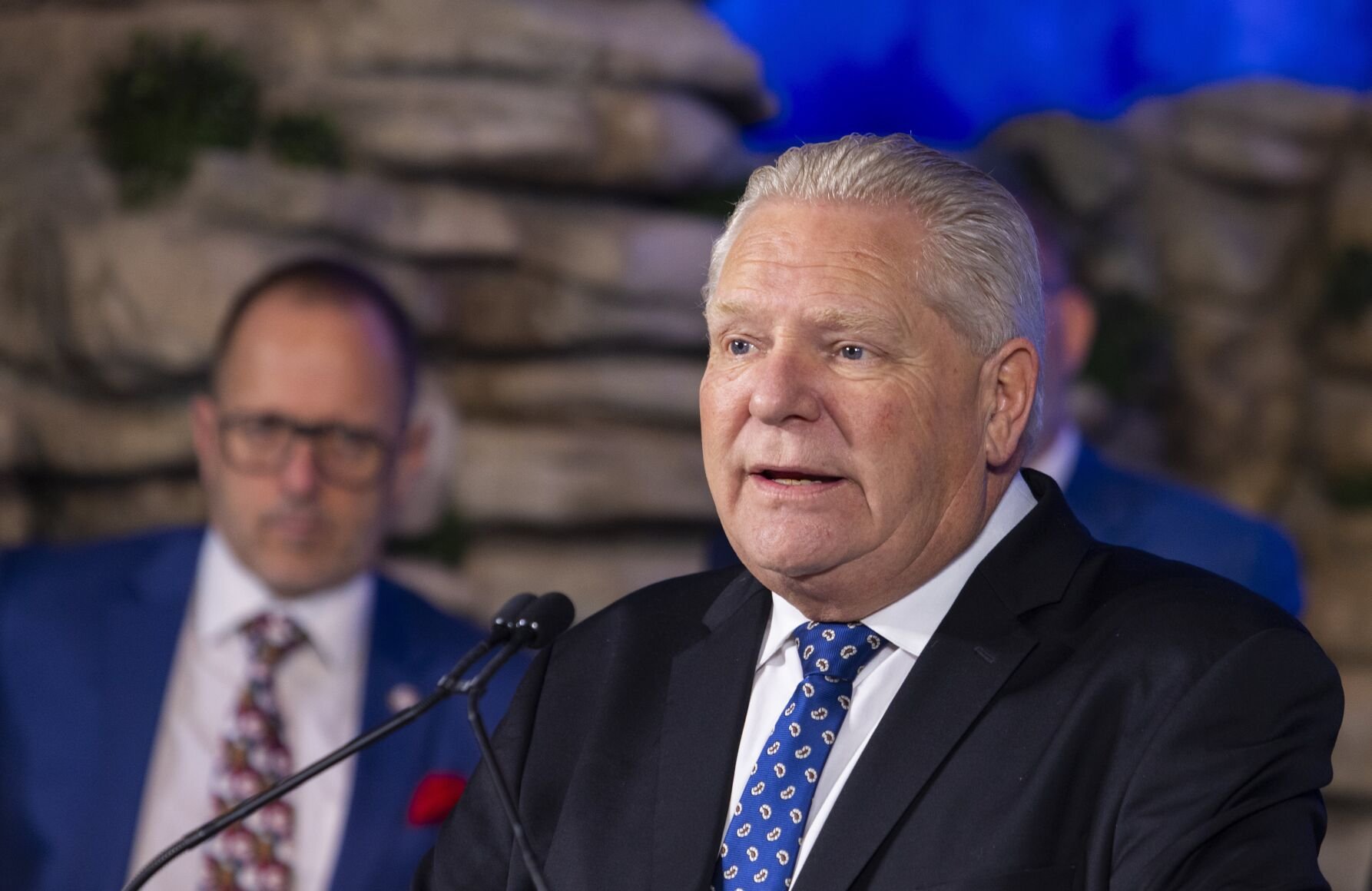
Ford predicted Carney’s move would further raise the ire of current President Donald Trump, who
However, the Chinese government in its formal statements did not detail any agreement on the specific tariff reductions for EVs, canola and seafood. Rather, its foreign ministry website underscored the broader areas of agreement. A posting by its U.S. embassy said that Carney and Xi agreed the two sides “should lengthen the list of co-operation while shortening the list of irritants.”
Canadian officials shrugged it off as normal, and said they had “full confidence” in China’s commitments.
Ahead of his meeting with Premier Li Qiang, Carney said the world had changed since the last visit of a Canadian prime minister eight years ago, and the progress his team has made with China “sets us up well for the new world order.”
Asked later to explain what he meant, Carney talked about the need to form coalitions with “like-minded” countries — hastily adding that like-minded doesn’t mean they agree on everything — in order to sort out what systems can replace the rules-based order that liberal democracies have seen falter.
That means not necessarily developing new systems or “architecture” to achieve financial or other reforms through global organizations like the IMF, WTO and other multilateral organizations, he said. Rather, “the expectation” is that new systems are going to be developed by “coalitions” for “sub-sectors of the world” whose leaders find common ground.
The global trading system “is undergoing a fundamental change, and the effectiveness of multilateral institutions on which trading powers such as Canada and China have greatly relied … has been greatly reduced,” he said.
Carney reframed his view expressed during last spring’s election campaign that China was the biggest security threat facing Canada, saying that the “security landscape continues to change, and in a world that’s more dangerous and divided, we face many threats.”
“You manage those threats by building resilience, building security … through alliances, you manage the threats through engagement, and we’re pursuing all of those,” Carney said, calling it “a sort of value-based realism.”
”We must be pragmatic,” Carney said. “And it’s with this approach that Canada is forging a new strategic partnership with China.”
His plan, the prime minister said, will double non-U.S. exports over the next decade, as he set a new “ambitious goal” to increase exports to China by 50 per cent in the next four years.
As he wrapped up a whirlwind of meetings with private sector CEOs and top Chinese government officials, Carney addressed a dinner hosted by the Canada China Business Council in Beijing where he collected plaudits and a gift. An executive with Pop Mart, the Chinese toy company, offered him a 15-inch trendy Labubu Monsters Fall in the Wild doll — which delighted the prime minister.
Conservative Leader Pierre Poilievre in a statement expressed dismay at Carney’s turnaround from declaring China a security threat to announcing a “strategic partnership” with Beijing — one he said will allow “50,000 EVs onto our streets, jeopardizing our security and auto jobs. This follows him breaking his promise to ‘negotiate a win’ and get a deal with the U.S. by last July,” said Poilievre.
“It’s time for Canadians to have a government that will put our country first and protect our security, our jobs and our sovereignty.”
Carney appeared to try to pre-empt his critics as he stood in the Beijing park near the Temple of the Sun. His government, he said, is out to do just that.
“Nostalgia is not a strategy,” he said.
With files from Alex Ballingall