dailynewsnblog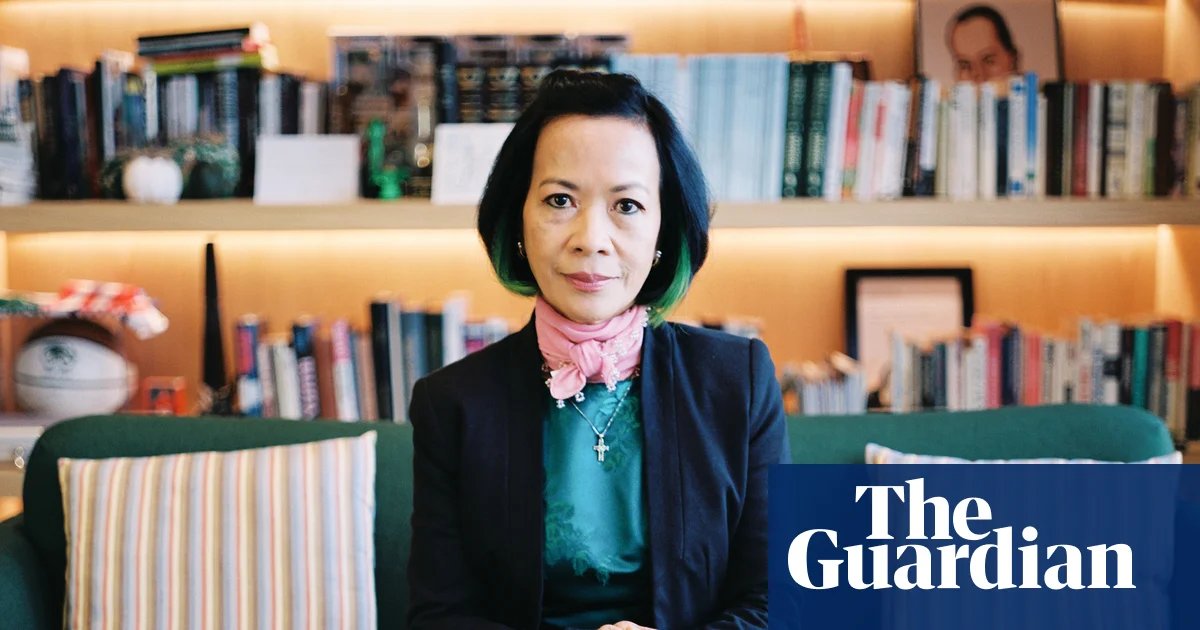
Astrid Tuminez, Utah Valley University’s seventh president, will step down at the end of the semester. She announced the decision on Wednesday during a State of the University address, speaking to a packed audience of students and faculty.
Tuminez, 61, said in an interview that the decision to step down had been building for some time. “There’s never a good time,” she said. “I love UVU so much.” The choice, she explained, came with a mix of grief and relief. “It is a swirl of emotion. I am heartbroken on one hand, but also happy and excited on the other, because life has its rhythms.
“I cried a lot last night, and I am not crying today,” Tuminez said, as she told the crowd she plans to leave the role in early May.
The decision follows a year marked by personal grief and institutional crisis. Her husband, Jeffrey Tolk, died suddenly in February 2025. “My heart was broken. There’s no other way to describe it,” Tuminez told the Guardian. In a later interview, she described the loss as leaving her “disconsolate and desolate”.
Months later, on 10 September 2025, the day that would have marked her husband’s birthday, Tuminez was travelling to Rome on a planned spiritual pilgrimage when news broke that Charlie Kirk, a 31-year-old far-right commentator and founder of Turning Point USA, had been assassinated on campus.
“Our bodies feel these things,” Tuminez later told the Guardian. “Just utter shock, like my whole body was on fire.”
The killing thrust Tuminez and the university into the centre of a national political crisis, as political violence in the US intensified and the Trump administration escalated pressure on universities over campus speech.
Utah Valley University is still reckoning with the aftermath of Kirk’s death. Many faculty, students, and state officials remain divided over how to remember Kirk, with some Republican leaders and university officials pushing to memorialise him, while others have warned against politicising the campus tragedy.
Tuminez, who became president in 2018, was the first woman, the first person of colour, and the first immigrant to lead Utah Valley University, located in one of Utah’s most conservative counties. She has described her ascent to the role with characteristic understatement. “I’m an accidental university president,” she said. “I never planned for this. It wasn’t even on the list.”
Trained as a scholar of Soviet politics, Tuminez has worked across academia, government, and international institutions, an experience that shaped her approach to leading the university through an increasingly polarised national moment. She has argued that universities remain central to the American project, describing them as “facilitators of the American dream”, and has said they should prepare students to grapple seriously with questions of civic discourse.
Her nearly eight years as president, one of the longest tenures in Utah’s public university system, were marked by significant growth and institutional change. During her time in office, enrolment increased by more than 20%, the university’s endowment more than doubled from $55m to $129m, graduation rates rose sharply, fundraising expanded, and new centres were established in applied artificial intelligence, fintech, and constitutional studies.
Her departure comes as universities across the US face mounting political pressure from the Trump administration, including heightened immigration enforcement and deportation of many students, visa restrictions affecting dozens of countries, and growing fears among international students. Tuminez, herself a former international student, said she remained concerned about what a more closed US could mean for higher education.
“One of the superpowers of America is our influence globally,” she said. “We educate people who go back and lead in their home countries.” She said she had hoped to expand UVU’s international student population, arguing that openness benefits both local students and those who come from abroad. “I had to get my own F-1 visa,” she added. “It was very, very difficult. “I think it’s good for Utahns, and it’s also good for these students, to have this experience, to be educated here.”
She framed the moment as political flux rather than sound policy, suggesting decisions driven by fear or politics risk long-term harm. Tuminez said she was concerned that fear among international students and a more closed immigration posture could erode one of the US’s defining strengths: its openness to the world. When asked about her next chapter, Tuminez was clear about one thing: she plans to pause. “I need a break,” she said. “This is not the kind of job you do for seven and a half years and feel rested.”