dailynewsnblog

Listen to this article
Estimated 4 minutes
The audio version of this article is generated by AI-based technology. Mispronunciations can occur. We are working with our partners to continually review and improve the results.
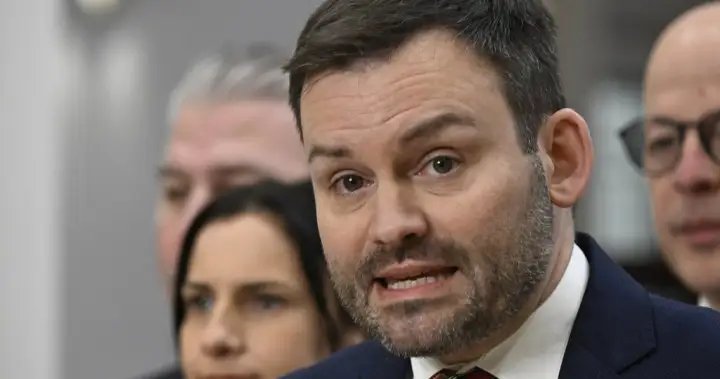
The leader of the Parti Québécois says François Legault’s resignation is proof that trying to build a strong Quebec within Canada doesn’t work.
At his first news conference since Legault stepped down on Wednesday, Paul St-Pierre Plamondon praised Legault for his commitment to the province. But St-Pierre said his departure signals it is time for a change in government, and an independent Quebec.
“You can change the person, but the facts are the same,” St-Pierre Plamondon said in Quebec City.
“Many things can happen before the general elections, but I think the conclusions about whether the CAQ [Coalition Avenir Québec] has achieved what it promised remain the same whether François Legault is there or not.”
He said the Coalition Avenir Québec (CAQ) was elected on a promise to do away with the never-ending political battles with Ottawa, but Legault wasn’t able to resolve them.
St-Pierre Plamondon, whose party has been leading in opinion polls for the better part of two years, has pledged to hold a referendum if the Parti Québécois (PQ) wins the Oct. 5 election.
St-Pierre Plamondon also criticized Prime Minister Mark Carney for his agreement with China, which will allow tens of thousands of Chinese electric vehicles into the domestic market in exchange for dropping duties on canola products.
“An independent Quebec would have a very different stance on China, because our priority would be to serve our regional economic and security interests way before trying that kind of tactic,” he said, adding that China “has been interfering with our democracy.”
Legault’s ‘third way’
Legault announced Wednesday he would step down “for the good of the party, and primarily for the good of Quebec,” following months of plunging poll numbers and several high-profile cabinet departures.
His right-of-centre party, which won two consecutive majority governments, advanced a so-called “third way” — a nationalist agenda that set aside the decades-old debate over Quebec independence.
In a year-end interview last month, in which he insisted he would stay on for the next election, Legault said he didn’t think the PQ’s lead in the polls would last.
“People will understand that Paul St-Pierre Plamondon is synonymous with a referendum and we don’t want that,” he told Radio-Canada.
He said a PQ election victory would lead to four years of anticipation for a referendum, which would create the type of uncertainty that would damage the province’s economy.
“Quebec’s economy would suffer for four years and ultimately, we would get a ‘no,'” said Legault.
Now, though, both the governing party and the opposition Liberals are without a leader ahead of the election, which will be held at the latest on Oct. 5.
Legault’s now party faces a challenge it has never encountered: a leadership race. Since founding the party in 2011, he has been its undisputed leader and driving force.
The Quebec Liberals are also in the midst of a leadership contest following the resignation of Pablo Rodriguez.

We go over some of the CAQ ministers who have thrown, or could throw, their name in the ring to replace François Legault as Quebec premier.
Political analysts say the year ahead is difficult to predict, especially until the new party leaders are chosen.
Québec Solidaire and the Conservative Party of Quebec will also attempt to carve out space in a crowded political field.
“The fall campaign that we’re expecting has completely changed. I’m not sure we know what to expect,” said Philippe Fournier, editor-in-chief of 338Canada.com.
“It’s going to be a tumultuous year in Quebec politics.”
Even before the latest upheaval, the possibility of another sovereignty vote was on the radar of the prime minister’s office.
Last month, Radio-Canada reported that officials in Carney’s government had recently held discussions to determine how Ottawa should respond to the PQ’s rhetoric in Quebec City.