dailynewsnblog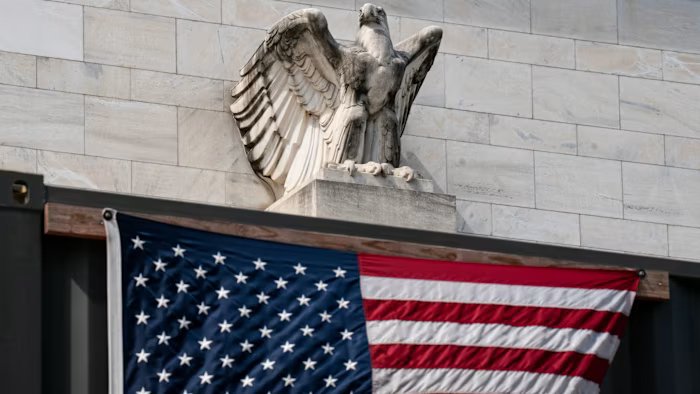
Unlock the White House Watch newsletter for free
Your guide to what Trump’s second term means for Washington, business and the world
The writer is an assistant professor at Brown University and the author of ‘Bankers’ Trust’ on central bank co-operation in crises
The importance of the US Federal Reserve to the world is not just a matter of its central role in steering the world’s largest economy and setting the most important benchmark interest rates.
In times of crisis and turmoil, the Fed provides crucial support to other countries through what is known as swap lines — agreements between central banks to exchange currencies. An essential part of the plumbing of the global financial system, they can provide access for stressed economies to what is still the world’s reserve currency, preventing a crisis tipping into deeper catastrophe.
From the Great Financial Crisis to the pandemic, the swap lines have served as lifelines to trusted counterparts. But they rely on the willingness and ability of the hegemon that is the US to lead.
So the much-criticised launch of a criminal investigation by the US Department of Justice into Fed chair Jay Powell has global implications well beyond monetary policy settings. The investigation is a sign of the Trump administration’s willingness to assert more direct influence over the Fed; those seeking to lead the central bank would be wise to fall in line. Given that, what is to stop the deployment of swap lines becoming more politicised as well?
The unprecedented show of support for an embattled Powell from central bankers around the world points to growing anxiety about the global implications of the risks of any undermining of Fed independence.
Powell’s term ends this May, and speculation is rising on how far the next chair would be willing to bend to presidential preferences. Contenders for the position include Kevin Hassett, the current National Economic Council director and longtime Trump adviser, and former Fed governor Kevin Warsh.
Political pressure on the Fed has intensified throughout 2025, not just from President Donald Trump’s insults of the Fed chair. Treasury secretary Scott Bessent has criticised what he calls the Fed’s “overuse of non-standard policies, mission creep and institutional bloat”.
Last year Reuters reported European financial stability officials were debating whether to create an alternative to the swap lines by pooling dollars held by non-US central banks in a bid to reduce their reliance on America under the Trump administration. There were doubts about the feasibility of such a move but the talks were a sign of concerns that the US facilities could be weaponised.
During the Great Financial Crisis, the Fed swap lines were an important part of stabilising the global economy, pulling it back from the brink. Over half a trillion dollars went to foreign central banks through bilateral arrangements. But their use did draw criticism from some in Congress, with concerns raised about “bailing out foreigners”. The use of the facilities during the Eurozone crisis saw criticism flare again. “Under the guise of providing dollar liquidity to strained European financial markets, the Fed is creating hundreds of billions of dollars out of thin air to prop up the euro,” the then congressman Rand Paul, a libertarian, wrote in 2012.
Given the more unilateral approach by the Trump administration to global affairs and its America First agenda, it is not hard to imagine it wanting to assert more geopolitical influence through the swap lines, seeking quid pro quos for support.
The Fed’s five current standing swap lines with central banks in Europe, Japan and Canada are reconstituted annually. Congress can remove the authority to grant them.
The choice of chair will be critical. As Fed chair, Alan Greenspan swayed other governors to wind back swap lines in the 1990s despite some resistance, including from one of his successors, Janet Yellen, who described them as “an important symbol of our commitment to international co-operation”.
Even if there are not explicit threats to remove the facilities, so much depends in times of crisis on the interpersonal ties between central banks, including the level of access to swap lines.
Powell’s successor cannot unilaterally dismantle the lines overnight without agreement from members of policy-setting Federal Open Market Committee but it is clear that these financial stabilisers should not be taken for granted. Non-US policymakers ought to be thinking about contingency plans. And the next chair should be asked their views on swap lines in Congressional confirmation hearings. On a more positive note, that might be an opportunity for that nominee to bolster bridges with international central bankers, reassuring them of their support for the facilities.