dailynewsnblog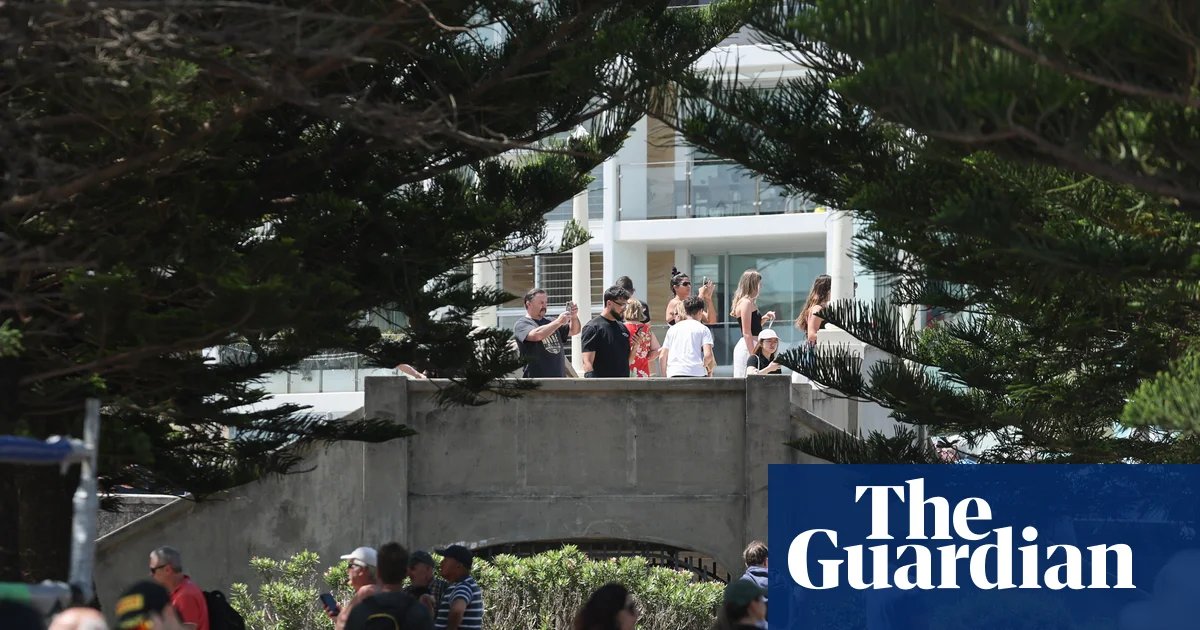
The future of the Bondi footbridge has been placed on hold after a meeting of Waverley council heard it was “really upsetting” that the matter had ignited such fierce public debate.
The future of the heritage-listed pedestrian footbridge used by the alleged Bondi attackers was on the agenda of Thursday evening’s extraordinary meeting called to discuss a range of matters a month after the tragedy.
On Wednesday, the New South Wales premier, Chris Minns, said the footbridge should be torn down to prevent it from becoming a “ghoulish reminder” of the atrocities that occurred, or worse, “exploited by reprehensible people in the future”.
“My personal view is that it would be better to knock down, but it’s the council’s responsibility and I understand they’re speaking with the victims and their families and I think they should have the final say,” he said.
Sign up: AU Breaking News email
Waverley’s mayor, Will Nemesh, said there had been “many ideas” about how to mark the tragedy but the consultation process would “take time”.
He raised a structural report, commissioned last year, which found both pedestrian bridges at Bondi beach were “reaching the end of their useful life and require replacement within several years”.
“The replacement of the bridge may form part of a future memorial,” he said.
“[But] any decision made on the future of one or both bridges will be made in an appropriate time and manner following consultation with the NSW government, Jewish community, Waverley community and the families of victims and survivors.
“We’re not making a decision on the future of one, both or either of pedestrian bridges tonight.”
Waverley’s deputy mayor, Keri Spooner, said she wished “nothing had ever been said about the bridge”.
“I find it really upsetting that that happened,” she said, adding it had detracted attention away from the “one thing we should be focused on”, which was the tragedy on 14 December and loss of 15 innocent lives.
“Of course there’s going to be consultation and it is way too soon for anyone to be making definitive statements about anything,” she said.
“Don’t worry about the bridges, what about the playground? There are so many things to be thought about here.”
A motion, passed unanimously by councillors, determined that council staff would prepare a report to determine the “cost, timetable and approvals process for a replacement and/or restoration of both heritage-listed pedestrian bridges”.
Councillors agreed the state government would lead discussions about a permanent memorial with the families of victims, the council and the Jewish community, with a timetable yet to be determined.
In the meantime, they passed a motion for the establishment of a number of dedicated mural panels to be displayed for a year along the Bondi beach promenade.
On 5 January, the council relocated a menorah in Dover Heights, created by Jewish artist Joel Adler, to Archer park in Bondi to act as a temporary memorial to the victims of the terror attack.
In a tribute to first responders, councillors also agreed to make nominations to the prime minister’s special honours list to posthumously acknowledge Boris and Sofia Gurman and Reuven Morrison for their “bravery in risking and sacrificing their lives” to stop the alleged gunmen. They also agreed that Ahmed al-Ahmed, Gefen Bitton and Leibel Lazaroff should be granted the “keys of the city” for their actions.
A number of community speakers prior to the council meeting called for the bridge to remain standing.
Two Jewish people living in the area, Carolyn Saul and Adrienne Kern, said they saw the bridge as “integral to the Bondi landscape” and suggested covering it in mosaic tiles with messages of “light, compassion and healing” as a reminder of the community’s strength.
Nicolette Boaz, a member of Friends of Bondi Pavilion, warned against “rushed decisions” to knock anything down and destroy heritage.
They echoed the views of co-CEO of the Executive Council of Australian Jewry, Alex Ryvchin, who said on social media that the bridge should remain standing and “become something the killers would have hated – a tribute to our dead and to the story of Channukah”.