dailynewsnblog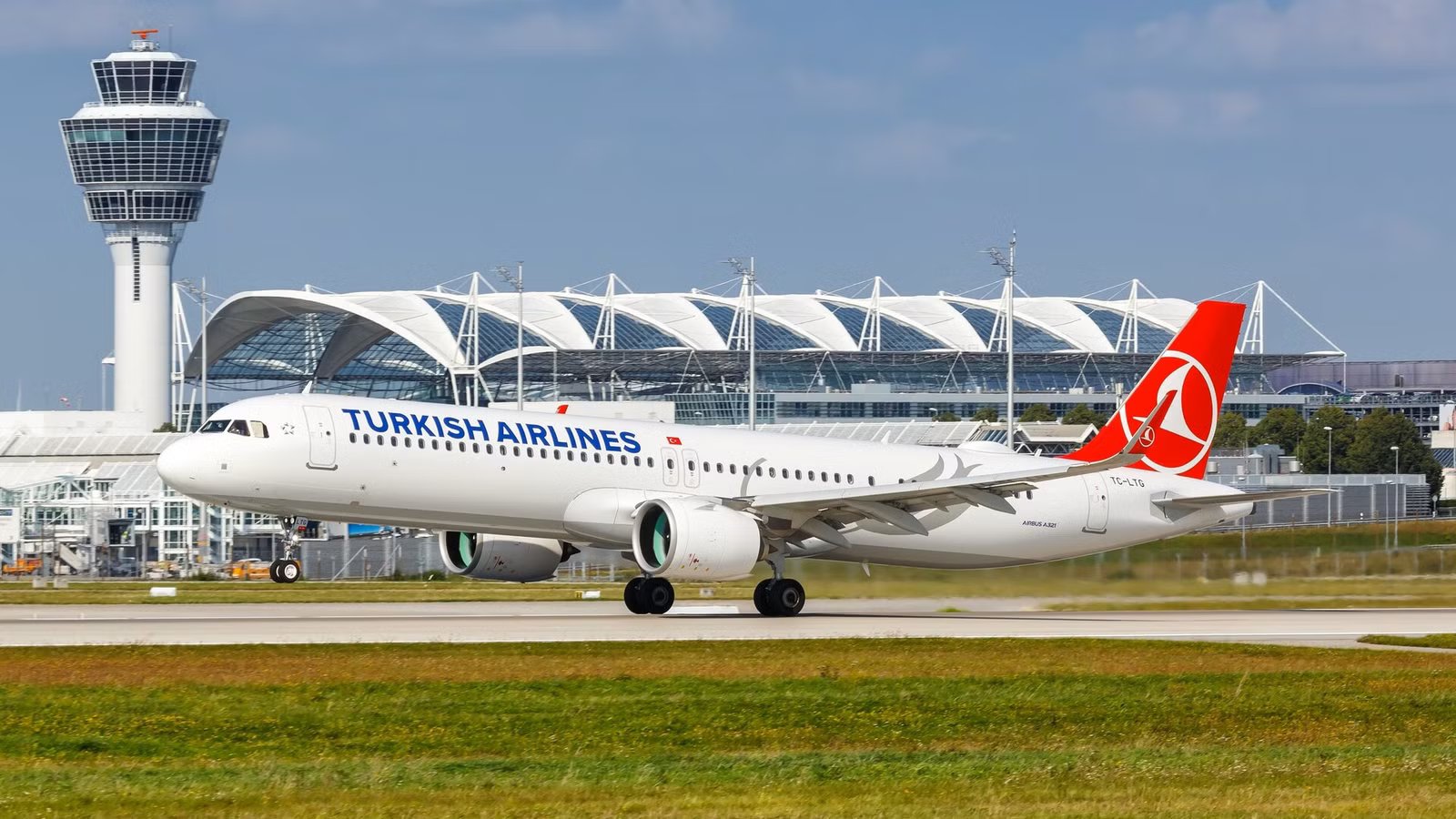
A  Turkish Airlines flight was forced to make an emergency landing at
  Barcelona-El Prat Airport on Thursday morning after a bomb threat was reported on board. Flight TK1853 from
  Istanbul Airport, operated by an Airbus A321, was traveling with 148 passengers and seven crew members on board. It was approaching Spanish airspace when the flight crew discovered that a passenger had created a personal Wi-Fi hotspot with a bomb threat.
Reuters reports that the threat ultimately proved to be a hoax, and Barcelona-El Prat has returned to normal operations. However, this is just the latest in a spate of bomb threats made on commercial airlines in recent years. While nearly all turn out to be hoaxes, the response to each comes at a significant cost to airlines and authorities, and can cause major inconvenience to passengers.
French And Spanish Fighter Jets Scrambled

Flight TK1853 is the first of four daily flights that Turkish Airlines operates between its Istanbul megahub and the Catalan capital. The flight was cruising over the Mediterranean when a member of the flight crew noticed that a Wi-Fi hotspot had been created onboard that reportedly included the phrase “I have a bomb, everyone will die.” The pilots immediately declared an emergency, which triggered a NATO Quick Reaction Alert (QRA).
A sonic boom was subsequently reported over southern France as French fighter jets were scrambled in response to the bomb threat, and the escort was handed over to Spanish Eurofighter Typhoons as the Turkish Airlines aircraft entered Spanish airspace. The A321 subsequently performed three loops in a holding pattern off the Catalan coast, a tactical move to clear civil traffic and ensure a controlled approach under military escort. It was able to make a safe landing just after 11:00 am local time after a half-hour delay.
A spokesperson for Turkish Airlines spokesperson later confirmed the incident, saying:
“On our flight this morning it was detected that a passenger established an in-flight internet access point and set the network name to include a bomb threat. The flight crew ensured a safe landing for the plane and thereafter local authorities boarded the plane to conduct a full inspection.”
A Global Spate Of Bomb Hoaxes

There has been a rapid escalation in recorded bomb threats on commercial aviation globally. According to the US Bomb Data Center (USBDC), bomb threats increased by 26% in 2023, while the Bureau of Civil Aviation Security (BCAS) in India reported nearly 1,000 bomb threats to aircraft in 2024 alone. This trend continued into 2025, with a number of high-profile incidents:
|
Notable Incidents Of Bomb Threats In 2025 |
||
|
Date |
Airline |
Details |
|
February |
American Airlines |
A flight from Austin to Charlotte had to be evacuated after a passenger reported seeing a Wi-Fi hotspot on the aircraft named “There is a bomb on the flight.” |
|
February |
American Airlines |
A flight from New York JFK to New Delhi was forced to divert to Rome with an escort of Eurofighter Typhoon aircraft after a bomb threat about 10 hours into its journey. |
|
April |
Allegiant Air |
A flight preparing to depart from Tampa to Cincinnati was forced to evacuate after flight attendants found a “very explicit” bomb threat on a note on the bathroom door. |
|
May |
United Airlines |
A flight from Honolulu to Los Angeles had to turn back just minutes into the flight after a note was found on its bathroom mirror that said that there was a bomb on the plane. |
|
June |
Saudia |
A flight carrying Hajj pilgrims from Jeddah to Jakarta made an emergency landing in North Sumatra after an emailed threat warning of an explosive device onboard. |
|
June |
Lufthansa |
A flight from Frankfurt to Hyderabad was forced to make a U-turn over Bulgarian airspace and return to Germany after an emailed bomb threat against the aircraft. |
|
November |
United Airlines |
A flight from Houston was targeted by a phone threat stating the plane would explode upon landing at Reagan National Airport. The airport was placed under a ground stop. |
|
December |
Qatar Airways |
A flight from Doha to Colombo was met by police and bomb disposal experts after the airline received an email alleging a bomb onboard, triggering a security alert. |
While all of these threats ultimately proved to be hoaxes, authorities are required to respond to every event, resulting in significant costs to the airlines and airports involved, as well as huge inconvenience to passengers.
The penalties for making false bomb threats to commercial flights can be severe. Simple Flying recently reported on the case of a passenger who made a threat on an Alaska Airlines flight from Atlanta to Seattle in 2023, causing the flight to be diverted en-route. He has just been sentenced to 22 months in federal prison and three years of supervised release, as well as being required to pay $80,000 in restitution to Alaska Airlines and Spokane International Airport.

Ryanair Boeing 737 Escorted By German Fighter Jets After Potential Security Threat
The plane was able to safely continue to its destination as planned with minimal additional flight time.
The Aftermath Of The Turkish Airlines Incident

Following emergency protocols, upon landing the Turkish Airlines aircraft was directed to a remote, isolated area of the Barcelona-El Prat airport to minimize risk to other airport operations. A massive security presence met the plane, and immediately began to disembark the passengers and search the aircraft. A spokesperson for the airport confirmed the details, saying that operations at El Prat had returned to normal:
“A plane originating from Turkey with a possible bomb threat has landed on runway 02 at El Prat airport. “We temporarily halted both approaching traffic (holding patterns) and takeoffs until the aircraft was escorted by airport emergency services to an isolated area, where it was subsequently disembarked. Airport operations have now returned to normal.”
After all passengers and crew were safely disembarked, specialized bomb disposal units and canine teams inspected the aircraft and luggage. The Spanish Interior Ministry later confirmed that no explosive materials were found on board. However, the passenger responsible for the WiFi hotspot was identified and detained for questioning, and could well find out that the cost of scrambling fighter jets is not covered by their travel insurance.