dailynewsnblog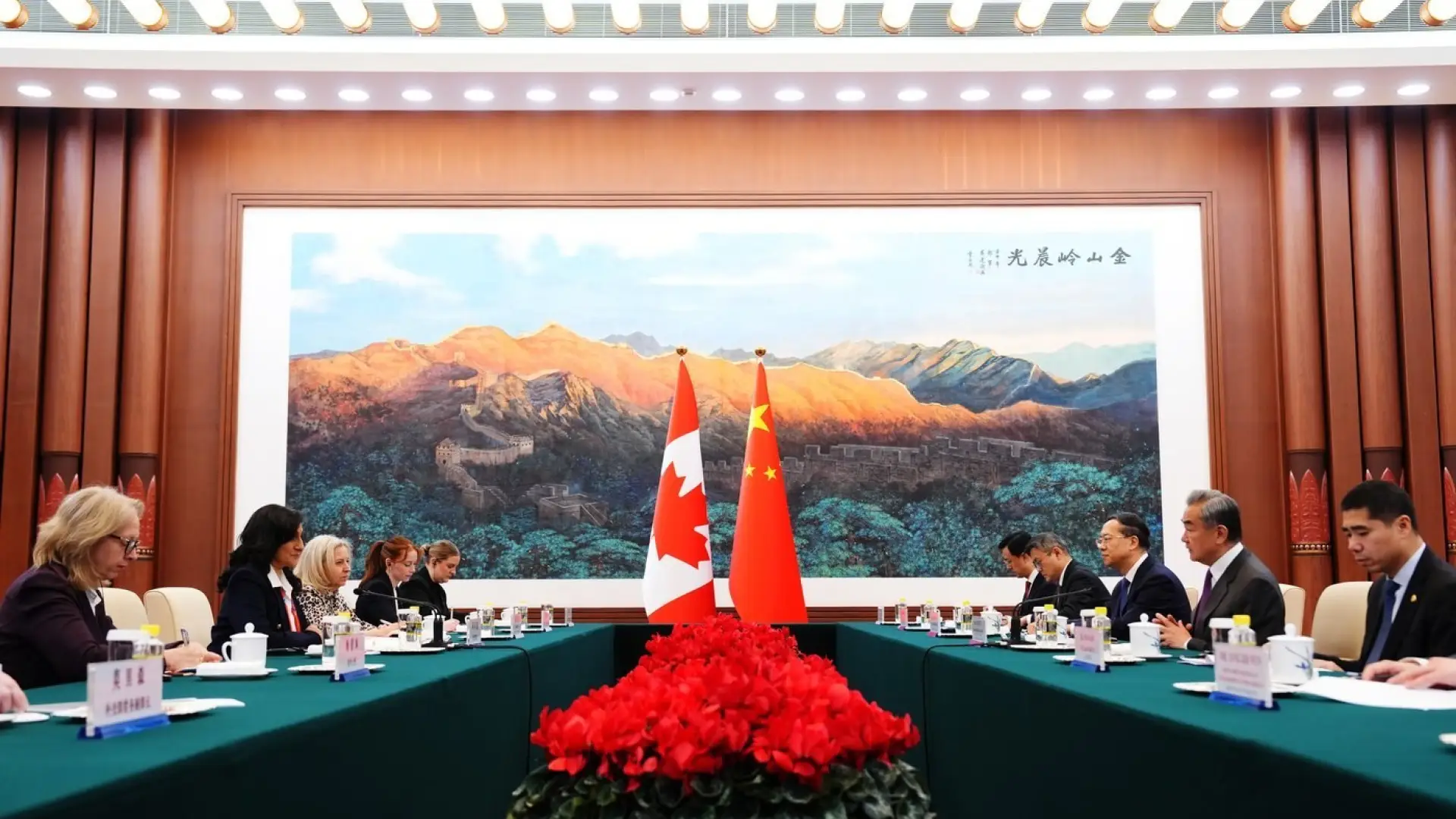
The five-year, non-binding agreement with the Chinese government also involves the Canadian federal Department of Natural Resources and is among the first reached with Beijing after the arrival of Prime Minister Mark Carney in China this week.
British Columbia’s Forests Ministry has entered into a memorandum of understanding with China on modern wood construction, a development that the province hopes will bolster the provincial lumber sector as it seeks alternatives to the U.S. market.
The five-year, non-binding agreement with the Chinese government also involves the Canadian federal Department of Natural Resources and is among the first reached with Beijing after the arrival of Prime Minister Mark Carney in China this week.
On the other side is China’s housing and development ministry, with the memo agreeing on co-operation on the integration of modern wood construction into China’s urban renewal and rural revitalization strategies and exploring “practical approaches” for green developments.
University of British Columbia political ecologist and China scholar Juliet Lu said the MOU is “relatively low-hanging fruit” in Carney’s attempt to rebuild trade momentum with Beijing, compared to dealing with Canadian tariffs on Chinese electric vehicles or China’s levies on Canada’s canola.
Nonetheless, Lu said the potential for B.C. processed lumber to enter the Chinese market on a larger scale is positive, given China has traditionally relied on carbon-intensive concrete-and-steel construction for its large-scale highrise projects.
The MOU says a goal is to strengthen development of an “industrial chain” for wood construction, calling for exchanges and joint research on modern wood construction involving tall wood buildings and mass timber projects.
“(Chinese construction) is shifting away from mass production into moments when demand for different types of building structures is growing,” Lu said. “Past years of work on opening regulations to wood-frame construction have allowed for that.
“Plus, we have this new technologies of engineered wood that allow for building bigger buildings, like what we see in China, with wood construction. So I think there is great possibility (for opportunity).”
She noted that previous MOUs had been signed between B.C. and China on wood-frame construction in 2010 and 2015, but Chinese building regulations had since opened up to allow for larger wood buildings in Beijing, Shanghai and the southern city of Haikou.
Lu also noted that a shift toward value-added products such as engineered wood and mass timber would provide an added boost to the provincial economy.
“Right now, our exports to China are dominated more by lower value products, things like pulp that goes into paper and things like unprocessed logs, which we really want to upgrade from,” she said. “So any shifts in China’s market demand for Canadian timber are going to have a huge impact on the Canadian market, even if it looks like a drop in the barrel for the Chinese market.”
In a statement, B.C. Forests Minister Ravi Parmar said the MOU is one of many moves being taken in the wake of tariffs from the United States placing pressure on the provincial forestry sector’s exports.
“The tariffs imposed by (U.S. President) Donald Trump have had a significant impact on B.C.’s — and Canada’s — forestry sector,” Parmar said. “That’s why we are exploring other markets to create new and strengthen existing partnerships to stabilize and diversify the sector.”
Parmar noted his trade mission to Japan and South Korea last year as well as Premier David Eby’s ongoing visit to India as other steps taken by B.C. to “bolster existing partnerships and look for new ones.”
The B.C. forestry industry has been hard hit by U.S. tariffs and global economic uncertainty, as well as what local operators have described as the lack of access to affordable fibre.
A Vancouver Island pulp mill operated by Domtar and employing about 350 workers announced late last year it was closing.
Carney is in China for the first visit to the country by a Canadian prime minister in more than eight years, with other deals signed today covering topics such as energy and food safety.
The office of federal Energy and Natural Resources Minister Tim Hodgson said in the wake of the new deal that China was Canada’s third-largest export market for wood products in 2024.