dailynewsnblog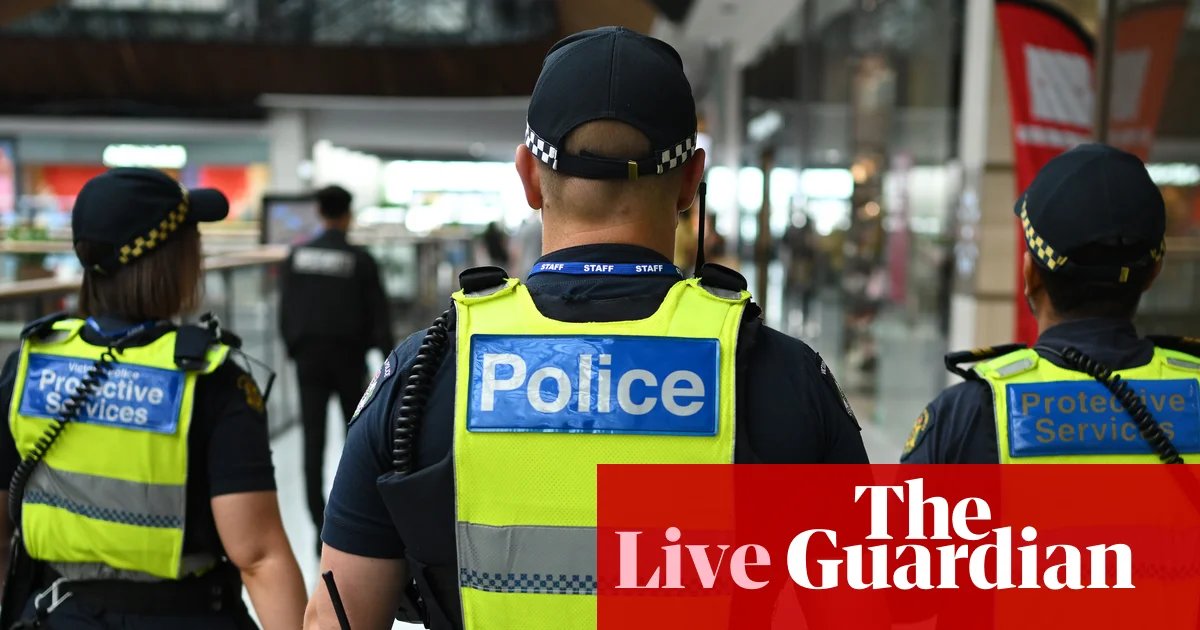
Victorian stop-and-search police powers in constitutional federal court challenge
Douglas Smith
The assistant commissioner for Victoria police is set to be cross-examined in federal court this morning as a constitutional challenge by a trio of activists looks at whether a declaration of Melbourne’s CBD as a designated area for four months was legal.
It is the second day of a two-day hearing. Constitutional arguments were laid out by counsel from both sides yesterday, focusing on how the implied freedom of political communication can be interpreted by police; and whether a protester wearing face-coverings should be considered a form of “political expression” or if they may be concealing their identity to commit a crime.
Under the declaration initiated from the Controlled Weapons Act, which was revoked four months early on 9 January, police, including protective service officers, were allowed to stop and search anyone without a warrant if they were within the designated area.
Police were also able to require police to remove face-coverings – regardless of whether they were being worn for political or health purposes, such as to protect against the effects of crowd-control substances, such as pepper spray.
Key events

Martin Farrer
Indie band Pulp will play Adelaide festival after all
The fallout from the Adelaide festival fiasco continues with an overnight statement from the indie band Pulp that they will be playing at the event next month.
The British band had initially told the organisers that they were joining the boycott of the event over the “dreadful” barring of Palestinian Australian academic Randa Abdel-Fattah from the Adelaide writers’ week.
At the organisers’ request, the band delayed their announcement of the boycott while the festival tried to resolve the crisis.
But after the apology to Abdel-Fattah, the band is back on board.
Frontman Jarvis Cocker said on Instagram last night that he was happy that the band was now “prepared to perform at the music festival once more”.
“This will be a free concert, open to anyone who respects the freedom of all voices to be heard. It will also be fun.”
Read our full story here:
Good morning, and happy Friday. Nick Visser here to take things over. Let’s get to it.
Douglas Smith
More on that stop-and-search hearing in Melbourne.
Counsel for the plaintiffs, Thomas Wood from the Human Rights Legal Centre, argued the declaration made by Victoria police was “invalid”.
He told the court yesterday:
The Act authorises, once a declaration is made, what can only be described as, ‘extraordinary powers’.
There are two that concern the interests of my client. They are search powers to search any person without forming any reasonable suspicions and without requiring a warrant, with the only condition being that that person being within the designated area.
And then there is what we’ve called a face-covering power, conferred by section 10ka (of the Act).
In court, counsel assisting for the Victorian government, Sarah Keating, said the state accepted that police requiring people to “remove a face-covering in some instances can burden political communication”, but contended that the “burden is indirect”, and was not “significant”.
The challenge was brought on by Invasion Day community organiser, Tarneen Onus Browne, environmental activist Benny Zable, and human rights advocate, David Hack, who was searched by police in Melbourne’s CBD on 7 December.
Victorian stop-and-search police powers in constitutional federal court challenge
Douglas Smith
The assistant commissioner for Victoria police is set to be cross-examined in federal court this morning as a constitutional challenge by a trio of activists looks at whether a declaration of Melbourne’s CBD as a designated area for four months was legal.
It is the second day of a two-day hearing. Constitutional arguments were laid out by counsel from both sides yesterday, focusing on how the implied freedom of political communication can be interpreted by police; and whether a protester wearing face-coverings should be considered a form of “political expression” or if they may be concealing their identity to commit a crime.
Under the declaration initiated from the Controlled Weapons Act, which was revoked four months early on 9 January, police, including protective service officers, were allowed to stop and search anyone without a warrant if they were within the designated area.
Police were also able to require police to remove face-coverings – regardless of whether they were being worn for political or health purposes, such as to protect against the effects of crowd-control substances, such as pepper spray.
Welcome
Good morning and welcome to our live news blog. I’m Martin Farrer to get the day started and then Nick Visser will take the news baton.