dailynewsnblog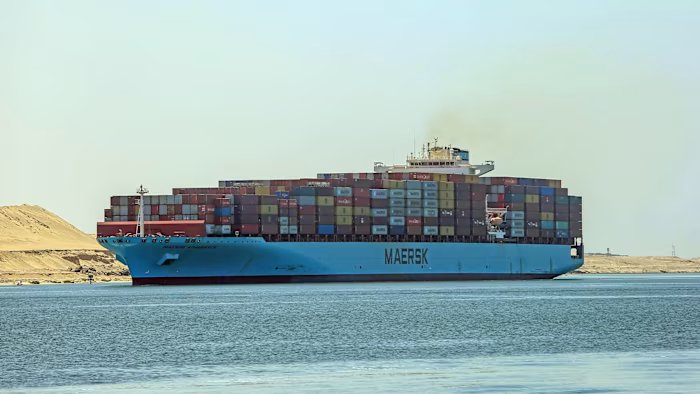
Unlock the Editor’s Digest for free
Roula Khalaf, Editor of the FT, selects her favourite stories in this weekly newsletter.
AP Møller-Maersk, the world’s second-largest container shipping line, said it would resume travel through the Suez Canal and Red Sea for its MECL service, becoming the second major shipping group to step up its transits through the key maritime corridor as the ceasefire in Gaza continues to hold.
Maersk on Thursday said it would “implement its first structural return to the trans-Suez route” for its MECL service, “following improved stability in the Red Sea”.
Container shipping groups have been weighing a return to the Suez Canal since Yemen’s Houthi rebels signalled in November that they would halt their attacks on ships passing through the Red Sea. CMA CGM, the world’s third-largest container shipping group, earlier this month resumed transits through the waterway on its India America Express service.
A wider return to the Red Sea would cut transit times between Asia and Europe by up to two weeks and reduce the number of vessels needed to meet demand, lowering the freight rates that shipping groups can charge for their services.
Peter Sand, chief analyst at shipping market tracker Xeneta, said between 6 to 8 per cent of the global container shipping fleet would no longer be needed in the event of a full-scale return to the Red Sea, meaning the “market balance will shift against carriers”.
Maersk’s share price fell 4 per cent on Thursday after its announcement.
Maersk previously said it would only embark on a full return if conditions were safe. On Monday it announced one of its ships on the MECL service has successfully transited the Bab el-Mandeb Strait — the focal point of past Houthi attacks — marking the second successful test run since December.
“The threat of the Houthis is still potentially there, but with the ceasefire agreement [in Gaza] in play, it was probably the natural thing for Maersk to go back through [the Red Sea],” said Jon Gahagan, president of US-based maritime risk consultancy Sedna Global.
Analysts cautioned that the situation in the Middle East remained volatile, after US President Donald Trump earlier this week stoked fears of a military intervention in Iran.
“It’s just so difficult because we haven’t got the faintest idea what the [Trump] administration is going to do,” said Peter Cook, a former head of the Security Association for the Maritime Industry, a trade association.