dailynewsnblog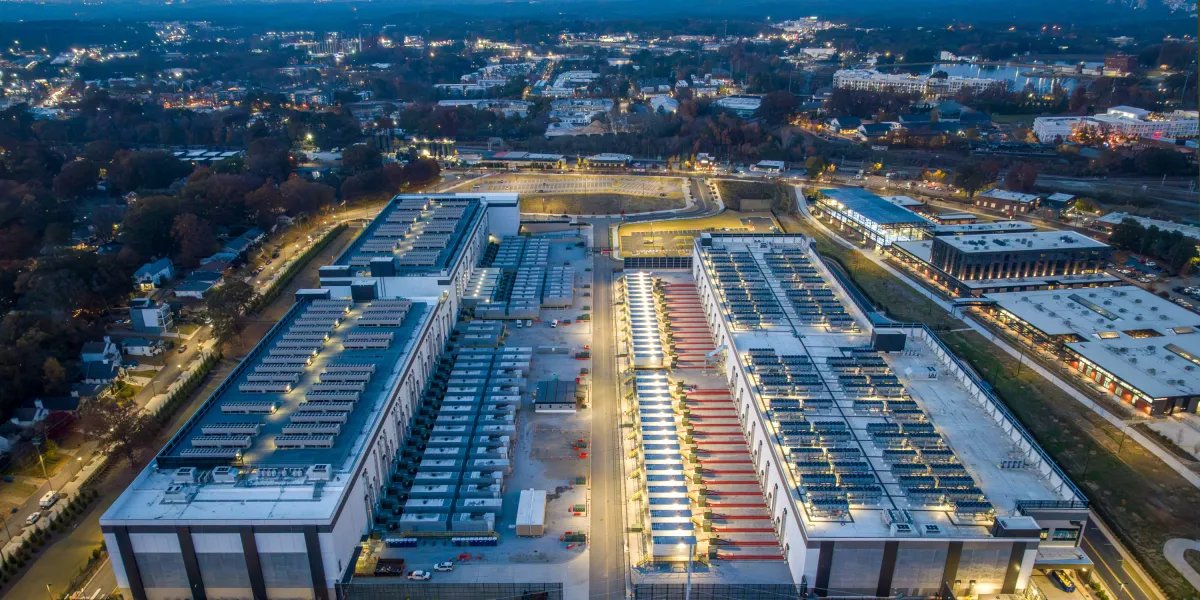
And as to the jobs they bring to communities. Well, I have some bad news there too. Once construction ends, they tend to employ very few people, especially for such resource-intensive facilities.
These are all logical reasons to oppose data centers. But I suspect there is an additional, emotional one. And it echoes one we’ve heard before.
More than a decade ago, the large tech firms of Silicon Valley began operating buses to ferry workers to their campuses from San Francisco and other Bay Area cities. Like data centers, these buses used shared resources such as public roads without, people felt, paying their fair share. Protests erupted. But while the protests were certainly about shared resource use, they were also about something much bigger.
Tech companies, big and small, were transforming San Francisco. The early 2010s were a time of rapid gentrification in the city. And what’s more, the tech industry itself was transforming society. Smartphones were newly ubiquitous. The way we interacted with the world was fundamentally changing, and people were, for the most part, powerless to do anything about it. You couldn’t stop Google.
But you could stop a Google bus.
You could stand in front of it and block its path. You could yell at the people getting on it. You could yell at your elected officials and tell them to do something. And in San Francisco, people did. The buses were eventually regulated.
The data center pushback has a similar vibe. AI, we are told, is transforming society. It is suddenly everywhere. Even if you opt not to use ChatGPT or Claude or Gemini, generative AI is increasingly built into just about every app and service you likely use. People are worried AI will harvest jobs in the coming years. Or even kill us all. And for what? So far, the returns have certainly not lived up to the hype.
You can’t stop Google. But maybe, just maybe, you can stop a Google data center.
Then again, maybe not. The tech buses in San Francisco, though regulated, remain commonplace. And the city is more gentrified than ever. Meanwhile, in Monroe County, life goes on. In October, Google confirmed it had purchased 950 acres of land just off the interstate. It plans to build a data center there.