dailynewsnblog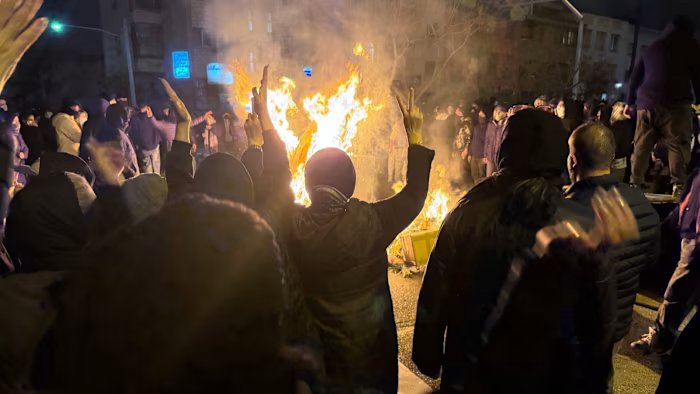
Good morning and welcome back. In today’s newsletter:
-
Donald Trump warns Iran to ‘show humanity’ or face ‘very strong action’
-
US Senate introduces bill to stop military from occupying Nato territories
-
China’s trade surplus hits record $1.2tn in 2025
-
Why the world has started stockpiling food again
We begin with the protests in Iran, as President Donald Trump yesterday gave his strongest signal yet that the US could intervene in the country.
The latest: Trump said Iran’s leaders should “show humanity” in dealing with the mass demonstrations sweeping the country as he warned Tehran the US would take “very strong action” if it started hanging protesters.
“They’ve got to show humanity,” the US president said. “They’ve got a big problem and I hope they’re not going to be killing people.”
What lies ahead: Trump’s comments came as he travelled from Detroit to Washington where he was due to meet top aides to continue discussions about a possible intervention in Iran.
His remarks followed a day of escalating US pressure on Iran’s regime, with Trump weighing military strikes on the country and calling on protesters to “take over your institutions”.
Trump’s push to support protesters in Iran, possibly with military strikes, would represent a far bolder and riskier move. Any attack — aimed at unseating the leadership of one of America’s strategic foes — would plunge the Middle East into further turmoil. Read the full report.
-
What are Trump’s options? Any US military or non-military action would be fraught with uncertainty — and risk backfiring.
-
Digital repression: Iran went from “halal internet” to near-total blackout after the government removed access. Here’s how citizens fought back.
-
Dispatch from Tehran: Cut off from the outside world, Iran has been convulsed by some of the worst violence since the 1979 Islamic revolution.
Here’s what else we’re keeping tabs on today:
-
Economic data: Opec publishes its monthly oil market report. The US releases its latest Beige Book of economic conditions.
-
Greenland: Foreign ministers of the island and Denmark meet US vice-president JD Vance and secretary of state Marco Rubio in Washington.
-
Book awards: Standard Chartered is to back the FT Business Book of the Year Award and the Bracken Prize for Young Authors for the next three years.
-
Results: Bank of America, Citigroup and Wells Fargo report earnings. See the Week Ahead for a fuller list.
Five more top stories
1. US senators have proposed legislation to prevent the American military from occupying or annexing Nato territories, including Greenland. The bill comes as Republican and Democratic lawmakers have expressed alarm over Trump’s renewed interest in acquiring the Danish Arctic territory.
2. China has reported a record full-year trade surplus of $1.2tn for 2025, as exports soared despite Trump’s trade war. Exports in goods grew 6.6 per cent in dollar terms in December on a year earlier, according to official data released today by the customs administration. Read the full story.
3. Exclusive: Coca-Cola has ditched plans to sell Costa Coffee after bids from private equity suitors fell short of its expectations, marking the latest setback in its ownership of the struggling UK coffee shop chain. The US soft drinks group had been seeking about £2bn for Costa.
4. Exclusive: McKinsey is piloting a shake-up in how it recruits its next generation, asking graduate candidates to use an AI assistant to complete tests designed to reflect consultants’ new ways of working. The move comes as firms build AI expertise and spend less time on traditional strategy advice.
5. Crispin Odey plans to make his company dormant this year, closing a chapter in the history of one of the City of London’s oldest hedge fund firms after its founder’s fall from grace. Read the full report.
The Big Read
From Sweden and Norway to India and Indonesia, countries are holding back increasing quantities of rice, wheat and other staples as insurance against a world they view as increasingly unstable. But many economists believe the move could be counter-productive.

We’re also reading . . .
-
Venezuela’s torture chamber: A futuristic Caracas shopping centre built during the oil boom became a notorious prison where hundreds of suspected dissidents were detained.
-
Elite British school: The Singapore offshoot of a prestigious London school has told parents it has scrapped a planned expansion weeks after an FT investigation.
-
Atomic forces: Europe’s nuclear start-ups are preparing to switch operations to the US as they seek deeper financing and stronger government support.
Chart of the day
America’s national security strategy, a “brutal” text published late last year, singles out the failings of its European allies, writes Martin Wolf. The blueprint however simply projects Maga’s internal fears abroad, he says, especially since the data shows many European countries protect freedom of speech better than the US.

Take a break from the news . . .
Every age has its own distinctive building type. For the 21st century it looks like it’ll be the data centre. So why do they look so dull? Read FT architecture critic Edwin Heathcote on the vast anonymity of the data centre.