dailynewsnblog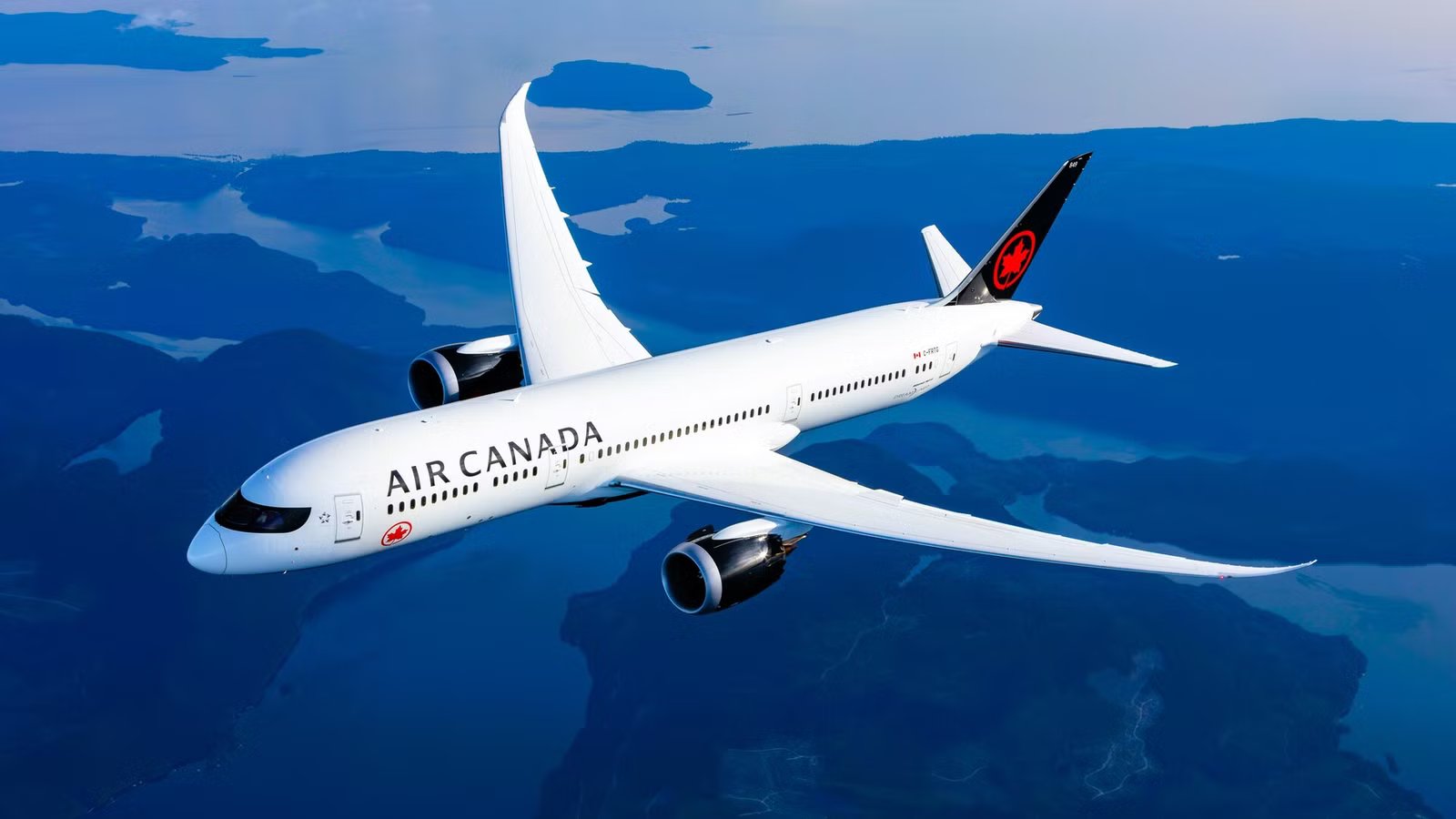
An  Air Canada flight from
  Auckland Airport to Vancouver International Airport was forced to return to the airport shortly after takeoff after the pilots detected fumes in the cockpit. Flight AC40 halted its climb just minutes after takeoff, and subsequently performed two loops over the ocean before making an emergency landing back in Auckland. There are no reports of injuries to passengers or crew.
This is the latest of a string of fume-related incidents on Air Canada flights over the past year. Many have had to declare an emergency, deploy oxygen masks, and make rapid returns or diversions. Fortunately, no passengers or crew have been seriously injured in these incidents, but fume incidents are on the rise across all airlines, and the health risks to those on board are serious.
A Rapid Return To Auckland

Flight AC40 is one of the longest in Air Canada’s network at 7,055 miles (11,354 km), and has a block time of 13 hours. It is operated four times a week using a 298-seat Boeing 787-9. Air Canada has 32 787-9s, and as the longest-range aircraft in its fleet, it is tasked with performing trans-Pacific routes such as those from Vancouver to Australia and New Zealand.
The flight itself was scheduled to depart at 2:00 pm local time on Tuesday, but only took off after a 50-minute delay. Just seven minutes into the flight, as the aircraft was passing through 12,000 feet, the pilots reported an “unusual odor” in the cockpit. They declared an emergency, leveled off at 12,900 feet, and subsequently performed two wide loops over the Hauraki Gulf. With a planned 13 hour flight ahead of it, the aircraft undoubtedly needed to dump fuel before making a return to the airport in Auckland.
Radio New Zealand reports that Flight AC40 was able to make a safe landing upon its return, with no injuries reported to the 269 passengers and 14 crew on board. An Air Canada spokesperson later confirmed that the flight returned to Auckland out of an abundance of caution after the odor and fumes were detected by the pilots, and that the aircraft remains grounded:
“The aircraft landed normally and has been taken offline for an inspection by maintenance and technical professionals. We are making arrangements for passengers to be rebooked to their final destination.”
Fortunately for the passengers, Air New Zealand is a  Star Alliance partner of Air Canada, and operates daily flights from Auckland to Vancouver. Along with the new 787-9 currently inbound to Auckland to perform Flight AC40 on Wednesday, this will aid in the re-booking of passengers and minimize delays in making it on to a new flight.
The Latest In A String Of Air Canada Fume Events

This is just the latest incident in which Air Canada and Air Canada Rouge flights have experienced smoke, fumes, and unexpected odors in the cockpit or cabin. Last year, the airline had six high-profile incidents that required the aircraft to declare an emergency and return to the airport or divert to a new airport. All of these involved the carrier’s Airbus fleet, so this latest incident is the first with one of its  Boeing aircraft in more than a year.
|
Recent Fume Incidents On Air Canada Flights |
||
|
Date |
Aircraft Type |
Incident |
|
November 18, 2025 |
A320-200 |
A flight from Las Vegas to Toronto was forced to declare an emergency and return to the airport after fumes in the cockpit and cabin. Three passengers were provided medical assistance. |
|
November 15, 2025 |
A319-100 |
A flight from Antigua to Toronto experienced fumes in the cabin during the cruise, and was forced to divert to Punta Cana. This was the same aircraft as the Tampa incident (see below). |
|
October 19, 2025 |
A330-300 |
A flight from Montreal to Calgary was forced to make an emergency landing in Winnipeg after the crew detected a burning smell and observed smoke in the flight deck. |
|
August 31, 2025 |
A220-300 |
A flight from Denver to Toronto was forced to perform an emergency return to the airport and subsequent runway evacuation due to an acrid smell and suspected fire. |
|
April 17, 2025 |
A321-200 |
A flight from Las Vegas to Toronto reported a smoke-like odor in the cockpit and cabin, and performed a rapid descent and emergency landing in Des Moines. |
|
January 31, 2025 |
A319-100 |
A flight from Tampa to Toronto reported smoke and fumes in the flight deck and cabin during the climb out, and made an emergency return to the airport. |
The last notable fume incident involving an Air Canada 787-9 occurred on July 8, 2024, with Flight AC864 from Montréal–Trudeau International Airport to  London Heathrow Airport. The aircraft was about two hours into the flight and approximately 480 nautical miles east-northeast of Newfoundland, when passengers reported a strong burning smell in the cabin. The pilots declared an emergency and initiated an immediate turnaround, landing safely about 90 minutes later at Gander International Airport.

Air Canada Rouge Airbus A321 Diverts To Des Moines After Smoke Detected In Cockpit
The airplane was more than halfway into its journey to Toronto when it diverted.
The Rising Concerns Regarding Fume Events

Incidents of smoke, fumes or odors in aircraft cockpits and cabins, broadly labeled as “fume events”, are undoubtedly on the rise. The Wall Street Journal has conducted multiple high-profile investigations into fume events and has reported that internal industry data found a rate of at least 22 fume events a day on aircraft in the US alone. To put this in context, the Journal’s analysis showed that reported fume events were nearly ten times higher in 2024 than a decade earlier.
It is worth noting that most experts believe that the majority of fume events go unreported or even undetected, but the health implications for passengers and crew remain the same. Dr. Robert Harrison, an occupational medicine specialist at the University of California, San Francisco, says that some people can have severe reactions to fume events. He says that he has treated more than 100 flight crew members for toxic exposure, many of whom have experienced chronic health conditions as a result.
“The most common problems I see are general nervous system issues. A person breathes the fumes into their lungs, it circulates around, and then it gets into their brain and can affect the other parts of the nervous system.”
Not everyone reacts to fume events the same way, and most passengers walk away without any serious reactions. But in extreme cases, some passengers and crew have been left with long-lasting conditions such as respiratory injuries, severe migraines, cognitive defects, tremors, memory loss, and balance and motor skill issues.
If you smell fumes on an aircraft, you should notify the crew immediately, providing as much information as you can on the source and smell, and any symptoms that you might be feeling. If you feel sick, see a doctor immediately upon landing and inform them of potential exposure to fumes, as some tests (like for carbon monoxide) are time-sensitive.