dailynewsnblog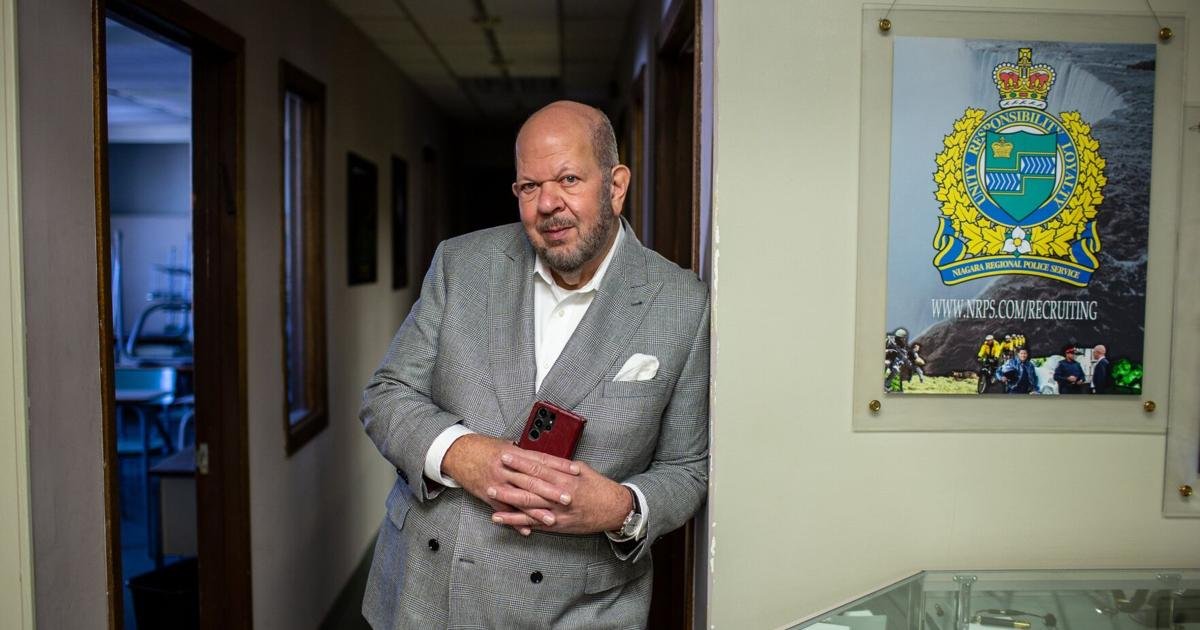
Eugène-François Vidocq certainly knew crime.
It helped that he was a criminal, at least some of the time.
Vidocq lived a couple of hundred years ago in France, but his name is still relevant today in the GTA, partly because he is considered the father of the private detective trade worldwide.
There are 2,285 private investigators licensed by the Ministry of the Solicitor General in Ontario alone. About half of them are believed to be in the GTA.
I took a course to become the 2,286th, with a 50-hour online course at the Canadian School of Private Investigation and Security (CSPIS).
I cover crime at the Star and wondered if this would give me a leg up. I also noticed how some of my old police contacts had migrated over to private investigative work and wondered what they were up to.
You’ve likely seen the CSPIS billboards, which feature a man peeking out from under the brim of his fedora and looking mysterious.
You won’t see their real-life graduates at work, as they pride themselves on being discreet, with no guns or uniforms or marked vehicles.
They could be anyone, including former police officers.
“We take pains to explain that the skills private investigators employ are very different than those used by members of a police service,” said Edward Franco, general manager of CSPIS.
“Rather than a uniform, a badge and a gun, private investigators need to develop interpersonal, methodical research skills and an ability to work flexibly rather than be assigned to a routine schedule. We also advise former police officers of how important it is to ‘break the mold’ of policing in order to succeed within the private sector.”
“Our students have included authors doing research for a book idea, journalists enhancing their skills, lawyers and paralegals seeking added insight into investigative methods and techniques, along with many other people from every walk of life,” Franco said.
Liana Najem, 30, is a trained journalist. She took the course separately from me but shared many of the same impressions as I had, when I contacted her.
She notes that private investigations and journalism both involve curiosity.
“I just felt very drawn to investigative work,” Najem said. “I love to know why people do what they do. The why is the biggest deal to me.”
“I like to go beyond assumptions.”
Lauren Berger, 25, another graduate of CSPIS describes herself as “unassuming.”
With a bachelor’s degree in criminology from York University, she said she likes the promise of independence that a career in private investigations promises.
Franco noted that, as with other occupations, pay can range dramatically based on experience, qualifications and abilities.
“It’s common to see field investigators engaging in areas such as surveillance and general investigations starting off at a range equivalent to $30 to $45 per hour, while senior investigators can demand substantial compensation based on experience and abilities,” Franco said. “Corporate investigations, insurance work and insurance-related investigators are often very highly renumerated.”

The Canadian School of Private Investigation and Security in North York.
Nick Kozak
Keep it simple
The CSPIS course is heavy on tips on how to investigate fraudulent insurance claimants, work undercover to nab thieves in warehouses and trace credit card thieves.
It also frequently cautioned us to keep things simple.
When undercover, try to change as little as possible of your personal history so that you don’t slip up.
Also, don’t become reliant on gizmos like pen cams, watch cams, button cams or key-chain cams.
That said, make sure you have a backup pen and that you’re handy with a video camera.
CSPIS students are cautioned that private investigators are not bailiffs and can’t be called upon to evict anyone.
They are also absolutely forbidden from snooping into the whereabouts or new identities in order to identify anyone in witness protection.
“If asked to locate a protected witness, you must not do so,” students are cautioned.
You’ve been served
Students are told they may be called upon to process serve, which involves bringing documents to a person as part of a civil litigation.
We were taught that, when process serving, it’s best to approach your subject with a confident gait and nothing in your hands.
Make sure you know how to pronounce your subject’s name before you start knocking on their door.
Create a mood of “positive anticipation” and try to sound firm but friendly as you rapidly knock on the door.
“A tepid, meek or quiet knock might psychologically give the person inside the residence an uncomfortable feeling,” we were cautioned.
That means, don’t say, “Are you Felix Maloney?” for example.
Instead, say, “Felix?” in a familiar manner, as if you’re a friend.
Follow that up with, “Felix Maloney?”
Assuming he affirms he is indeed Felix Maloney, keep smiling as you smoothly reach into a jacket pocket for court papers, which you place in his hand.
GSI: Garbage scene investigation
Much of the course involves learning the fundamentals of the Ontario Occupational Health and Safety Act for probes into industrial theft, substance abuse and fraud for undercover industrial and warehouse work.
There’s plenty to study here.
If you do well, your potential employers are plentiful, like transportation companies, private corporations and law firms.
A tip regarding the exam: study these acts carefully.
That said, much of the course is common sense.
When doing surveillance, don’t slow down and stare when you pass your subject’s house. Try to park so that your subject’s vehicle drives away from you and not toward you.
Also, try to have the sun at your back, as this makes you less visible.
If you must get out of the car, use a steady gait, and a minimum of twitchiness.
“Never peek at the subject from around corners; don’t hide behind telephone poles; never crouch behind windows or parked cars to stare at someone,” we were cautioned.
“Don’t stand out in any way.”

Edward Franco, general manager of the Canadian School of Private Investigation and Security says the skills private investigators employ are very different than those used by members of a police service.
Nick Kozak
If you see garbage by the curb of your subject’s home, this could be gold.
Smelly gold, but gold nonetheless.
Garbage on the curb has no value, so taking it isn’t theft.
That said, you can’t stray onto private property to scoop it up or humiliate someone with whatever you might find in their garbage.
“Therefore, obtaining information of a highly personal nature and disclosing that information in a manner which may cause embarrassment or distress to that individual may result in a private investigator being sued,” we were cautioned.
Would be investigators are cautioned that planting GPS tracking devices on a vehicle is illegal, unless it’s your vehicle or a company vehicle and you have authority in that company.
You also can’t intercept a communication without the consent of at least one party involved in it.
At some point, you may end up talking with your subject.
Try to ask open ended questions. Get the subject to retell things.
You don’t have the power to compel anyone to say anything or stop them from walking away.
Any statements you do take are not under oath.
The luminaries
Early on in my studies, I was told about Vidocq. I’m not sure if that was for inspiration or as a warning. Either way, I found it entertaining.
You’re likely already familiar with his work, even if his name doesn’t ring a bell.
Victor Hugo cozied up to Vidocq for inspiration when writing “Les Miserables” in 1865. Hugo drew on Vidocq for the central character of Jean Valjean, as well as that of Inspector Javert, the story’s ultra-obsessive police officer.
Vidocq also befriended French novelist and playwright, Honoré de Balzac, who’s credited with the saying, “Behind every great fortune lies a great crime.”
There’s also more than a touch of Vidocq’s policing methods in Sir Arthur Conan Doyle’s “Sherlock Holmes” series.
In real life, Vidocq alternated between being a lawbreaker and a lawman, spying on fellow criminals for authorities. His methods helped provide a policing blueprint for Scotland Yard, established in 1829, and the FBI in 1908.
They followed his lead by keeping detailed and voluminous written records, preserving footprints with plaster of paris, handwriting analysis and matching bullets to gun barrels.
Not so easy to teach is Vidocq’s odd ability to appear much taller or shorter than his real height when doing surveillance.
He did this by tinkering with his hats.
Some things are better not imitated at all, like how Vidocq killed two men in duels or how he reportedly escaped from 20 prisons, sometimes dressed as a nun.
The CSPIS course offers no tips on how to break out of custody dressed as a nun.
Pinkerton
It does note that the modern private investigation business also draws from the pioneering work of Allan Pinkerton, which began in the 1850s.
Pinkerton provided the catchy “We Never Sleep” motto and its unblinking eye logo, which became the inspiration for the term, “Private Eye.”
Pinkerton’s agency guarded the Illinois Central Railroad, hired the first female private detective, invented the mug shot, protected Abraham Lincoln — obviously not well — and escorted the Mona Lisa safely across the Atlantic Ocean.
Here in Canada, Pinkertons chased train robber Bill Miner through the woods of British Columbia, infiltrated German spy rings during the First World War, and helped Canada’s first prime minister John A. Macdonald fend off raids from Irish revolutionaries.
Takeaways
In the end, the course helped me better understand various statutes and records involved in them. This can help in gathering information. Bad guys have to launder their gains and this potentially helps me do a better job of snooping into them.
I found the parts on history fascinating, but things you should already know, without a course.
In short, try to be like Vidocq on his good guy days, and not his thieving, prison-breaking, disguised-as-a-nun ones.
In short, don’t be a jerk.
Be good Vidocq, not bad Vidocq.
“You must remember that as a private investigator you are representing law and order, not anarchy and chaos,” the course cautioned.
“Remember, there is no file, person or circumstance that can justify deviating from the highest standards of behaviour.”