dailynewsnblog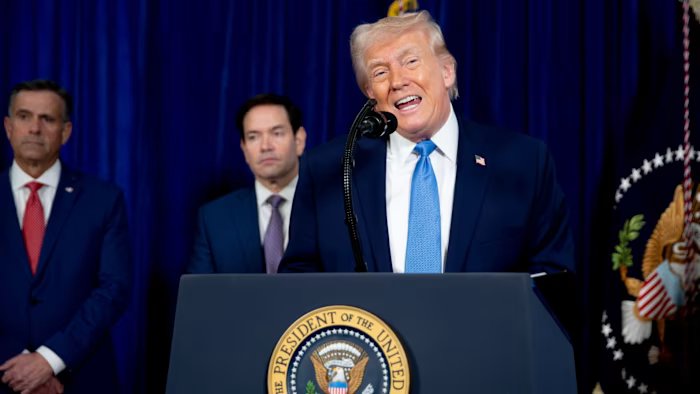
Good morning and welcome back. In today’s newsletter:
-
Donald Trump warns Venezuela’s new leader
-
Denmark tells Trump to stop making Greenland threats
-
France’s far-right leaders court business leaders
-
Artificial intelligence groups target Google’s browser dominance
Donald Trump issued a stark warning to Delcy Rodríguez, Venezuela’s de facto leader, that she must meet US demands as Washington signalled its intent to dictate policy in Caracas after Nicolás Maduro’s capture, rather than physically govern the country.
What to know: The US president made the warning to Rodríguez late yesterday as he returned to Washington from Florida. “If they don’t behave, we will do a second strike,” he said, adding that Rodríguez was “co-operating”, but would “face a situation probably worse than Maduro” if she did not bow to Washington.
Total access: Trump’s comments followed a day of confusion about US intentions towards Venezuela. In a round of television interviews yesterday, US secretary of state Marco Rubio suggested that Washington did not intend to occupy or administer Venezuela but would dictate policy to Caracas.
But asked what he wanted to see from Rodríguez, who was granted acting presidential powers by Venezuela’s supreme court, Trump told reporters: “We need total access. We need access to the oil and to other things in their country that allow us to rebuild their country.” Read for more on the latest.
Energy market reaction: Oil prices steadied after the US operation created uncertainty over the future of the world’s largest crude reserves. Brent crude, the international oil benchmark, opened in Asia today as much as 1.2 per cent lower at $60 a barrel. It later turned modestly higher to trade around $60.8 a barrel. Here’s what traders expect.
We have more coverage of Trump’s intervention in Venezuela:
-
Who is Delcy Rodríguez?: After capturing Maduro on Saturday, the US left in charge Venezuela’s vice-president, somebody Washington knows well.
-
Venezuela’s oil: Trump said a US takeover of the country’s energy sector would generate a “tremendous amount of wealth”. Industry insiders said the process could take years. One former top Chevron executive however is already raising $2bn for oil projects in the country.
-
From the diaspora: The US president’s popularity has rocketed in Doral, a Florida city which has one of the largest Venezuelan communities in the US.
-
A reckless intervention: Few will mourn Maduro’s ousting, but its manner sets a dangerous precedent, writes the Financial Times’ editorial board.
Here’s what we’re keeping tabs on today:
-
US: Maduro is set to face charges in a New York court that he led a cocaine conspiracy, in a case that could test the limits of presidential power. Meanwhile, the UN Security Council convenes a special meeting on Venezuela.
Five more top stories
1. Denmark’s Prime Minister Mette Frederiksen called on Trump and his allies to stop making threats to seize control of Greenland as tensions flared between the Nato allies following America’s intervention in Venezuela. She said the US has no right to annex the Arctic island.
2. France’s far-right leaders Jordan Bardella and Marine Le Pen are courting business leaders keen to prepare for the possibility that Rassemblement National may come to power. French executives have stepped up their engagement with the party, a link once considered taboo.
3. The EU’s recycling system is being taken advantage of by Chinese buyers snapping up aluminium scrap, smelting it and exporting it back to Europe as newly produced metal, according to an executive at Novelis, the industry’s largest recycler. Read the full interview.
4. The private equity owners of Asda and Morrisons have raised about £6.5bn by selling off chunks of the UK retailers’ property portfolios, as they move to pay down the debts accrued to finance their takeovers and regain ground lost to rival supermarkets.
5. The UK government will need to raise taxes again before the next election because of persistently weak growth and political pressure to top up spending plans, according to a majority of leading economists polled by the FT. Read comments from the respondents.
The Big Read

In 2026, Ruchir Sharma predicts artificial intelligence mania will wane and drag down the economies of the US and China, but he adds the rest of the world is well positioned to pick up the slack. Here are the other top world trends Sharma forecasts for the year.
Take part in a live Ask an Expert Q&A with Roula Khalaf, FT editor, on January 8. Submit your questions on what will shape 2026.
We’re also reading . . .
-
African economy: There are reasons to hope that the continent could finally gain some Asian-style momentum, writes David Pilling. There are also signs that indicate it might not.
-
Digital euro: One of the European Central Bank’s most complex projects is heading for a key vote this year at the European parliament, where majority support remains unclear.
-
The exit trade: Perverse incentives and fear of the unknown keep senior bankers stuck in lucrative but unsatisfying jobs, writes Craig Coben.
Chart of the day
Top AI groups such as OpenAI and Perplexity are stepping up efforts to challenge Google’s dominance of the browser market, as they bet the cutting-edge technology will change the way people access the internet.

Take a break from the news . . .
Check out FT Weekend’s 2026 cultural calendar, where our critics share what they’re most looking forward to this year in film, TV, theatre, classical, art, gaming, pop and dance.