dailynewsnblog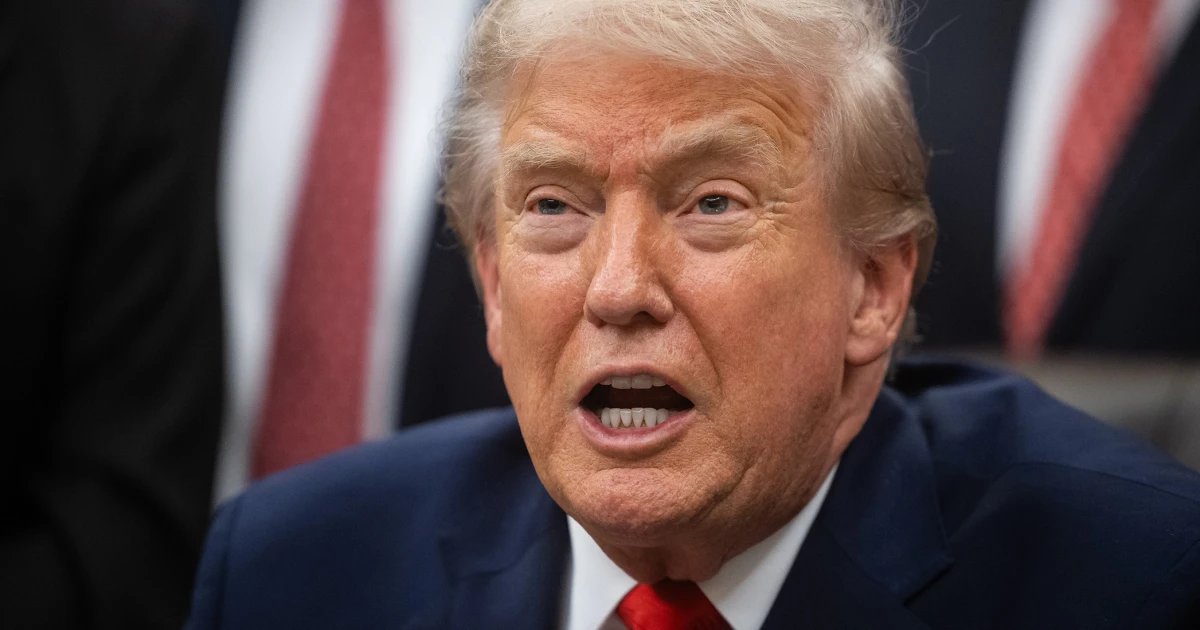
WASHINGTON — President Donald Trump and the Supreme Court’s smooth relationship could turn sour in the new year.
The court’s 6-3 conservative majority mostly avoided direct confrontations with Trump in 2025 while handing him a series of wins, but it pushed rulings on a series of contentious White House proposals into this year. And there are signs the court could hand the president at least one major defeat.
Heading into 2026, the court is set to rule on Trump’s plan to curtail automatic birthright citizenship, his sweeping tariffs and his attempt to fire a member of the Federal Reserve’s powerful board of governors.
In all three cases, the justices could have acted sooner, but the Supreme Court has a long history of waiting until a president has lost some of his post-election power and popularity before delivering major legal losses.
“The court is not confronting the president head-on until spring this year,” said Richard Pildes, a professor at New York University School of Law. “That’s very different in terms of his political strength.”

Trump started his second term with positive ratings in public polling, but surveys have shown views on the president’s job performance sliding throughout 2025. The December NBC News Decision Desk Poll showed 42% of adults approving of Trump’s performance, a slight decrease from April, while 58% disapprove.
Last year, the court repeatedly granted emergency requests filed by the Trump administration that allowed it to move forward with policies that had been blocked by lower courts, drawing criticism even from some judges.
Trump himself has heavily criticized lower court judges who have ruled against his policies, but has largely held fire when it comes to the Supreme Court, even on the rare occasions when he has lost, including a decision last month preventing him from deploying the National Guard in Chicago.
But now the court is about to issue definitive rulings, not provisional decisions that merely decide whether government actions can be implemented while litigation continues.
Tension between the president and the court is nothing new, but justices have often hesitated to rule against the White House early in a term, when voters have just given a president a new mandate. There are multiple examples of significant rulings against presidents when they are later in their terms and waning in popularity.
Toward the end of President Harry Truman’s presidency in 1952, the court had little hesitation in ruling that his attempt to seize control of steel mills during a labor dispute was unconstitutional.
And in 1974, the Supreme Court helped put a final nail in the coffin of President Richard Nixon’s presidency when it ruled against him over his attempt to withhold tapes of conversations in the White House during the Watergate scandal. Nixon resigned days later.
More recently, the court handed major defeats to the administrations of President George W. Bush over its detention of suspected terrorists and President Barack Obama on a policy aimed at giving legal status to people who entered the country illegally, both in their final years in office. The court, with its current 6-3 conservative majority, frequently ruled against President Joe Biden on his use of executive power, including its decision killing his effort to forgive student loan debt, a major legacy item.
“I’m not making the argument that if they see the president as very popular, they won’t rule against him or his policies, but you could say sometimes maybe the opposite is true,” said Barbara Perry, an expert on presidential history at the University of Virginia’s Miller Center.
“It would always be easier perhaps for them as human beings, but also in thinking about the legitimacy of the court, that they are on thicker ice if they are ruling against a president if they know he’s unpopular,” she added.
An age-old concern for the court is that it lacks the ability to enforce its rulings, relying upon its legitimacy among the public and the goodwill of government officials. And lower court judges have on multiple occasions accused the Trump administration of not complying with court orders.
As Jack Goldsmith, an expert in presidential power at Harvard Law School, wrote in a law review article in November, “the Court has acted, as it generally has through its history, to maximize its authority in the face of the reality that it lacks sword or purse.”
One notable feature in the first year of Trump’s presidency is how the court has pushed potential conflict with the White House down the road. The administration has also been careful only to appeal cases to the court that it thinks it has a strong chance of winning.
In the spring, for example, the administration asked the justices to block lower court rulings that said Trump’s plan to end automatic birthright citizenship was unconstitutional. The government asked the justices to take up a technical question on whether judges had the power to block the policy nationwide and did not seek a definitive ruling on whether the policy was lawful.
The court obliged, issuing a ruling in June that allowed the administration to take a major victory lap. Some court watchers wondered at the time why the court, as it had the authority to do, did not simply rule that the policy violates the Constitution’s 14th Amendment, as every judge so far has ruled.
Instead, the court waited until December to take up a case on the merits of the plan, with a ruling due by the end of June.
The delay is significant, with most legal experts expecting the court to rule against Trump, the decision will come just months before the midterm elections that will put the president into lame duck territory.
Similarly, the court in June last year turned away a request from companies challenging Trump’s tariffs that it immediately rule on the policy and instead heard arguments in November, with a ruling to come early this year. During oral argument, justices appeared skeptical of Trump’s power to impose the tariffs.
And when it came to Trump’s attempt to fire Lisa Cook from the Federal Reserve, the court left in place lower court rulings that blocked the firing while agreeing to hear oral arguments on Jan. 21, 2026. In doing so, it took no action on Trump’s request that he immediately be able to remove Cook from office.
The delay does not mean the court will necessarily rule against the administration in all three cases, but Daniel Epps, a professor at Washington University School of Law in St. Louis, suggested it might be more likely to do so given a less urgent timetable.
“Kicking the can down the road, I think, is helpful to the court and probably helpful to people that are hopeful that the court rules against Trump,” he said.