dailynewsnblog
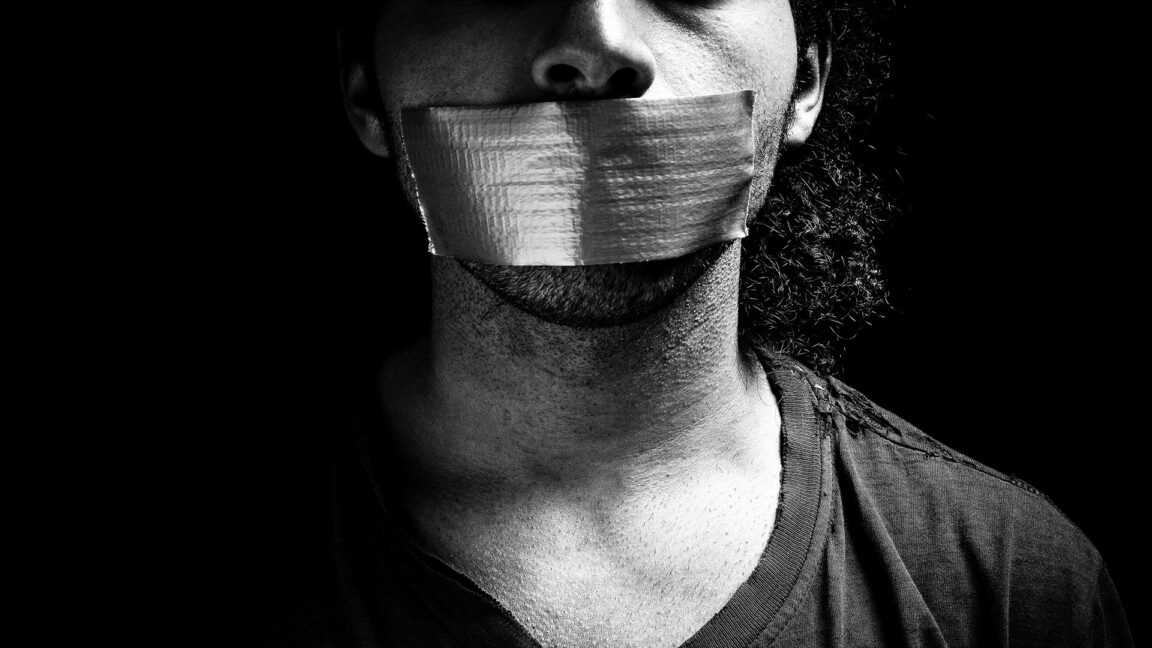
The US has adopted more of a middle ground approach, essentially letting private companies decide what they wanted to do. Daymude and his co-authors wanted to investigate these markedly different approaches. So they developed a computational agent-based simulation that modeled how individuals navigate between wanting to express dissent versus fear of punishment. The model also incorporates how an authority adjusts its surveillance and its policies to minimize dissent at the lowest possible cost of enforcement.
“It’s not some kind of learning theory thing,” said Daymude. “And it’s not rooted in empirical statistics. We didn’t go out and ask 1000 people, ‘What would you do if faced with this situation? Would you dissent or self-censor?’ and then build that data into the model. Our model allows us to embed some assumptions about how we think people behave broadly, but then lets us explore parameters. What happens if you’re more or less bold? What happens if punishments are more or less severe? An authority is more or less tolerant? And we can make predictions based on our fundamental assumptions about what’s going to happen.”
Let one hundred flowers bloom
According to their model, the most extreme case is an authoritarian government that adopts a draconian punishment strategy, which effectively represses all dissent in the general population. “Everyone’s best strategic choice is just to say nothing at this point,” said Daymude. “So why doesn’t every authoritarian government on the planet just do this?” That led them to look more closely at the dynamics. “Maybe authoritarians start out somewhat moderate,” he said. “Maybe the only way they’re allowed to get to that extreme endpoint is through small changes over time.”
Daymude points to China’s Hundred Flowers Campaign in the 1950s as an illustrative case. Here, Chairman Mao Zedong initially encouraged open critiques of his government before abruptly cracking down aggressively when dissent got out of hand. The model showed that in such a case, dissenters’ self-censorship gradually increased, culminating in near-total compliance over time.
But there’s a catch. “The opposite of the Hundred Flowers is if the population is sufficiently bold, this strategy doesn’t work,” said Daymude. “The authoritarian can’t find the pathway to become fully draconian. People just stubbornly keep dissenting. So every time it tries to ramp up severity, it’s on the hook for it every time because people are still out there, they’re still dissenting. They’re saying, ‘Catch us if you dare.’”