dailynewsnblog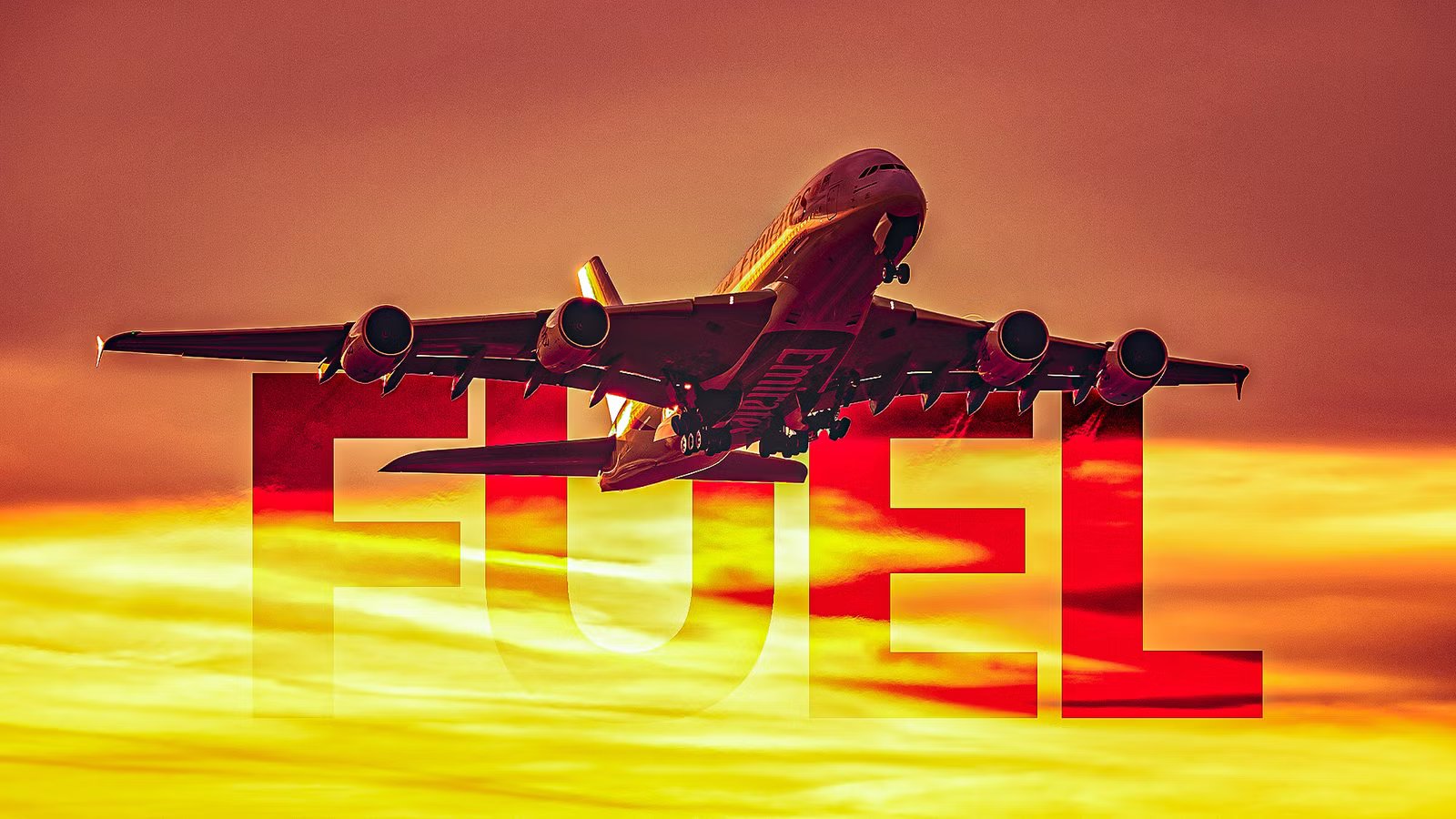
That’s right, not only does the Airbus A380 carry more fuel than an Air Force tanker, it carries a lot more. While not a tanker, its massive size allows it to carry nearly 60% more fuel than the largest dedicated military tankers in service, including the recently retired KC-10. The enormous “Superjumbo” not only has a gigantic fuel supply but is rated to land with full tanks, not something many military aircraft can do.
Not counting the McDonnell Douglas KC-10 Extender, which had a significantly larger fuel capacity than its successors do, means that the A380 can carry almost triple the capacity of a current aerial refueling tanker. That may come as a surprise, so let’s illustrate the reasons why Airbus’ Goliath dwarfs even the largest tanker jets of any military in the world.
A Different Concept Of Operations

There are a couple of major strategic and logistical reasons why the military tankers are not as large as the A380 nor have as much fuel capacity. The simplest and most practical reason is that the size of the super jumbo is a constraint for airfield operations. The limitations of the A380 in terms of runway and taxiway access are well documented; the US Air Force and other air forces require flexibility that would make that a “no-go.”
The other simple answer is a straightforward strategic concept: “don’t put all your eggs in one basket.” The United States Air Force deploys its tanker fleet to airfields around the world and supports many operations, including other service branches like the Navy and Marines, as well as allied air forces with a “more booms are better” doctrine, basically. Flying an enormous tanker, the size of the A380, would create a very big target for any potential adversary.
The People’s Republic of China (PRC) is well known to have made its Chengdu J-20 Mighty Dragon still fire within an almost explicit purpose of hunting high-value assets (HVA) in the American Air Force and Navy for this very strategic mission. Instead of making larger air-to-air tanker jets, the newest airframe has actually decreased capacity in favor of more multirole mission capacity. The Boeing KC-46 Pegasus can only carry a little more than half of what the KC-10 could.
Super Jumbo Fuel Management

The A380 was made for ultra-long-haul flying as well as high-density air corridors. While the leading operator of the type has a unique ability to fly the colossal aircraft on short high-traffic routes, the vast majority of super jumbo missions are very long range. Nonstop flights on the A380 easily exceed 8,000 nautical miles (15,000 km) while carrying over 500 passengers.
A major engineering difference between the aerial tankers of the military and the super jumbo from Airbus is where the fuel is stored. The Air Force aircraft have large reservoirs in the fuselage, but the A380 stores its fuel in its gigantic wings. Storing fuel in the wings is an engineering strategy to reduce wing bending. The weight of the fuel helps counteract the upward aerodynamic lift on the wings during flight, reducing structural stress.
The A380 uses a trim tank located in the tail’s horizontal stabilizer. An automated fuel control and monitoring system (FCMS) shifts fuel between the tail and wing tanks to maintain the aircraft’s balance, which minimizes drag and optimizes fuel efficiency during cruise. The fuel acts as a natural coolant for the aircraft’s hydraulic and electrical systems too, absorbing excess heat before being consumed by the engines.

Is A Boeing 747 Bigger Than An Airbus A380?
Comparing two of the world’s largest passenger jets.
Every Drop Accounted For

On top of having a much larger fuel capacity than its military-grade counterparts, the Airbus A380 is able to land with its full tanks and not cause any damage to the gear or airframe. Not many military aircraft are capable of landing with a maximum takeoff weight (MTOW), nor are all airliners and cargo aircraft, because they routinely take off with a very heavy fuel load that over-stresses the plane when it touches down.
That is not to say that it is a routine option. However, if there is a major mechanical crisis or medical emergency on board, the plane is designed to survive the unexpected landing. A hard landing inspection would be required to ensure that it is safe to fly afterward. Like the aerial tankers of the military, the A380 is equipped with a fuel jettison system. The plane can dump its gas tanks if it is required for safety.
There are other aircraft that are rated to survive one-time landing with full fuel tanks, as an engine fire or structural fire in the fuselage makes it unsafe to dump fuel in the air. The incredible strength of the Airbus A380’s airframe and landing gear is a valuable engineering component of the jet. The exceptionally high cost of aviation fuel in the modern world also makes this element important for the A380 as a commercial airliner.
The jet takes off with millions of dollars in fuel, and if there were an emergency that demanded a landing immediately after takeoff, the airline would be looking at a major loss in revenue. The total investment in any flight by a carrier is dominated by the fuel consumed on the aircraft. While it may not be worth the maintenance risk in every case, it is still a very important feature for the plane.
Pumping Gas At 30,000 Feet

The Airbus A380 manages its fuel supply of up to 254 metric tons through a highly automated fuel control and monitoring system (FCMS). This system continuously redistributes fuel across 11 tanks to optimize aerodynamic performance, structural integrity, and center-of-gravity (CG). During cruise, the FCMS automatically moves fuel from the wing tanks to the trim tank in the horizontal stabilizer. Shifting the CG aft reduces the downforce required from the tail, which lowers drag and increases fuel efficiency.
Fuel is kept in the outer wing tanks as long as possible. This weight counteracts the upward lift, reducing the bending moment on the wing roots and extending the airframe’s life. On ultra-long-haul flights, the center tank (fuselage belly) is filled to provide maximum range. It is typically drained early in the flight to keep the weight central before drawing from the wing tanks.
The system manages 21 pumps and 43 valves. If a pump fails, the system automatically redirects fuel to ensure all four engines receive a constant supply. As the aircraft descends, fuel is pumped from the trim tank back to the wing tanks to shift the CG forward, ensuring maximum stability for the landing phase.
On short-haul routes, the Airbus A380 is not filled up fully. Not many carriers run these types of itineraries with their super jumbo fleet; however, the leading operator of the type in the world is known to operate several short-range corridors. The Emirates fleet accounts for roughly half of all the A380 planes ever made by Airbus. The FCMS automatically selects which tanks to fill during refueling to achieve an optimum takeoff CG, and typically, the highest level they will be filled to is 40% to 50% on such missions.

From KC-97 To KC-46: A Brief History Of US Air Force Tankers
The first tanker was propeller-driven and today they are based on airliners (the Boeing 707 and 767), but this is soon set to change.
Flying Gas Stations

Aerial tankers do not require the massive fuel capacity of an A380 to be useful because their strategic value lies in operational flexibility and acting as a force multiplier, rather than maximizing total fuel volume in a single airframe. Tankers with smaller capacities, like the Boeing KC-135 Stratotanker (based on the 707) and the KC-46 (based on the 767) can operate from a wider variety of airfields and forward bases, including those with shorter runways or less infrastructure.
The primary purpose of an aerial tanker is to extend the range and endurance of combat aircraft like fighters, bombers, or reconnaissance planes, and not to be a single “flying gas station” with infinite fuel. The Airbus A380 would require extensive infrastructure to operate and potentially need to be based at a position that was very far from the battle space, making it less useful and more logistically demanding to sustain.
|
Aircraft |
Fuel Capacity (Pounds) |
Fuel Capacity (Kilograms) |
|---|---|---|
|
Airbus A380-800 |
560,000–575,000 lb |
254,000–261,000 kg |
|
McDonnell Douglas KC-10 Extender |
356,000 lb |
161,500 kg |
|
Airbus A330 MRTT |
245,000 lb |
111,000 kg |
|
|
212,299 lb |
96,297 kg |
|
Boeing KC-135 Stratotanker |
200,000 lb |
90,719 kg |
 Boeing
Losing one A380-sized asset would be a critical blow to an operation, whereas losing one of several smaller tankers allows the mission to continue using the remaining aircraft. Smaller tankers enable patrol and combat aircraft to remain on station for much longer periods, reducing the total number of aircraft required for continuous coverage. Modern tankers are equipped with multiple refueling points (booms and wing-mounted drogues) to refuel two or more aircraft simultaneously, which is more efficient for servicing a strike package.
As of 2025, the Next-Generation Air-Refueling System (NGAS), the tanker counterpart to the sixth-generation F-47 (NGAD) fighter program, is also expected to be smaller than current aerial tankers, though the US Air Force is currently evaluating a family of systems that may include multiple, differently sized platforms.