dailynewsnblog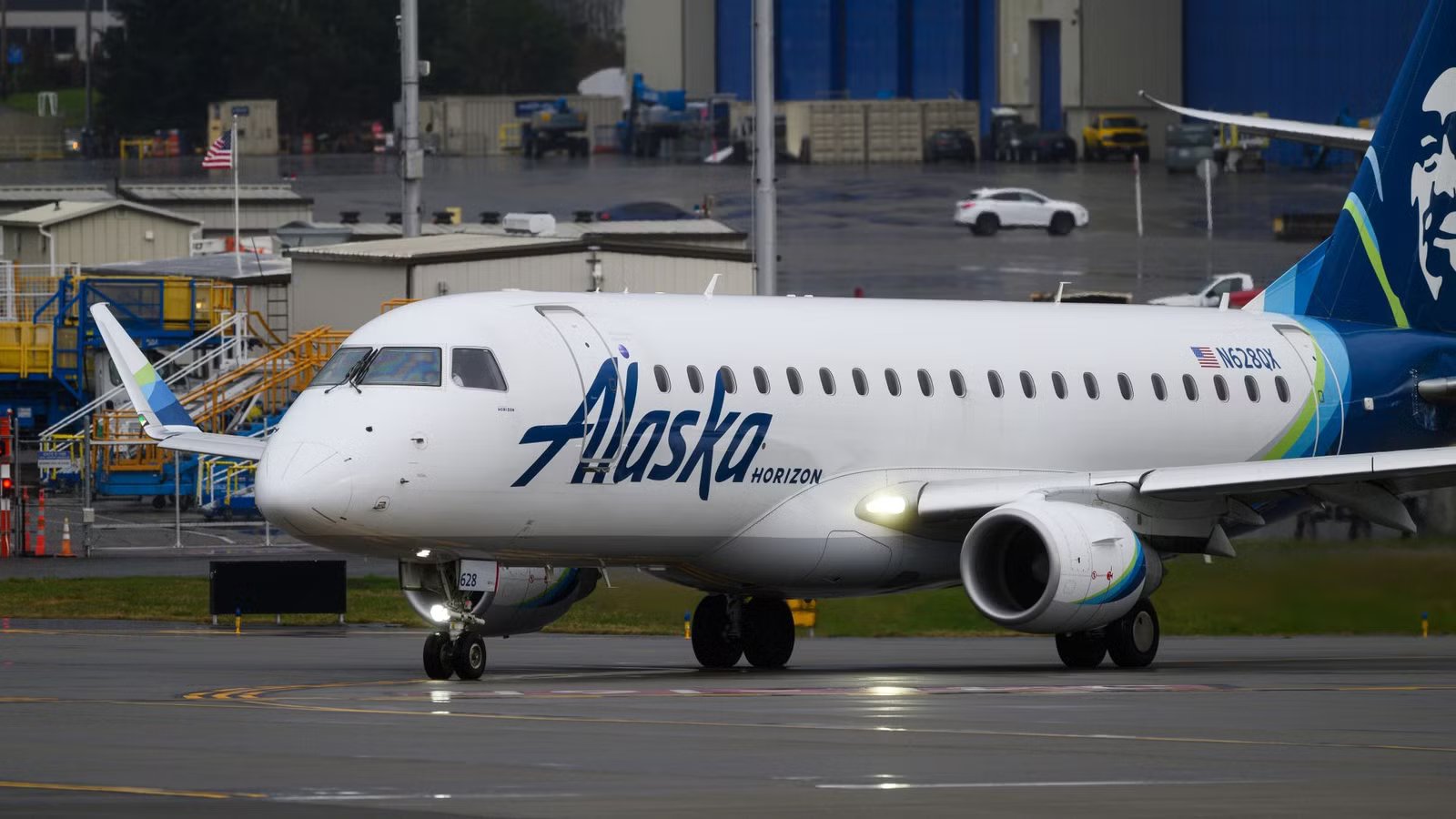
A regional jet flown by Horizon Air had the unfortunate honor of becoming the latest bird strike victim in Sacramento International Airport (SMF) on this past Tuesday. Departing on a scheduled flight for its parent company,  Alaska Airlines, the Embraer E175 hit the bird just after takeoff.
The jet landed safely, and emergency responders were not required, standing down when the plane returned to the terminal. Local news outlet KCRA relayed that, surprisingly, the year’s total of 161 wildlife strikes is actually significantly down from 245 last year.
The Facts As We Know Them

Information from FlightAware shows that the aircraft was only in the air for 20 minutes before it touched back down. Taking off at 5:31 PM, Pacific Time, the plane was back on the ground by 5:51 PM. It has since been grounded for maintenance inspection and repairs to the damage caused by the mishap, but it is expected to return to service by this Saturday, December 27.
The plane in question is registered as N638QX, which rolled off the line in 2018, a little over seven years ago. The jet has exclusively flown for Horizon Air since it was delivered, fresh from the factory in São José dos Campos (SJK), Brazil. Alaska Airlines representatives spoke about the incident to KCRA local news.
“The captain and first officer are trained for these situations and landed the aircraft safely without any issue. An emergency was declared out of an abundance of caution. The aircraft returned to the gate and is being inspected by our maintenance team.”
Bird Strikes & Puddle Jumpers

Smaller aircraft naturally take much more damage if they experience a bird strike. A regional jet is more durable than a general aviation propeller plane, but still far more vulnerable than even a single-aisle commercial airliner like a Boeing 737. With that in mind, a quick turnaround on the aircraft that was struck on Tuesday indicates that it may have only suffered minor damage.
Speed is one of the most decisive factors in the force behind the impact of a wildlife strike. In that regard, an Embraer is not much different from a 737. While regional planes fly slower than large jets, their smaller, lighter structures are more easily compromised by large birds like geese, which can exert over 25 tons of force upon impact.
Regional turboprops and jets often operate from smaller airports with more concentrated wildlife. In January 2025, the Aviation Safety Network reported that a Bombardier CRJ200 regional jet sustained significant airframe and engine damage after hitting a flock of large birds on final approach in Mississippi. Many regional airports are located near coastal areas, wetlands, or agricultural fields that attract high bird activity.

American Airlines Airbus A321neo Returns To PHL After Bird Strike
The aircraft has been taken out of service for detailed maintenance inspections.
The Danger Zone

Over 90% of bird strikes occur at or below 3,000 feet. Regional flights spend a higher percentage of their total flight time at these lower altitudes during frequent takeoffs and landings. Ingestion of birds into smaller engines can cause immediate thrust loss, which is particularly critical during takeoff or landing when power margins are thin.
Engine failure is the most dangerous potential damage suffered from a bird strike. Military Aviation sees a large number of mishaps, including low-level accidents that are often catastrophic when wildlife is ingested by aircraft engines. In December 2024, a 737-800, operated by Jeju Air, crashed in South Korea after a dual engine failure caused by a bird strike during landing, resulting in 179 fatalities.
Military aircraft frequently operate at “bird-rich” altitudes, between 100 feet and 1,000 feet, for tactical training and terrain masking. Because military jets fly much faster than civilian aircraft at low altitudes, even a small bird strike can deliver catastrophic force. An impact at 400 knots delivers nearly three times the force of one at 250 knots.
Bird strikes cost the US Air Force an average of $35 million annually in damages. Civilian flights typically transit these altitudes only briefly during takeoff and landing, whereas military missions can remain there for hours.