dailynewsnblog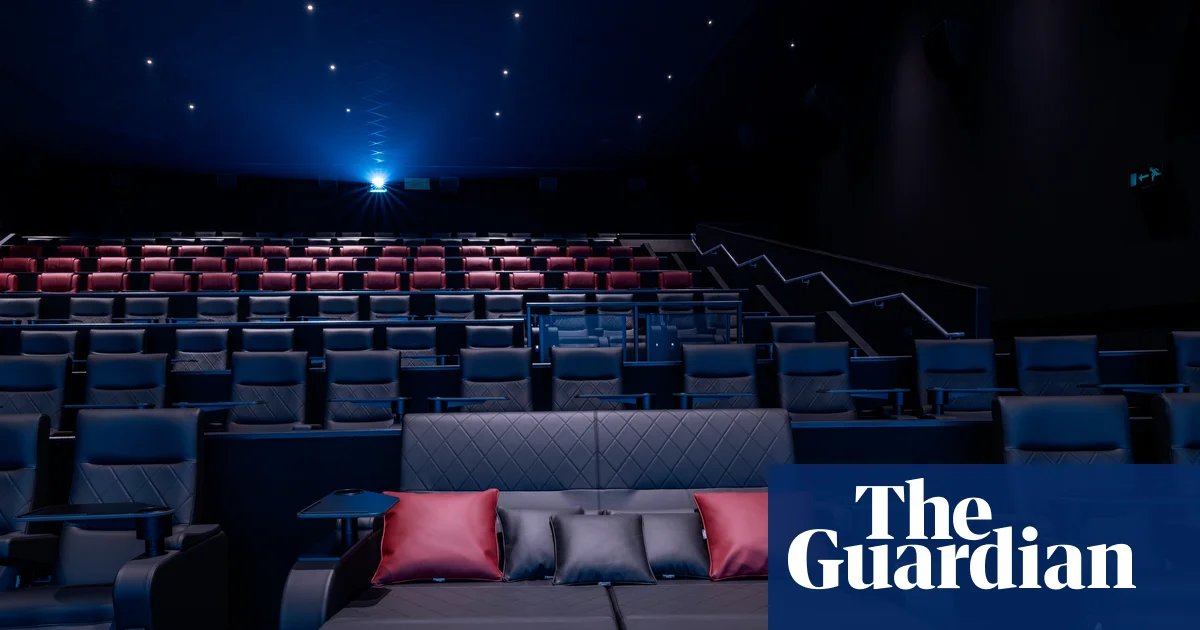
From champagne coolers to front row VIP beds, cinema owners are investing heavily in premium experiences as the industry gets its box office mojo back.
As the third instalment in James Cameron’s blockbuster Avatar series pulls in the Christmas holiday crowds, the UK box office is expected to surpass £1bn in 2025 for the first time since before the global Covid pandemic.
Amid financially testing times – with the pace of a hoped-for box office recovery derailed by the Hollywood actors’ and writers’ strikes – cinema owners have focused on reinventing the movie-going experience to win back film fans.
“We are rolling out 200 of our Ultra Lux seats, which have a built-in champagne or wine cooler, each day across Europe,” says Tim Richards, chief executive and founder of the Vue cinema chain. “Our ‘worst’ seat in the house is a leather recliner, and it is amazingly comfortable. We have been investing very heavily and to use an airline analogy, our new cinemas are business and first class – and that’s it – but at prices for everyone.”
Its rival Odeon first launched its premium offering, under the Luxe brand, in 2017 and it now has 38 venues which the company says have become the “defining standard” for customers across its entire estate.
Odeon has moved to super-charge its premium strategy with the introduction of Luxe Suite Pods, which it describes as a “private cocoon” with luxury seats that is proving a hit for date night and with families.
It is also introducing VIP Beds, now in nine locations, which promise to “transform the front row into the best seat in the house”.
“This is next level,” says Suzie Welch, managing director for UK & Ireland at Odeon. “Over the last 18 months we have been looking at what we want to do next with Luxe, what we think our guests want next from their cinema experience. Innovations like the Luxe Suites and VIP Beds are about creating a different experience; families love them and they are great for an evening experience, like a date night. The focus is on how we can give people choice and experiences for all occasions.”
The cost of seating in cinemas varies widely depending on factors including the time and day of the week, the type of film, sound and picture technology, and the location.
Vue’s Ultra Lux recliner seats range from £10 to about £26. Odeon’s range of Luxe seating runs from £7.50 to £35 for a VIP bed for three, and £28 for a Luxe Pod for two.
The path to premium has been pioneered by Everyman, founded in 2000, where viewers can lounge on sofas and have food and beverages ordered to their seats.
Its model is proving to be a runaway success post-pandemic, with Everyman’s latest results showing a 46% year-on-year increase in sign-ups to its membership programme in the first half, and revenues growing by a fifth.
The chain has also seen admission numbers rise, despite an increase in ticket prices, with movie-goers spending more on food and drink.
“Everyman have led the way on premium for more than 20 years – comfy seats, food – other chains are catching on to that,” says Andrew Renton, director of research at Cavendish. “Smaller cinemas, a cosier feel and higher spend.”
But the move to premium by mass-market chains – which include operators such as Vue introducing next-generation laser projectors to rival the experience offered by Imax – coincides with a significant shift in cinema-going habits.
Cinema attendance has been well down since the pandemic, from 176m annual UK admissions in 2019 to 126m in 2024, as many film fans fell out of love with the big screen.
While the push to premium may make film-going a more attractive prospect, cinema audiences are not expected to bounce back to pre-pandemic levels, even if the number of film releases return to pre-2020 levels.
The cost of living crisis has meant household bills have soared, making cash-strapped consumers much more selective about what they spend their extra income on.
“It is probably the case that movie fans will continue to go less than they did,” says Renton. “However, they are willing to spend more on the occasion, as we have seen in other sectors, such as big ticket gigs like Coldplay and Oasis.”
The cinema industry is also continuing to come to grips with the small screen revolution, prompted by the rise of Netflix, with consumers now awash with choice when it comes to in-home entertainment.
Netflix’s co-founder, Reed Hastings, once succinctly summed up the intense battle for attention in the digital age when he said the company considered almost every activity to be a rival – half-joking that sleep was its biggest competitor.
Cinema companies are also trying to offer more than the traditional experience as they face extra competition from the rise of the experiential economy.
The £98bn market for immersive experiences is booming, from The Greatest Showman-inspired Come Alive, the long-established Abba Voyage, and Crystal Maze, to more recent pop-ups linked to Minecraft, Jurassic World and Squid Game.
“It comes down to what is the purpose of cinema becoming, because it is not just about the old model where it was about going to see a film as soon as it is released,” says Renton. “Now it is much more about experiential leisure. They realise that to continue to capture that going-out experience they have to make a bigger difference. They are doing that through premiumisation.”
While there have been flashes of pre-pandemic levels of commercial success, including most recently the Wicked films, the industry still lacks the blockbusters to realise its ambitions for a premium-led-experience recovery.
Vue’s CEO, Richards, acknowledges that “2025 is still a period where we have seen 20% fewer movies released compared to the average of the three-year pre-pandemic period of 2017, 2018 and 2019”.
However, he points to the increasing commitment to the big screen shown by the Silicon Valley giants as evidence of a healthy future.
Apple’s release of F1, Brad Pitt’s highest-grossing film, has given the iPhone maker confidence in its big-screen strategy.
And after Amazon’s $8.5bn acquisition of MGM – the Hollywood studio behind the James Bond and Rocky franchises, as well as an extensive library ranging from Gone with the Wind to The Hobbit – the studio is scaling up and matching the output of traditional film studios with plans for 10 big releases in 2026 and a further 16 in 2027.
“It takes 18- to 24 months-plus for a major production to go from being green lit to the big screen,” says Richards. “We are just really now starting to see the Hollywood machine rev up and get going again.”
For now, the cinema industry is looking at a promising year ahead.
Big releases include Super Mario, more editions of Spider-Man, Avengers, Dune and Moana, a fifth Toy Story release and a third in the Jumanji franchise.
The insights company Omdia estimates that the volume of releases of films of all budgets in the UK next year will hit 850, the most since 2019.
“In totality, next year and in 2027 we will see the same number of releases, or an even greater number, than before the pandemic,” says Richards. “When the history books are written, this is the end of the post-pandemic period and new era of film.”