dailynewsnblog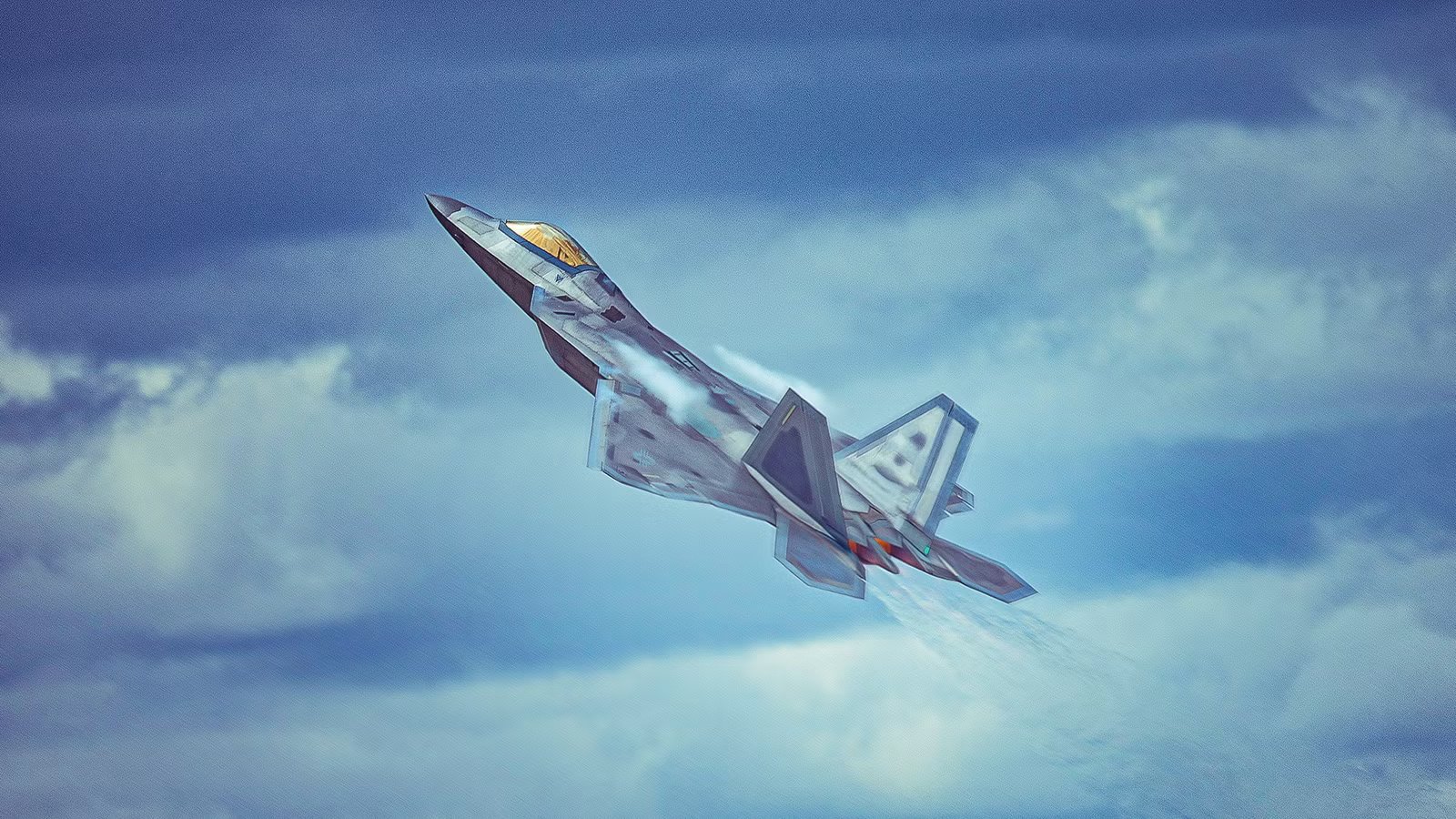
Since the aircraft’s introduction in the 2000s, the Lockheed Martin F-22 Raptor has dominated public and professional debate as the unquestioned symbol of American air power and air superiority. Designed during the closing stages of the Cold War and fielded into the early 21st century, the F-22 was originally conceived to outperform everything it might face in the skies. The aircraft features a cutting-edge blend of stealth, speed, and situational awareness, which, alongside the aircraft’s capable munitions systems, helped redefine what a fighter aircraft could be. However, the question that remains is whether this jet can actually be called the world’s best fighter jet. Finding an answer to that question requires significantly more nuance than simply comparing top speed or stealth signatures. The doctrine that led to the aircraft’s development, mission sets, adversary capabilities, sustainability, and position within global geopolitics will all need to be analyzed.
Fighter programs like the F-35 Lightning II, the Su-57 Felon, the Eurofighter Typhoon, the Dassault Rafale, and the Chengdu J-20 all have similar design philosophies and aim to balance a variety of strategic and tactical priorities. However, it is difficult to compare pretty much anything to the F-22 Raptor, as it remains an aircraft so incredibly capable that it has seldom even been needed in combat. The aircraft’s technological and mechanical capabilities speak for themselves, but how the aircraft has performed in service, how its weapons complement its mission, and how it stacks up against other fighter jet programs are all necessary factors for further analysis. We break down how to separate myth from measurable performance as we make a concrete argument why the F-22 Raptor is the most dynamic and capable fighter aircraft to ever take to the skies.
An Overview Of The Aircraft And The Capabilities That It Offers

Shutterstock | Simple Flying
The F-22 Raptor is a fifth-generation air superiority fighter built around core pillars, including stealth, supercruise, integrated avionics, and agile maneuverability. Stealth remains one of the aircraft’s defining features, as a combination of radar-absorbent materials and carefully controlled airframe shaping reduces the jet’s radar cross-section, ultimately making it difficult to detect and track at typical engagement ranges. The aircraft’s Pratt & Whitney F119-PW-100 engines grant the jet the ability to supercruise, meaning that it can maintain supersonic speeds without the need for traditional afterburners, which deliver faster transit speeds and longer high-speed sectors with lower overall fuel burn and a reduced thermal signature, critical for a stealth fighter.
The aircraft’s sensor suite, which is anchored by its AN/APG-77 radar, ultimately integrates data fusion from multiple onboard and offboard sources, giving pilots an unprecedented amount of situational awareness picture of both ground and air threats. The Raptor’s agility is enhanced by the fact that the jet has thrust vectoring nozzles and fly-by-wire controls, all of which make it capable of extreme maneuvers at high angles of attack. When combined, these capabilities give the Raptor a first-look, first-shot, first-kill edge in contested airspace. Here are some additional specifications for the F-22 Raptor, according to technical documents published by the United States Air Force.
|
Category: |
F-22 Specification: |
|---|---|
|
Maximum Takeoff Weight (MTOW) |
83,500 lbs (38,000 kg) |
|
Maximum speed: |
Mach 2.25 |
|
Supercruise: |
Mach 1.76 |
Defensive systems and electronic warfare should further enhance survivability, while internal weapons bays preserve their low-observable profile. Unlike fourth-generation fighters that rely more on external payloads, the F-22’s design avoids added drag and radar reflections. This results in a blend of stealth, speed, sensors, and maneuverability that has defined what most analysts call true air dominance, as the jet is designed to win engagements before they fully develop across a spectrum of contested environments.
A Look At The Development Of The F-22 Raptor

The F-22 Raptor’s development began in the late 1970s and continued through the 1980s and 1990s under the United States Air Force’s Advanced Tactical Fighter (ATF) program. In a period otherwise marked by rapid advances in Soviet air defenses and fighter technology, the USAF sought a platform capable of dominating both air-to-air and ground-attack roles while surviving in high-threat environments. The ATF competition quickly narrowed in on two prototypes, with the YF-22 offered by Lockheed Martin and  Boeing, while the YF-23` was provided by Northrop Grumman and McDonnell Douglas.
After subsequent evaluation, the YF-22 program was selected in 1991, and it quickly entered full-scale manufacturing development. Lockheed Martin, with Boeing and Pratt & Whitney in tow, brought the design into production throughout the 1990s and the early 2000s. This program emphasized radar signature reduction, advanced avionics, and next-generation propulsion. At the same time, the program also faced challenges. These began with cost overruns and shifting defense priorities after the Cold War ended. The changing threat landscape also led to questions about the scope of the project.
By 2009, the USAF capped procurement of the jet at just 187 operational frames, far fewer than earlier forecasts. This limited fleet size now shapes discussions about the Raptor’s long-term impact on the defense landscape. The F-22 would go on to achieve initial operational capability in 2005, and it has since served as the backbone of US air superiority.

The Striking Differences Between The F-22 Raptor & F-35 Lightning II
F-22 vs F-35: 2 fifth-generation fighters with unique strengths: speed and air dominance vs multirole flexibility. Discover what truly sets them apart
An Analysis Of The F-22 Raptor’s Weapons Systems

At the center of the aircraft’s design are its integrated weapons systems. These platforms are designed for beyond-visual-range (BVR) and within-visual-range (WVR) engagements. The Raptor’s internal bays also carry a mix of air-to-air and air-to-ground ordinance while preserving its overall stealth profile. The aircraft’s principal air superiority loadout includes AIM-120 AMRAAM missiles, which provide long-range engagement capabilities.
The F-22 Raptor features AIM-9 Sidewinder missiles for short-range combat. Internal carriage preserves the jet’s low observable signature until it is committed to action. For overall ground-attack missions, the F-22 can carry GBU-32 JDAM precision-guided bombs, enabling it to strike high-value targets with GPS-guided accuracy. Other munitions can also be integrated as the plane’s mission needs evolve. The integrated AN/AAR-56 missile-warning system and advanced countermeasures help the plane defend against a range of incoming threats.
The F-22 Raptor’s avionics fuse data from radar, inertial navigation systems, electronic warfare systems, and allied data links, providing a comprehensive weapons employment picture. The AN/APG-77 AESA radar not only tracks multiple targets at extended ranges but also supports low-probability-of-intercept modes, enhancing both detection and overall survivability. This kind of weapons suite also allows the F-22 to engage hostile aircraft while minimizing detection risk.
A Deep Dive Into The F-22’s Operational History

Although it was an aircraft originally designed for high-end conflict, the F-22’s operational deployment history has been relatively restrained. The aircraft’s first combat role was in 2014 in the Middle East, where the Raptor flew air superiority and precision strike missions, primarily in support of coalition operations. Over the years, Raptors have participated in exercises with all kinds of allied air forces. These were designed to strengthen the jet’s interoperability.
The aircraft conducts routine patrols and deterrence missions, including airspace sweeps and quick reaction alert (QRA) duties. These have, over time, proven to be staples of F-22 operations, especially in regions where the United States seeks to reassure partners. These missions are designed more to deter conflict than to fight it, reflecting overall strategic utility even when they do not have direct engagement.
Maintenance requirements and the aircraft’s limited fleet size have influenced deployment patterns. Raptors are often dispersed into small detachments to maximize coverage. Training sorties compete with operational commitments for flight hours, underscoring the importance of readiness management. Despite this, the plane’s safety record and mission reliability remain strong and unchallenged.

How Many F-22 Raptors Are In Service With The US Air Force?
The USAF has a large fleet of F-22 Raptors, but managing the fleet of the world’s best stealth fighters isn’t without challenges.
What Truly Makes The F-22 The Best?

The F-22 Raptor occupies a unique tier of fifth-generation fighter. There are some comparisons, such as the Lockheed Martin F-35 Lightning II, a multirole stealth fighter with a global operational presence. The F-35 prioritizes sensor fusion, networked operations, and overall affordability over the raw air-to-air dominance that defines the Raptor. This contrasts with the F-22, which excels exclusively in air superiority.
The Russian Sukhoi Su-57 and Chinese Chengdu J-20 represent other fifth-generation fighter efforts. Both emphasize stealth and long-range engagement capabilities, but both lack the broad operational maturity or reliability of the F-22. European programs like the Eurofighter Typhoon and the Dassault Rafale program both produced highly capable fighters that lack internal weapons bays and true low-observability.
In dogfight performance, the sophistication of the F-22’s avionics and its stealth integration allow it to easily match the Raptor. In multirole versatility and export adoption, modern platforms like the F-35 are capable of outshining it. Thus, the F-22 is unrivaled in its niche, with other programs outperforming it in different mission areas reflecting divergent design choices and overarching strategic priorities.
What Are Our Key Takeaways?

We have now thoroughly analyzed the fighter jet and its reputation as the best fighter ever produced, based on a blend of stealth, supercruise, sensor fusion, and lethal weapons integration. In pure air-to-air combat, it is simply difficult to make a case for any other aircraft surpassing it. The jet’s development pushed the boundaries of aerospace engineering and set a standard for fifth-generation performance.
However, the question of best depends on the criteria, as the Raptor excels in air superiority, and other modern fighters, like the F-35, offer broader mission sets, lower lifecycle costs, and wider overall global adoption. Comparisons with emerging fifth-generation designs suggest that strategic context, not just technical specifications, shape how the jet is valued.
The F-22’s limited fleet size and non-export status also influence its legacy. In contested airspaces where detection and first-strike capabilities matter the most, the Raptor’s design still gives it an edge. In the evolving landscape of networked, multirole warfare, the aircraft is undoubtedly an impressive player, with versatility and increasingly valuable stealth.